What a specifier actually is
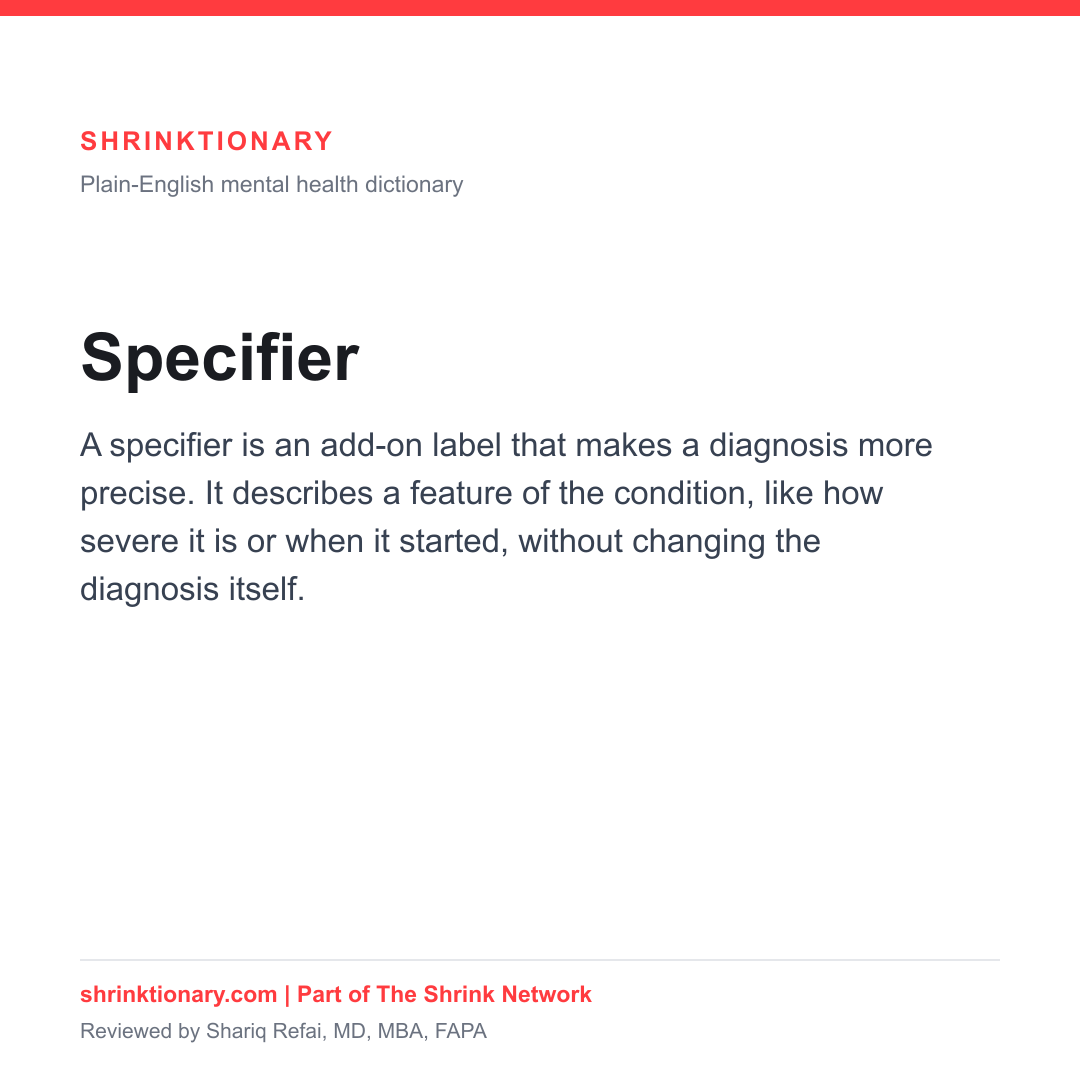
A specifier is extra detail attached to a diagnosis. The diagnosis names the condition. The specifier says something more about this particular version of it.
Specifiers cover different kinds of detail. Some describe intensity, like mild, moderate, or severe. Some describe timing, like whether an episode began around childbirth or follows a seasonal pattern. Some describe features that are present, like anxious distress. Some describe where things stand right now, like in partial remission or in full remission.
Why specifiers matter
Two people can carry the same diagnosis and need quite different care. Specifiers are how that difference gets recorded. Severe with anxious distress is a different clinical picture than mild and in partial remission, even though the diagnosis line reads the same.
That detail drives real decisions. It shapes what treatment gets recommended first, how closely someone is followed, and what a clinician watches for. It also travels with the record, so the next clinician who reads it knows more than the diagnosis alone would tell them.
What specifiers aren’t
A specifier isn’t a separate diagnosis. It doesn’t stand on its own, and it doesn’t mean a person has two conditions. It’s a modifier on one.
It also isn’t a judgment about a person. A severity specifier reflects how many symptoms are present and how much they’re interfering with life, not how hard someone is trying or how much they’re struggling inside. People often read severe as a verdict when it’s meant as a description.
Related terms you’ll see next
The DSM-5-TR is where the available specifiers are defined. Severity is one of the most common specifiers you’ll see. Remission shows up as a specifier when symptoms have dropped below the diagnostic threshold.
Where you’ll see it
You’ll see specifiers written after a diagnosis, often as a short phrase in a note or on paperwork. If you see one you don’t recognize, it’s fair to ask what it means and why it was chosen, because specifiers usually explain something about how your care is being planned.
When this word matters
It matters because a specifier is where the real detail of a diagnosis lives. Two people with the same diagnosis can need different care, and the specifier is what records that difference and shapes what gets recommended.
Commonly confused with
Frequently asked questions
What is an example of a specifier?
Common ones describe severity (mild, moderate, severe), timing (such as a seasonal pattern or onset around childbirth), features that are present (such as anxious distress), or current status (such as in partial or full remission).
Does a specifier mean I have two diagnoses?
No. A specifier is a modifier on one diagnosis, not a separate condition. It adds detail about this particular version of it.
Does severe mean I'm failing at something?
No. A severity specifier reflects how many symptoms are present and how much they interfere with daily life. It isn't a statement about effort, character, or how hard someone is trying.
Related terms
Sources
- Diagnostic and Statistical Manual of Mental Disorders (DSM-5-TR) , American Psychiatric Association
- Mental Health Topics , National Institute of Mental Health
Use or cite this definition
Free to reuse with attribution. Paste the block into your own page, or grab a citation.
Embed on your site
<blockquote>
<p><strong>Specifier:</strong> A specifier is an add-on label that makes a diagnosis more precise. It describes a feature of the condition, like how severe it is or when it started, without changing the diagnosis itself.</p>
<p>— <a href="https://shrinktionary.com/terms/specifier/">Shrinktionary</a>, a plain-English mental health dictionary, medically reviewed by a board certified psychiatrist.</p>
</blockquote>Cite (APA)
Refai, S. (2026). Specifier. Shrinktionary. https://shrinktionary.com/terms/specifier/
Cite (MLA)
"Specifier." Shrinktionary, https://shrinktionary.com/terms/specifier/. Accessed September 29, 2026.
Your next step in The Shrink Network
You are here: Shrinktionary, the language layer of The Shrink Network.
Each site in the network has one job. No matter where you enter, we help you find the next step that makes sense.
Want to understand more first?
See how this connects to everything else in the Term Web →
Take it with you
Free printable references you can save or share. For education, not medical advice.