What electroconvulsive therapy actually is
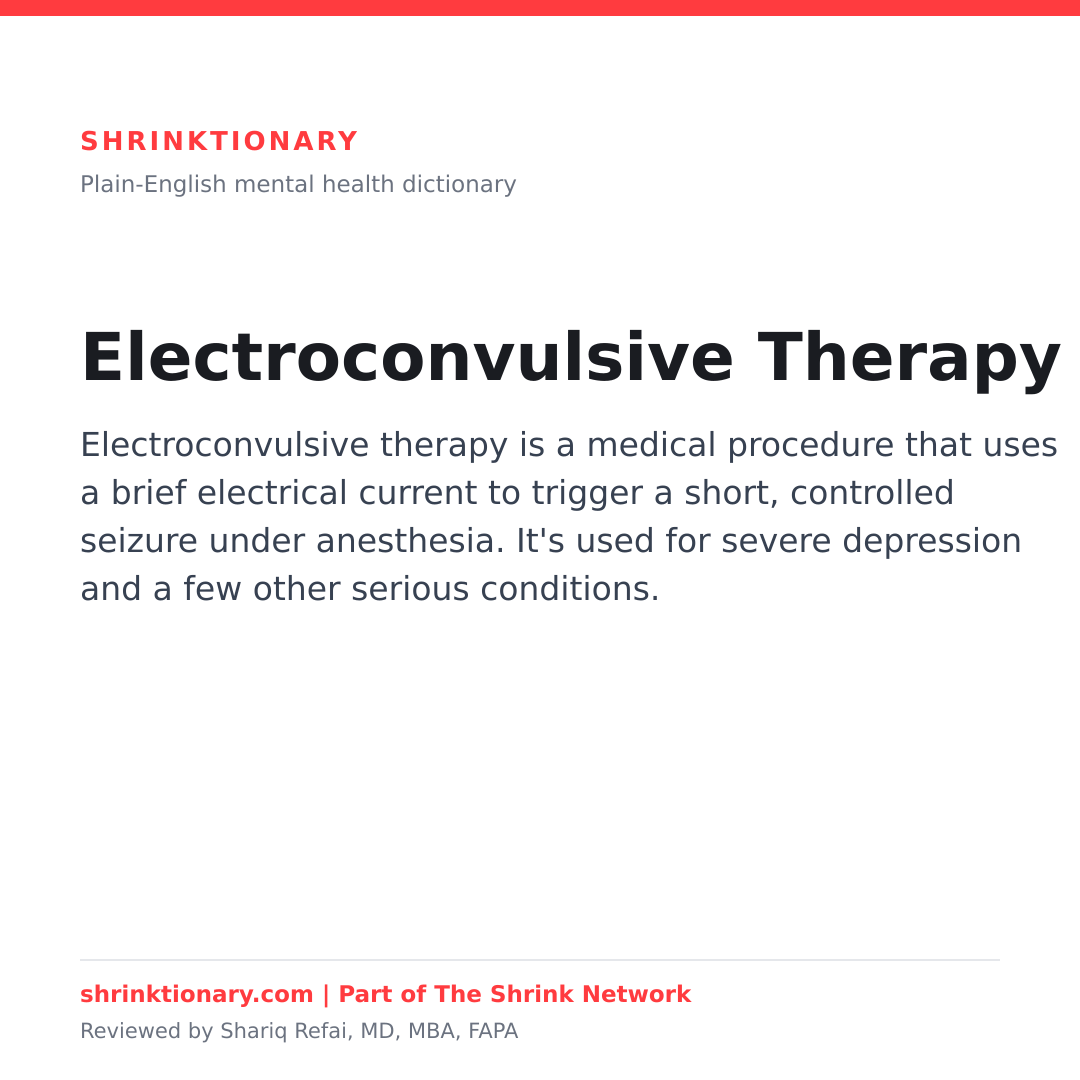
Electroconvulsive therapy, almost always shortened to ECT, is a medical procedure used to treat certain serious mental health conditions. While a person is under general anesthesia and given a muscle relaxant, a carefully controlled electrical current is applied to the scalp to trigger a brief, deliberate seizure in the brain. The whole thing is done in a hospital or clinic setting by a trained team, and the person is asleep and feels nothing during the procedure.
ECT is mainly used for severe depression, especially when other treatments haven’t worked or when a fast response is needed because of risk to the person’s safety. It’s also used for some cases of bipolar disorder, certain forms of severe mania, and catatonia, and it can be an option during severe depression in pregnancy when medications carry their own risks. Treatment is usually given as a series, often a few times a week over several weeks, with the number tailored to the person.
How it works
Researchers don’t have a single complete explanation, but the brief seizure is thought to produce widespread changes in brain chemistry and activity that can lift severe depression and other symptoms. The effect appears to involve shifts in neurotransmitters and in how brain networks connect and adapt, rather than the electrical current itself doing lasting harm.
On the day of a treatment, the person is monitored closely, given anesthesia and a muscle relaxant, and the seizure produced is mild in the body because of the medication, lasting under a minute. Vital signs are watched throughout, and the person wakes up shortly afterward in a recovery area. A full course is planned and adjusted by the treating psychiatrist based on how the person responds.
What electroconvulsive therapy isn’t
ECT today isn’t the frightening procedure shown in old films. Modern ECT is done with anesthesia and muscle relaxants, under medical monitoring, with informed consent, and it’s one of the more carefully studied treatments in psychiatry. It isn’t a punishment and isn’t done while a person is awake or struggling.
It also isn’t the same as transcranial magnetic stimulation, which uses magnetic pulses, no anesthesia, and no induced seizure. The most common side effect of ECT is memory trouble, often confusion right after a session and some gaps in memory around the treatment period, which usually improves over time. Naming these effects honestly matters so people can weigh the decision with real information.
Related terms you’ll see next
Transcranial magnetic stimulation is the other brain stimulation treatment people compare with ECT. Treatment-resistant depression and catatonia are situations where ECT is often considered.
Why it matters
For some people with severe, dangerous, or treatment-resistant illness, ECT can work when nothing else has, and it can work quickly, which matters when safety is at stake. It carries real risks and side effects, so the choice is made carefully with a psychiatrist who can explain the benefits, the risks, and the alternatives. Understanding what ECT actually is, rather than the myth, helps people make that decision clearly.
When this word matters
It matters when illness is severe, dangerous, or treatment-resistant and a fast response is needed because of risk to safety. ECT can work when other treatments haven't, and it can work quickly, but it carries real risks and side effects, so the choice is made carefully with a psychiatrist who explains the benefits, risks, and alternatives.
Commonly confused with
Frequently asked questions
What is electroconvulsive therapy?
ECT is a medical procedure that uses a brief, controlled electrical current to trigger a short seizure in the brain while a person is under general anesthesia and given a muscle relaxant. It's used mainly for severe depression, and also for some cases of bipolar disorder, severe mania, and catatonia.
Is ECT safe?
Modern ECT is done with anesthesia, muscle relaxants, medical monitoring, and informed consent, and it's one of the more carefully studied treatments in psychiatry. It carries real risks and side effects, most commonly memory trouble, so the decision is made carefully with a psychiatrist.
Does ECT cause memory loss?
Memory trouble is the most common side effect. People often have confusion right after a session and some gaps in memory around the treatment period. This usually improves over time. A psychiatrist can explain the benefits and risks so the choice is made with real information.
Related terms
In these language clusters
Sources
- Electroconvulsive Therapy (ECT) , Mayo Clinic
- Electroconvulsive Therapy (StatPearls) , National Center for Biotechnology Information
Use or cite this definition
Free to reuse with attribution. Paste the block into your own page, or grab a citation.
Embed on your site
<blockquote>
<p><strong>Electroconvulsive Therapy:</strong> Electroconvulsive therapy is a medical procedure that uses a brief electrical current to trigger a short, controlled seizure under anesthesia. It's used for severe depression and a few other serious conditions.</p>
<p>— <a href="https://shrinktionary.com/terms/electroconvulsive-therapy/">Shrinktionary</a>, a plain-English mental health dictionary, medically reviewed by a board certified psychiatrist.</p>
</blockquote>Cite (APA)
Refai, S. (2026). Electroconvulsive Therapy. Shrinktionary. https://shrinktionary.com/terms/electroconvulsive-therapy/
Cite (MLA)
"Electroconvulsive Therapy." Shrinktionary, https://shrinktionary.com/terms/electroconvulsive-therapy/. Accessed September 26, 2026.
Your next step in The Shrink Network
You are here: Shrinktionary, the language layer of The Shrink Network.
Each site in the network has one job. No matter where you enter, we help you find the next step that makes sense.
Want to understand more first?
See how this connects to everything else in the Term Web →
Take it with you
Free printable references you can save or share. For education, not medical advice.