What fatigue actually is
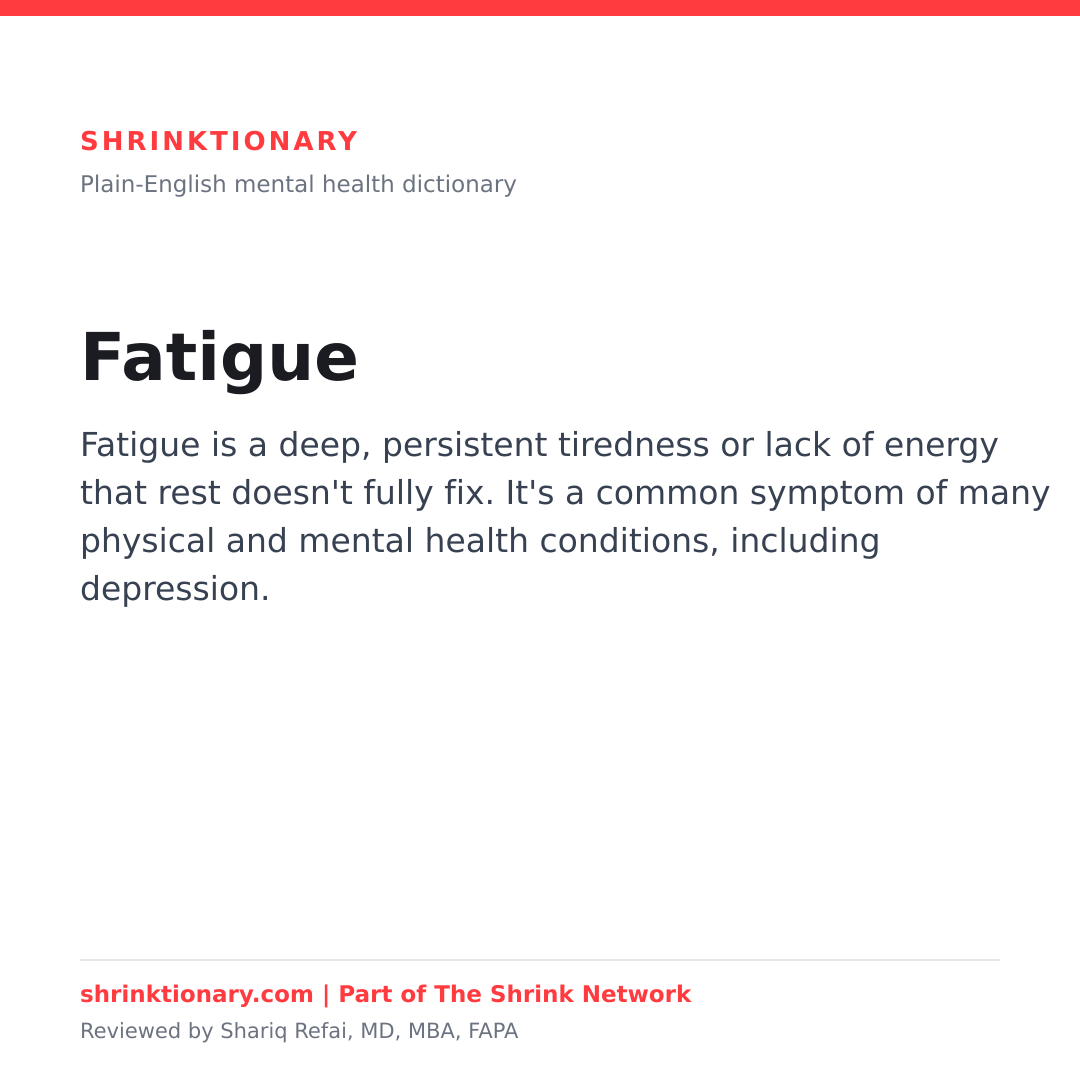
Fatigue is a deep, ongoing sense of tiredness or low energy that goes beyond normal sleepiness and that rest doesn’t fully relieve. It can be physical, mental, or both, and it often makes everyday tasks feel like they take far more effort than usual. It’s a symptom rather than a diagnosis, and it can come from many directions.
In mental health, fatigue is a common feature of depression and anxiety, and it can also follow ongoing stress, poor sleep, or burnout. It has many medical causes too, including anemia, thyroid problems, infections, chronic illnesses, and medication effects. Because the list is long, clinicians often look at the whole picture rather than assuming a single cause.
The key feature is that the tiredness is persistent and out of proportion to a person’s activity, lingering even after what should be enough rest.
What fatigue can feel like
People often describe feeling drained, heavy, or like they’re moving through fog. Getting through a normal day can feel like wading uphill, and tasks that used to be easy may feel exhausting before they even start.
Mental fatigue can show up as trouble concentrating, slowed thinking, or low motivation, while physical fatigue shows up as weak, tired limbs or a need to rest often. Many people feel frustrated that sleep doesn’t fix it, or guilty that they can’t keep up. These reactions are common, and they don’t mean a person is lazy.
What fatigue isn’t
Fatigue isn’t the same as ordinary tiredness after a busy day, which usually eases with rest. The defining difference is that it sticks around and isn’t fully relieved by sleep.
It also isn’t a sign of weakness or a lack of effort. When fatigue is tied to depression, anxiety, or a medical condition, no amount of pushing through reliably fixes it, and treating the underlying cause usually helps far more. Dismissing fatigue as just needing to try harder can delay finding what’s actually going on.
Related terms you’ll see next
Depression commonly includes fatigue as a core symptom. Insomnia can both cause and worsen daytime fatigue. Burnout is a state of exhaustion linked to chronic stress. Anhedonia, the loss of pleasure, often travels alongside low energy in mood conditions.
When to seek professional care
If fatigue is severe, lasts for weeks, or is getting in the way of daily life, it’s worth talking with a clinician, who can check for both physical and mental health causes. Fatigue that comes with low mood, loss of interest, or thoughts of hopelessness deserves attention, since it may point to depression. Sudden or unexplained fatigue with other symptoms should be evaluated promptly. If you’re having thoughts of suicide or self-harm, seek help right away. In the United States, you can call or text 988.
When this word matters
Fatigue matters as a symptom rather than a diagnosis, common in depression, anxiety, and burnout but also in medical causes like anemia, thyroid problems, and infections, so clinicians look at the whole picture. It's defined by being persistent and out of proportion to activity, lingering even after enough rest.
Commonly confused with
Frequently asked questions
How is fatigue different from normal tiredness?
Ordinary tiredness after a busy day usually eases with rest, while fatigue is persistent and out of proportion to activity. The defining difference is that it lingers and isn't fully relieved by sleep.
Can fatigue be a sign of depression?
Yes. Fatigue is a common feature of depression and anxiety, and it can also follow ongoing stress, poor sleep, or burnout. Fatigue alongside low mood or loss of interest may point to depression.
Does fatigue always come from a mental health condition?
No. It has many medical causes too, including anemia, thyroid problems, infections, chronic illnesses, and medication effects. Because the list is long, clinicians often look at the whole picture rather than assuming a single cause.
Related terms
In these language clusters
Compare
Sources
- Fatigue , MedlinePlus
- Depression , National Institute of Mental Health
Use or cite this definition
Free to reuse with attribution. Paste the block into your own page, or grab a citation.
Embed on your site
<blockquote>
<p><strong>Fatigue:</strong> Fatigue is a deep, persistent tiredness or lack of energy that rest doesn't fully fix. It's a common symptom of many physical and mental health conditions, including depression.</p>
<p>— <a href="https://shrinktionary.com/terms/fatigue/">Shrinktionary</a>, a plain-English mental health dictionary, medically reviewed by a board certified psychiatrist.</p>
</blockquote>Cite (APA)
Refai, S. (2026). Fatigue. Shrinktionary. https://shrinktionary.com/terms/fatigue/
Cite (MLA)
"Fatigue." Shrinktionary, https://shrinktionary.com/terms/fatigue/. Accessed September 26, 2026.
Your next step in The Shrink Network
You are here: Shrinktionary, the language layer of The Shrink Network.
Each site in the network has one job. No matter where you enter, we help you find the next step that makes sense.
Want to understand more first?
See how this connects to everything else in the Term Web →
Take it with you
Free printable references you can save or share. For education, not medical advice.