What behavioral activation actually is
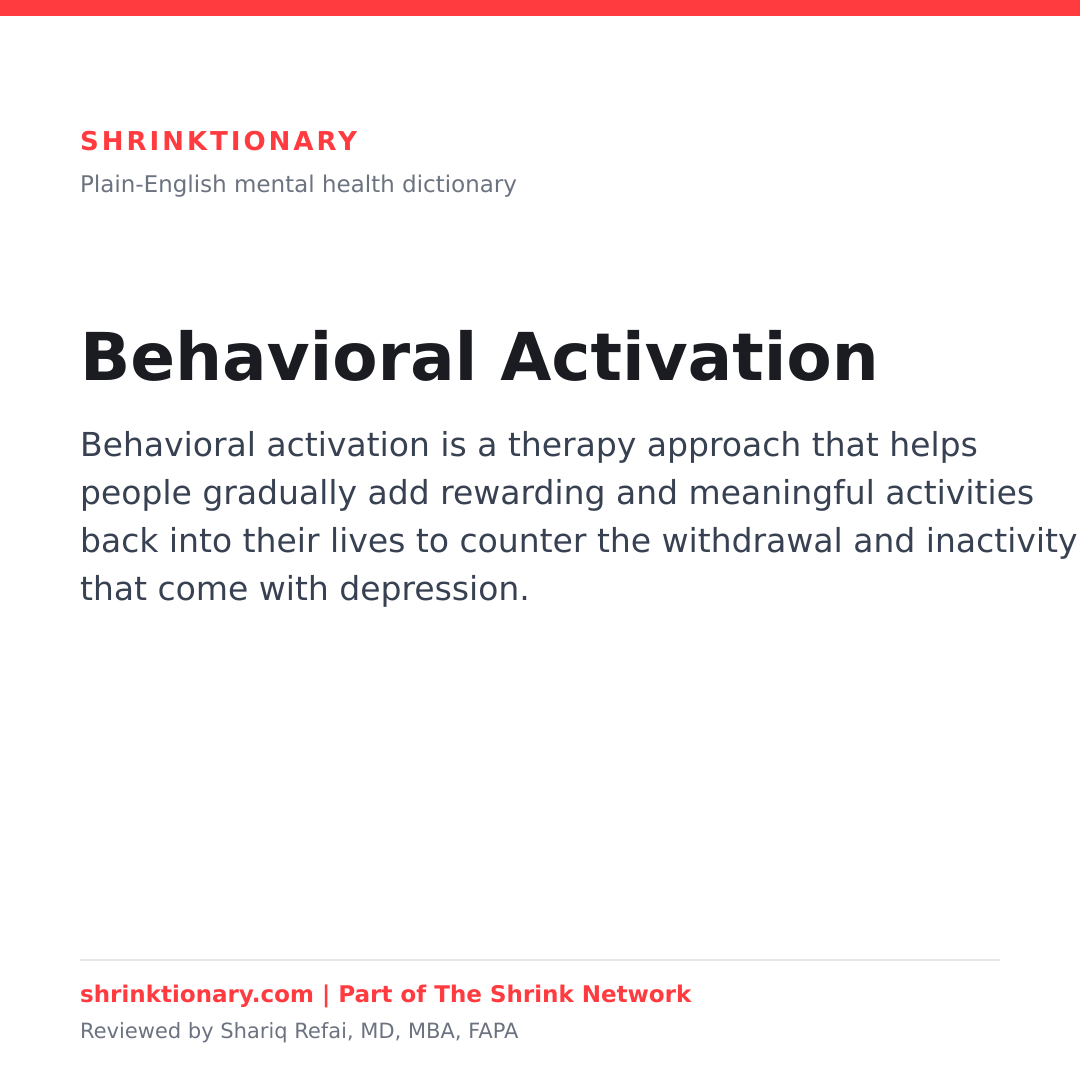
Behavioral activation is a practical, evidence-based therapy for depression. It rests on a clear observation. Depression often pulls people into a cycle where low mood leads to withdrawal, withdrawal removes sources of reward and connection, and the loss of those rewards deepens the low mood. Behavioral activation works to reverse that cycle from the outside in.
Instead of waiting to feel motivated before doing things, behavioral activation has people schedule and do meaningful or pleasant activities first, trusting that mood often follows action rather than the other way around. The activities are chosen to match a person’s values and to bring a sense of accomplishment or pleasure.
It can be used on its own or as part of broader cognitive behavioral therapy, and it has strong research support for treating depression.
What behavioral activation looks like in practice
A therapist and client usually start by tracking how the person spends their time and how each activity affects their mood. From there, they build a plan to gradually add back activities that have dropped away, starting small and specific. That might mean a short walk, a phone call to a friend, or returning to a hobby for a few minutes.
Activities are often broken into tiny, manageable steps so they feel doable even on a hard day. The person schedules them in advance and tracks how they actually felt, which often challenges the prediction that nothing will help.
Over time, the goal is to rebuild a life with more sources of reward and meaning, which tends to lift mood and energy.
If you want a structured way to take those first steps, see the Depression Reset, a step-by-step guide to rebuilding momentum on shrinkMD. shrinkMD is part of The Shrink Network, founded by Shariq Refai, MD.
What behavioral activation isn’t
Behavioral activation is not the same as simply telling someone to cheer up or stay busy. It is a structured method that targets the specific avoidance and withdrawal patterns that keep depression going, with careful planning and tracking.
It is also not about forcing constant productivity. The aim is meaningful and rewarding activity, not packing a schedule until a person burns out.
And it is not a replacement for other care when needed. For many people it works alongside medication or other therapies rather than instead of them.
Related terms you’ll see next
CBT, Anhedonia, Depression, and Major depressive disorder often come up alongside behavioral activation.
When to seek professional care
Behavioral activation is most effective when guided by a trained therapist who can tailor the plan and keep it on track. If low mood, loss of interest, or withdrawal from daily life lasts more than a couple of weeks, a mental health professional can help. Anyone having thoughts of suicide should seek immediate support, including the 988 Suicide and Crisis Lifeline in the United States.
When this word matters
It matters in depression, where withdrawal and inactivity feed low mood, and the approach gradually adds rewarding, meaningful activities to break that cycle. The distinction matters because it focuses on changing actions rather than directly challenging thoughts.
Commonly confused with
Frequently asked questions
How does behavioral activation work?
Instead of waiting to feel motivated, behavioral activation has people schedule and do meaningful or pleasant activities first, trusting that mood often follows action. It targets the withdrawal and inactivity that keep depression going.
Is behavioral activation the same as just staying busy?
No. It's a structured method that targets specific avoidance and withdrawal patterns, with careful planning and tracking. The aim is meaningful, rewarding activity, not packing a schedule until you burn out.
Does behavioral activation replace medication?
Not necessarily. It can be used on its own, but for many people it works alongside medication or other therapies rather than instead of them.
Related terms
In these language clusters
Sources
- Psychotherapies , National Institute of Mental Health
- Depression , National Institute of Mental Health
Use or cite this definition
Free to reuse with attribution. Paste the block into your own page, or grab a citation.
Embed on your site
<blockquote>
<p><strong>Behavioral Activation:</strong> Behavioral activation is a therapy approach that helps people gradually add rewarding and meaningful activities back into their lives to counter the withdrawal and inactivity that come with depression.</p>
<p>— <a href="https://shrinktionary.com/terms/behavioral-activation/">Shrinktionary</a>, a plain-English mental health dictionary, medically reviewed by a board certified psychiatrist.</p>
</blockquote>Cite (APA)
Refai, S. (2026). Behavioral Activation. Shrinktionary. https://shrinktionary.com/terms/behavioral-activation/
Cite (MLA)
"Behavioral Activation." Shrinktionary, https://shrinktionary.com/terms/behavioral-activation/. Accessed September 26, 2026.
See also on ShrinkDaily
For a three-minute daily lesson on this idea, read the daily concept on behavioral activation.
Your next step in The Shrink Network
You are here: Shrinktionary, the language layer of The Shrink Network.
Each site in the network has one job. No matter where you enter, we help you find the next step that makes sense.
Want to understand more first?
See how this connects to everything else in the Term Web →
Take it with you
Free printable references you can save or share. For education, not medical advice.