Medication pathway
Step 1 of 5 through The Shrink Network.
What an SSRI actually is
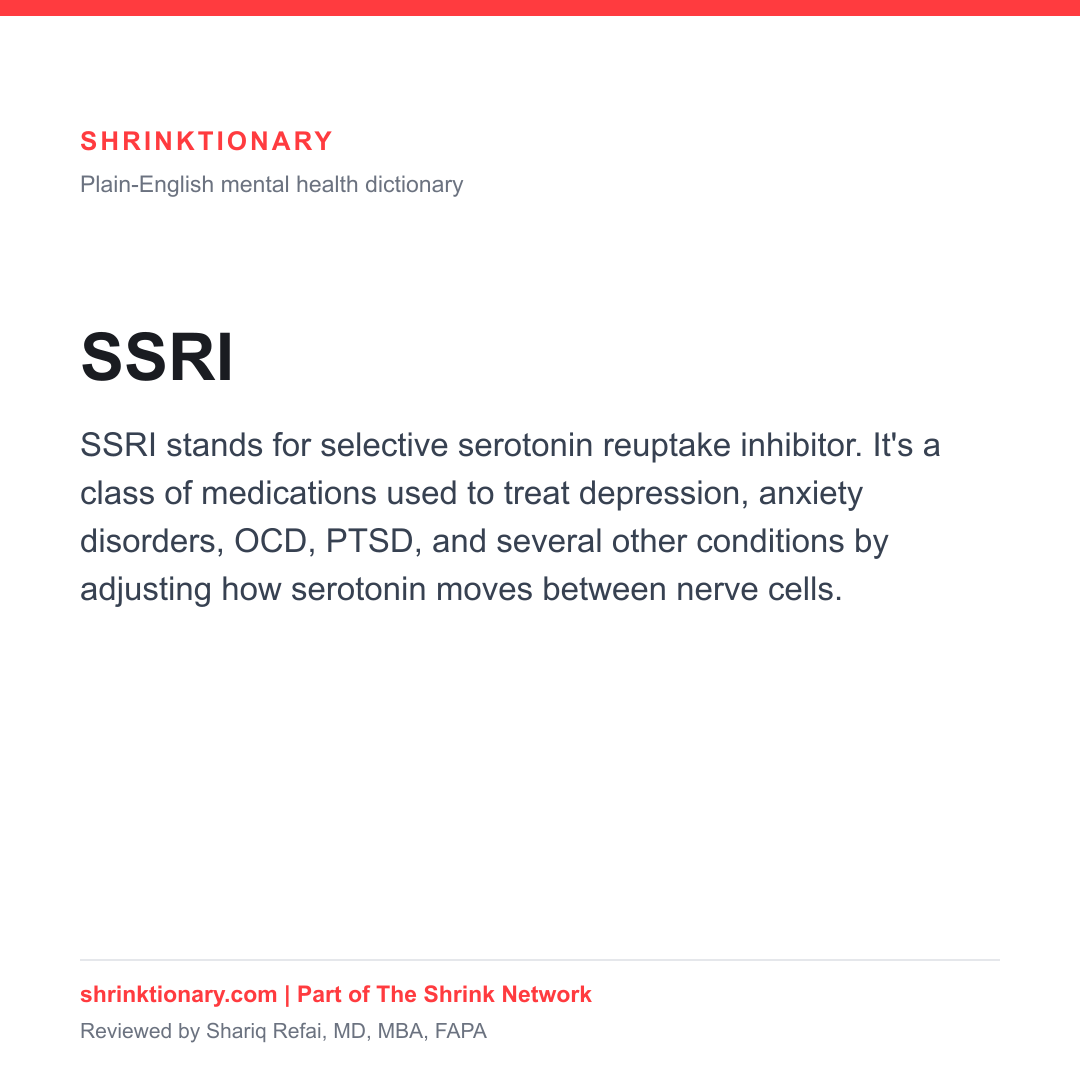
SSRI stands for selective serotonin reuptake inhibitor. The name describes what the medication does. Nerve cells communicate using chemical messengers, one of which is serotonin. After serotonin gets released into the small space between two cells, it’s normally reabsorbed by the cell that sent it. An SSRI slows that reabsorption down, leaving more serotonin available in the space between cells.
The exact reason this helps mood and anxiety isn’t fully understood, even after decades of research. The leading theory has shifted from “low serotonin causes depression” to “SSRIs change how mood-regulating brain networks adapt over time.” What’s clear from large studies is that SSRIs help many people with depression, generalized anxiety, social anxiety, panic disorder, OCD, and PTSD.
Common SSRIs
The class includes fluoxetine (Prozac), sertraline (Zoloft), citalopram (Celexa), escitalopram (Lexapro), paroxetine (Paxil), and fluvoxamine (Luvox). Each has a slightly different profile around side effects, drug interactions, and how quickly it leaves the system.
What to expect
Most people don’t notice mood change in the first week. Side effects, when they happen, often arrive first. Benefits typically build over four to six weeks, sometimes longer. Common early side effects include nausea, headache, sleep change, and lower libido. Most early side effects fade after the first couple of weeks. Persistent or troubling ones are worth a conversation with the prescriber.
SSRIs are not controlled substances. They don’t cause the kind of dependence associated with benzodiazepines or opioids. They do require a gradual taper if you and your prescriber decide to stop them, because stopping suddenly can cause discontinuation symptoms.
What an SSRI isn’t
An SSRI isn’t a tranquilizer, isn’t a quick fix, and isn’t a personality changer. It also isn’t right for every condition or every person. The decision to start one is clinical, and it should be paired with therapy when feasible.
Related terms you’ll see next
Serotonin is the neurotransmitter the medication acts on. SNRIs are a related class that also affects norepinephrine. Discontinuation syndrome is what can happen if an SSRI is stopped abruptly.
When to seek professional care
SSRIs are prescription medications. The decision to start, change, or stop one should be made with a licensed clinician who’s evaluated you. If you’re already on an SSRI and have a question about side effects, dosing, or interactions, contact your prescriber.
The side effects usually arrive before the benefit does. That's the whole problem with the first month, and it's why so many people stop a medication that would have worked. Nausea or restlessness can show up in days, and then settle. The lift tends to build over weeks four to six. Judging an antidepressant on day five is judging the wrong thing.
When this word matters
SSRIs are often a first-line option for depression, anxiety disorders, OCD, and PTSD, and the distinction matters because they usually take several weeks to show full benefit and shouldn't be stopped abruptly. Pay attention to early side effects and how mood and anxiety shift over the first month or two.
Commonly confused with
Frequently asked questions
How long does an SSRI take to work?
Most people don't notice mood change in the first week, and benefits typically build over four to six weeks, sometimes longer. Side effects, when they happen, often arrive first and many early ones fade after the first couple of weeks.
Are SSRIs addictive?
SSRIs are not controlled substances and don't cause the kind of dependence associated with benzodiazepines or opioids. They do require a gradual taper if you and your prescriber decide to stop, because stopping suddenly can cause discontinuation symptoms.
What conditions do SSRIs treat?
Large studies show SSRIs help many people with depression, generalized anxiety, social anxiety, panic disorder, OCD, and PTSD. The decision to start one is clinical and should be made with a licensed clinician who's evaluated you.
Related terms
In these language clusters
Sources
- Mental Health Medications , National Institute of Mental Health
- Selective Serotonin Reuptake Inhibitors (SSRIs) , Mayo Clinic
- Antidepressants: Selecting one that's right for you , Mayo Clinic
Use or cite this definition
Free to reuse with attribution. Paste the block into your own page, or grab a citation.
Embed on your site
<blockquote>
<p><strong>SSRI:</strong> SSRI stands for selective serotonin reuptake inhibitor. It's a class of medications used to treat depression, anxiety disorders, OCD, PTSD, and several other conditions by adjusting how serotonin moves between nerve cells.</p>
<p>— <a href="https://shrinktionary.com/terms/ssri/">Shrinktionary</a>, a plain-English mental health dictionary, medically reviewed by a board certified psychiatrist.</p>
</blockquote>Cite (APA)
Refai, S. (2026). SSRI. Shrinktionary. https://shrinktionary.com/terms/ssri/
Cite (MLA)
"SSRI." Shrinktionary, https://shrinktionary.com/terms/ssri/. Accessed September 26, 2026.
Your next step in The Shrink Network
You are here: Shrinktionary, the language layer of The Shrink Network.
Each site in the network has one job. No matter where you enter, we help you find the next step that makes sense.
Want to understand more first?
See how this connects to everything else in the Term Web →
Take it with you
Free printable references you can save or share. For education, not medical advice.