What hypersomnia actually is
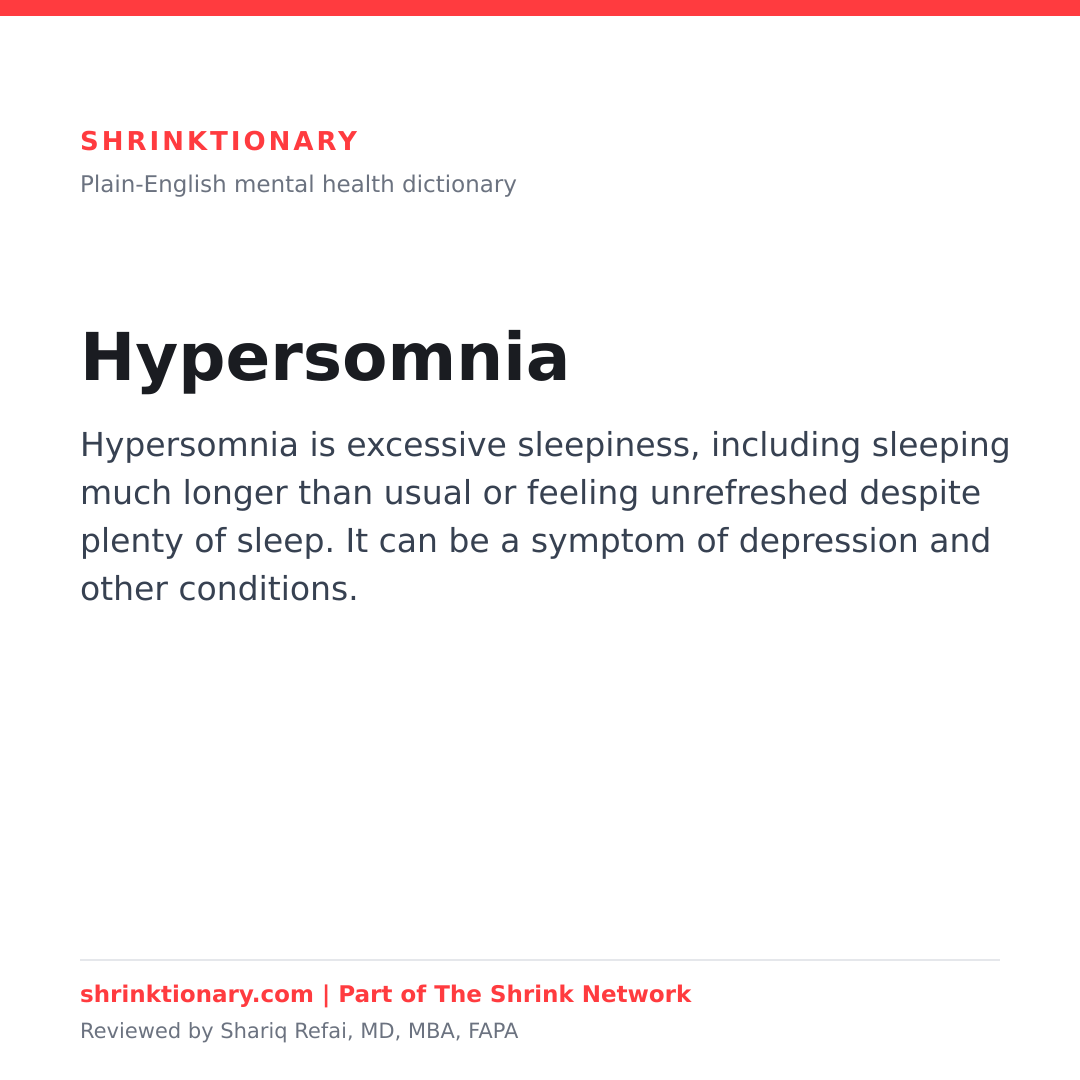
Hypersomnia is excessive sleepiness. It can mean sleeping far longer than usual at night, struggling to stay awake during the day, or feeling unrefreshed no matter how many hours of sleep a person gets. It’s the opposite end of the sleep spectrum from insomnia, and like insomnia, it’s a symptom rather than a single condition.
It can be a symptom of depression, particularly in patterns like seasonal affective disorder and some bipolar depression. It can also stem from medical causes, sleep disorders, or medications. Because the causes vary so widely, hypersomnia usually calls for a careful look at what else is going on.
What hypersomnia can feel like
People often describe a pull toward sleep that’s hard to resist. Mornings are heavy. Naps don’t help much. Even a full night, or more, leaves them groggy and slow to get going. The day can feel like it’s spent fighting to stay awake.
When hypersomnia is part of depression, it often comes bundled with low energy, low mood, and lost interest. The extra sleep doesn’t restore the person, which is one clue that the sleepiness is a symptom rather than simple tiredness from a busy stretch.
What hypersomnia isn’t
Hypersomnia isn’t the same as being well-rested or just liking sleep. The hallmark is that the sleepiness is excessive, hard to shake, and gets in the way of daily functioning. Sleeping in after a hard week is ordinary. Persistent, unrefreshing oversleep is different.
It also isn’t laziness or a lack of discipline. When hypersomnia is driven by depression or a medical condition, willpower alone won’t fix it, and treating it as a character issue usually misses the real cause.
Related terms you’ll see next
When to seek professional care
If excessive sleepiness has lasted for weeks, is interfering with work or daily life, or comes with low mood and lost interest, it’s worth a professional evaluation. A clinician can check for depression, sleep disorders, and medical causes, since the right treatment depends on what’s driving the sleep. Persistent daytime sleepiness is also worth raising because it can affect safety, including driving.
When this word matters
Oversleeping crosses into hypersomnia when excessive sleepiness lasts for weeks, leaves a person unrefreshed, and interferes with daily life. It can be a symptom of depression, seasonal patterns, sleep disorders, or medical causes.
Commonly confused with
Frequently asked questions
What is hypersomnia?
Hypersomnia is excessive sleepiness, which can mean sleeping far longer than usual, struggling to stay awake during the day, or feeling unrefreshed no matter how much sleep a person gets. It's a symptom rather than a single condition.
Can hypersomnia be related to depression?
Yes. It can be a symptom of depression, particularly in patterns like seasonal affective disorder and some bipolar depression. When it's part of depression, the extra sleep doesn't restore the person.
Is oversleeping just laziness?
No. When hypersomnia is driven by depression or a medical condition, willpower alone won't fix it, and treating it as a character issue usually misses the real cause.
Related terms
Sources
- Depression , National Institute of Mental Health
- Sleep Disorders , MedlinePlus
Use or cite this definition
Free to reuse with attribution. Paste the block into your own page, or grab a citation.
Embed on your site
<blockquote>
<p><strong>Hypersomnia:</strong> Hypersomnia is excessive sleepiness, including sleeping much longer than usual or feeling unrefreshed despite plenty of sleep. It can be a symptom of depression and other conditions.</p>
<p>— <a href="https://shrinktionary.com/terms/hypersomnia/">Shrinktionary</a>, a plain-English mental health dictionary, medically reviewed by a board certified psychiatrist.</p>
</blockquote>Cite (APA)
Refai, S. (2026). Hypersomnia. Shrinktionary. https://shrinktionary.com/terms/hypersomnia/
Cite (MLA)
"Hypersomnia." Shrinktionary, https://shrinktionary.com/terms/hypersomnia/. Accessed September 26, 2026.
Your next step in The Shrink Network
You are here: Shrinktionary, the language layer of The Shrink Network.
Each site in the network has one job. No matter where you enter, we help you find the next step that makes sense.
Want to understand more first?
See how this connects to everything else in the Term Web →
Take it with you
Free printable references you can save or share. For education, not medical advice.