What brain fog actually is
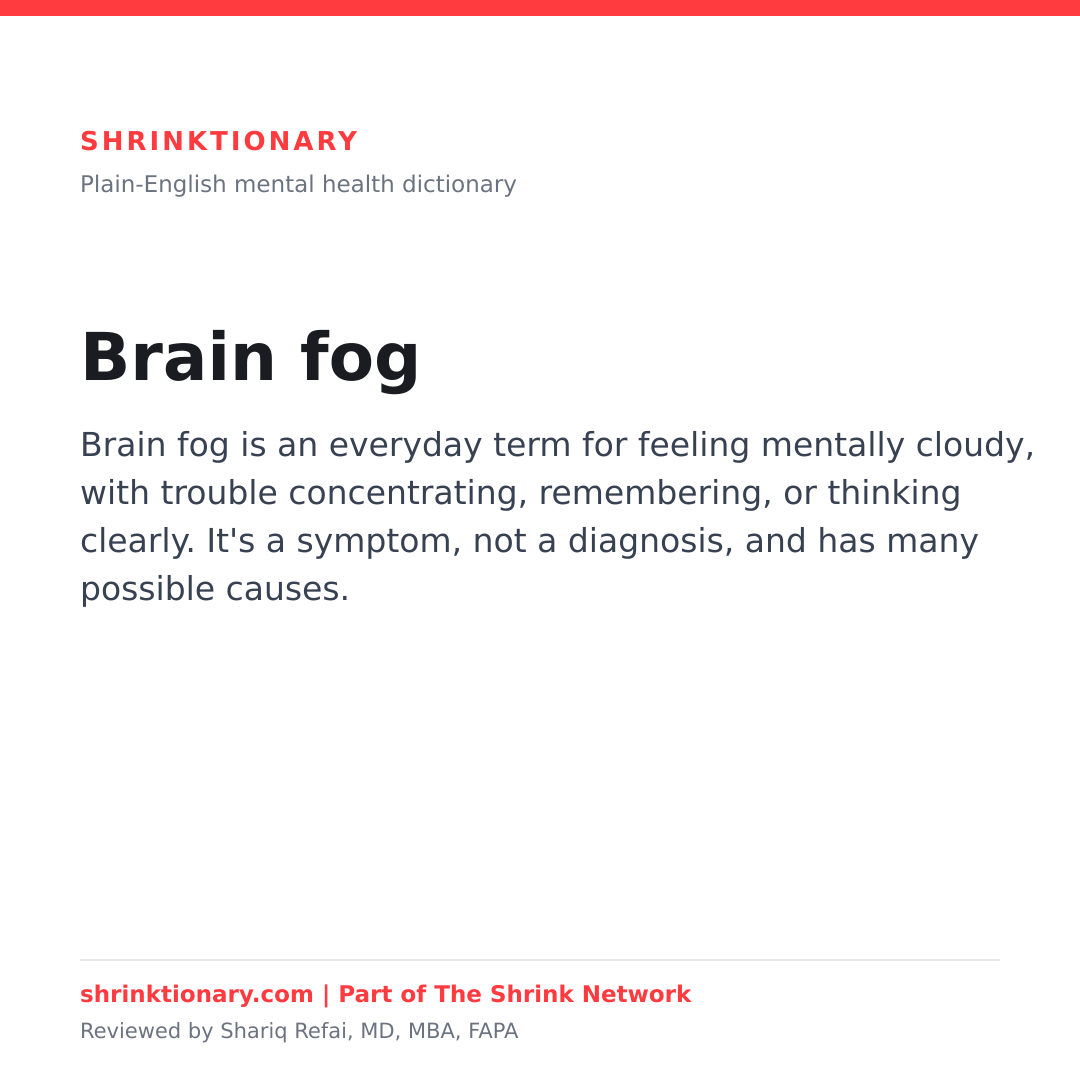
Brain fog is an everyday term, not a formal medical diagnosis, for a feeling of mental cloudiness. People use it to describe trouble concentrating, slowed thinking, forgetfulness, and a sense that the mind just isn’t as sharp as usual. Because it’s a description rather than a diagnosis, clinicians treat it as a symptom and look for what might be causing it.
The causes are wide-ranging. Brain fog is commonly linked to poor sleep, stress, depression, and anxiety, where worry and low mood can crowd out clear thinking. It can also follow physical illnesses and their recovery, hormonal changes, certain medications, and conditions affecting the thyroid or other body systems. Often more than one factor is involved at once.
Although the term sounds vague, the experience is real and can have a noticeable effect on work, study, and daily routines.
What brain fog can feel like
People often describe feeling fuzzy, scattered, or like their thoughts are moving through mud. Finding the right word, holding a train of thought, or remembering why they walked into a room can suddenly feel harder than it should.
It can take more effort to focus, follow conversations, or finish tasks, and mistakes may creep in. Many people find this frustrating or worrying, especially when it interferes with things they normally handle with ease. Tiredness and low motivation often ride along with the mental cloudiness, which can make the whole experience feel heavier.
What brain fog isn’t
Brain fog isn’t a specific disease, and it isn’t a sign that a person is losing their intelligence. It’s a signal that something, often sleep, stress, mood, or a physical issue, is affecting how clearly the mind is working.
It also isn’t usually permanent. When the underlying cause is addressed, whether that’s improving sleep, treating depression or anxiety, or managing a medical condition, the fog often lifts. Treating it as a clue rather than a personal failing tends to be more helpful.
Related terms you’ll see next
Fatigue frequently goes hand in hand with brain fog. Depression can cause trouble with concentration and memory. Anxiety can crowd out clear thinking with worry. Working memory is the mental workspace that often feels overloaded when someone has brain fog.
When to seek professional care
If brain fog is persistent, getting worse, or interfering with daily life, it’s worth talking with a clinician, who can look for causes such as sleep problems, mood or anxiety conditions, or medical issues. Sudden confusion, memory loss, or fog that comes with other concerning symptoms should be checked promptly. If brain fog comes with low mood, hopelessness, or thoughts of suicide or self-harm, seek help right away. In the United States, you can call or text 988.
When this word matters
It's worth looking into when the cloudiness sticks around or interferes with work, study, or daily routines, since it's a symptom with many possible causes rather than a diagnosis on its own. Sleep loss, stress, depression, anxiety, medications, and physical illness can all feed it.
Commonly confused with
Frequently asked questions
What is brain fog?
Brain fog is an everyday term, not a formal diagnosis, for a feeling of mental cloudiness with trouble concentrating, slowed thinking, and forgetfulness. Clinicians treat it as a symptom and look for what might be causing it.
What causes brain fog?
The causes are wide-ranging and often overlap, including poor sleep, stress, depression, and anxiety, as well as physical illness and recovery, hormonal changes, certain medications, and thyroid or other body issues.
Is brain fog permanent?
It usually isn't. When the underlying cause is addressed, such as improving sleep or treating depression or anxiety, the fog often lifts. It also isn't a sign that someone is losing their intelligence.
Related terms
Sources
- Memory , MedlinePlus
- Mental Health Information , National Institute of Mental Health
Use or cite this definition
Free to reuse with attribution. Paste the block into your own page, or grab a citation.
Embed on your site
<blockquote>
<p><strong>Brain fog:</strong> Brain fog is an everyday term for feeling mentally cloudy, with trouble concentrating, remembering, or thinking clearly. It's a symptom, not a diagnosis, and has many possible causes.</p>
<p>— <a href="https://shrinktionary.com/terms/brain-fog/">Shrinktionary</a>, a plain-English mental health dictionary, medically reviewed by a board certified psychiatrist.</p>
</blockquote>Cite (APA)
Refai, S. (2026). Brain fog. Shrinktionary. https://shrinktionary.com/terms/brain-fog/
Cite (MLA)
"Brain fog." Shrinktionary, https://shrinktionary.com/terms/brain-fog/. Accessed September 26, 2026.
Your next step in The Shrink Network
You are here: Shrinktionary, the language layer of The Shrink Network.
Each site in the network has one job. No matter where you enter, we help you find the next step that makes sense.
Want to understand more first?
See how this connects to everything else in the Term Web →
Take it with you
Free printable references you can save or share. For education, not medical advice.