What avolition actually is
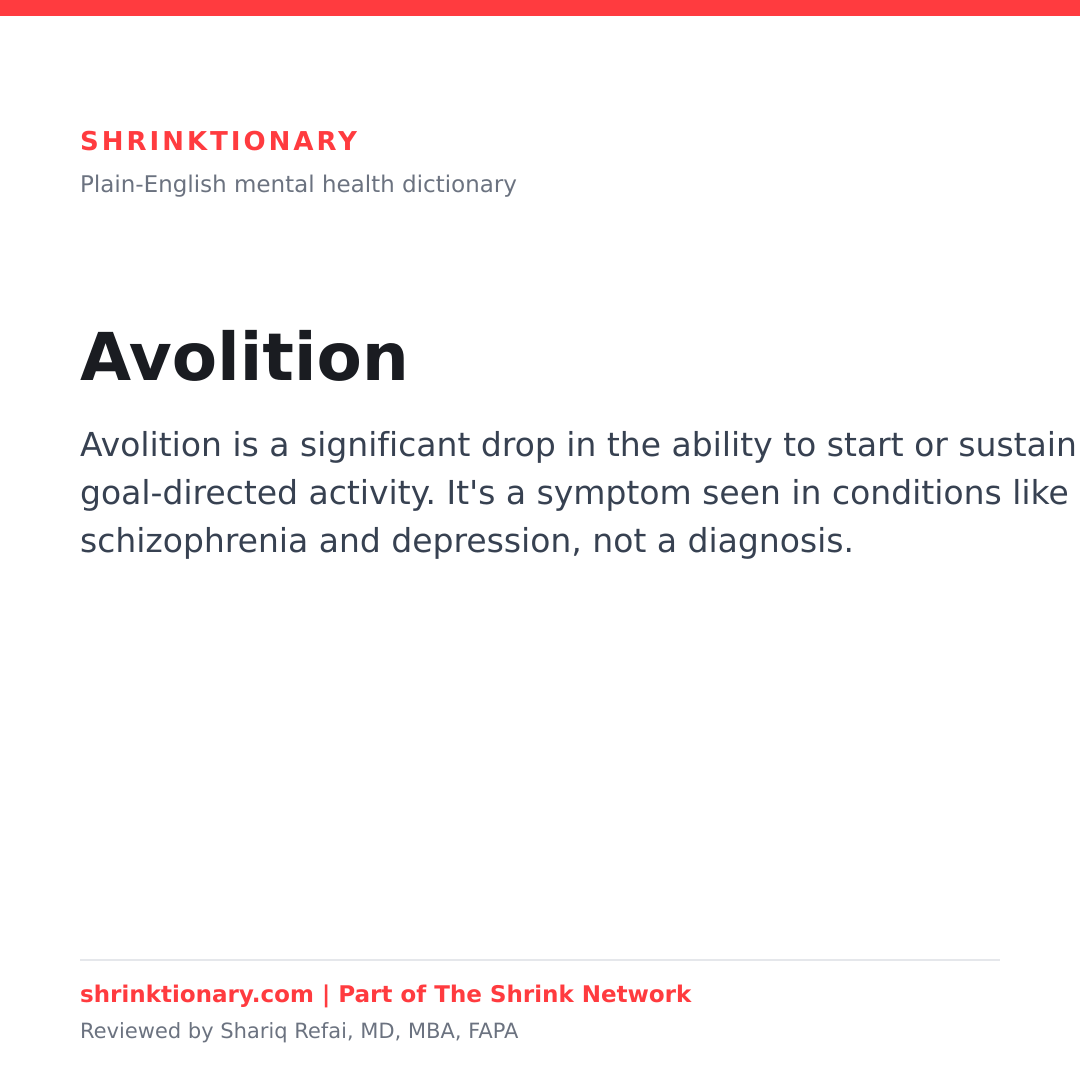
Avolition is a marked reduction in the ability to begin and keep up with purposeful, goal-directed activity. It’s more than feeling unmotivated on a slow day. With avolition, the drive to start tasks, follow through, and pursue goals is significantly diminished, often to the point that everyday responsibilities and self-care slip. The wish to do things may still flicker, but the engine that turns intention into action runs low.
It’s a symptom rather than a diagnosis. Avolition is one of the negative symptoms of schizophrenia, meaning it reflects a reduction in normal functioning. It also appears in severe depression, in some other psychotic and mood disorders, and at times as a feature of certain neurological conditions. Because the same outward picture can come from different causes, clinicians treat avolition as a sign to investigate rather than a label by itself.
What avolition can look like
In daily life, avolition can look like a person sitting for long stretches without starting anything, letting tasks pile up not out of defiance but because initiating them feels nearly impossible. Hygiene, chores, schoolwork, and job duties may all suffer. Plans get made and then never started. Activities that once filled the day quietly drop away.
From the outside, this is easy to misread as laziness or not caring. From the inside, people often describe knowing what they should do and feeling unable to get moving, as though the usual sense of drive has gone quiet. Avolition frequently travels with other symptoms, such as reduced pleasure or reduced speech, and together they can make daily functioning hard. The reduction is in the capacity to act, not in a person’s underlying values or worth.
What avolition isn’t
It isn’t laziness, a weak character, or a refusal to try. The difficulty lies in the systems that generate drive and follow-through, not in a person’s effort or intentions. It also isn’t simple procrastination, which most people push through eventually. Avolition is broader and more persistent.
It isn’t a standalone diagnosis either. The same reduced drive can stem from depression, schizophrenia, a medication effect, or another condition, and identifying the cause is what guides the right support.
Related terms you’ll see next
Motivation is the drive that’s reduced when avolition is present. Anhedonia, the loss of pleasure, often appears alongside it and can feed into it. Flat affect and alogia are other negative symptoms commonly discussed with avolition in conditions like schizophrenia.
When to seek professional care
A lasting, significant drop in the ability to start or finish everyday activities is worth a professional evaluation, particularly when self-care and responsibilities are slipping. Avolition can point to depression, a psychotic disorder, or another condition, and the right treatment depends on the cause. If the loss of drive has persisted, is interfering with daily life, or comes with other symptoms such as low mood, withdrawal, or reduced speech, a clinician can help clarify what’s behind it and what support fits.
When this word matters
It matters when a lasting, significant drop in the ability to start or finish everyday activities causes self-care and responsibilities to slip. Avolition can point to depression, a psychotic disorder, or another condition, and identifying the cause is what guides the right treatment.
Commonly confused with
Frequently asked questions
What is avolition?
Avolition is a marked reduction in the ability to begin and keep up with purposeful, goal-directed activity. It's more than feeling unmotivated on a slow day. The drive to start tasks, follow through, and pursue goals is significantly diminished, often to the point that responsibilities and self-care slip.
Is avolition the same as laziness?
No. The difficulty lies in the systems that generate drive and follow-through, not in a person's effort or intentions. People often know what they should do and feel unable to get moving, as though the usual sense of drive has gone quiet.
What conditions involve avolition?
It's one of the negative symptoms of schizophrenia and also appears in severe depression, in some other psychotic and mood disorders, and at times with certain neurological conditions. Identifying the cause is what guides the right support.
Related terms
Sources
- Schizophrenia , National Institute of Mental Health
- Schizophrenia , StatPearls, NCBI Bookshelf
Use or cite this definition
Free to reuse with attribution. Paste the block into your own page, or grab a citation.
Embed on your site
<blockquote>
<p><strong>Avolition:</strong> Avolition is a significant drop in the ability to start or sustain goal-directed activity. It's a symptom seen in conditions like schizophrenia and depression, not a diagnosis.</p>
<p>— <a href="https://shrinktionary.com/terms/avolition/">Shrinktionary</a>, a plain-English mental health dictionary, medically reviewed by a board certified psychiatrist.</p>
</blockquote>Cite (APA)
Refai, S. (2026). Avolition. Shrinktionary. https://shrinktionary.com/terms/avolition/
Cite (MLA)
"Avolition." Shrinktionary, https://shrinktionary.com/terms/avolition/. Accessed September 26, 2026.
Your next step in The Shrink Network
You are here: Shrinktionary, the language layer of The Shrink Network.
Each site in the network has one job. No matter where you enter, we help you find the next step that makes sense.
Want to understand more first?
See how this connects to everything else in the Term Web →
Take it with you
Free printable references you can save or share. For education, not medical advice.