What Mania actually is
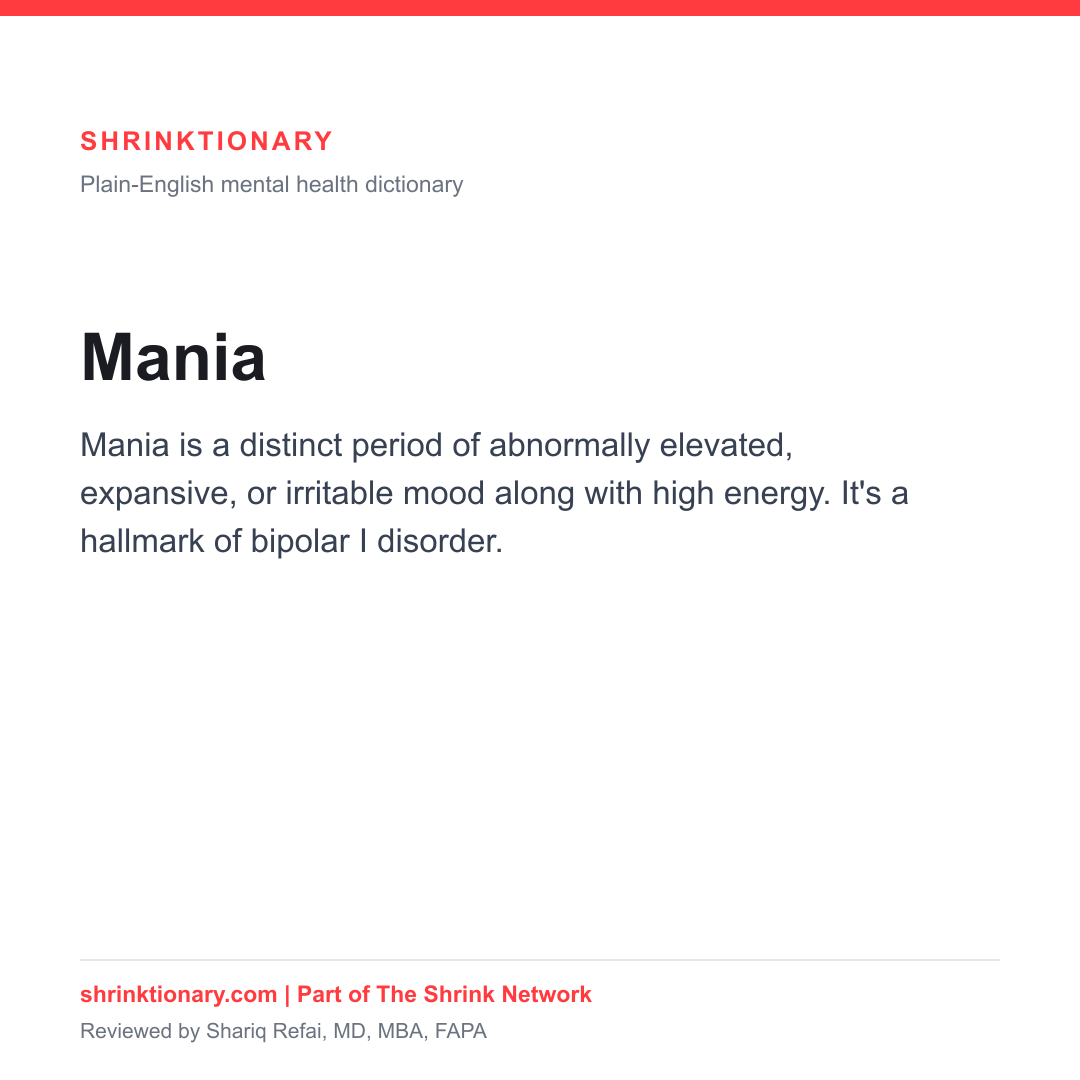
Mania is a period of unusually high or irritable mood paired with a big jump in energy and activity. To count as a manic episode, this state lasts at least a week, or shorter if it’s severe enough to need hospital care, and it’s a clear change from how the person normally is.
Mania is the defining feature of bipolar I disorder. During a manic episode, the brain runs at a faster pace. Thoughts speed up, the need for sleep drops, and a person may take on far more than usual. It isn’t simply being in a good mood. It’s a state intense enough to interfere with work, relationships, and safety.
What Mania can feel like
In the moment, mania can feel powerful and even pleasant. People may feel on top of the world, full of ideas, and convinced they can do anything. Speech can come fast, jumping from topic to topic. Sleep can drop to a few hours without feeling tired.
It can also feel uncomfortable, with intense irritability, restlessness, and a sense of being unable to slow down. Mania often leads to risky choices, like overspending, impulsive decisions, or actions a person wouldn’t normally take. In severe episodes, a person may lose touch with reality and have delusions or hallucinations.
What Mania isn’t
It isn’t the same as being happy, productive, or excited about something good. Those feelings are part of normal life. Mania is more extreme, lasts longer, and brings clear problems with sleep, judgment, and daily functioning.
It also isn’t a personality flaw or a lack of willpower. Mania is a medical state tied to bipolar disorder, and it responds to treatment.
Related terms you’ll see next
When to seek professional care
Mania needs medical attention, and the sooner the better. If you or someone you care about is sleeping very little, acting far outside their usual self, or making risky decisions during a high-energy period, reach out to a mental health professional or doctor.
If there’s any immediate danger to safety, call 911 or go to the nearest emergency room. In the US, you can also call or text 988 any time to reach the Suicide and Crisis Lifeline. Treatment for mania, often including mood stabilizers, can help bring the episode under control and prevent future ones.
When this word matters
Mania is the defining feature of bipolar I disorder and needs medical attention when a high or irritable mood with surging energy lasts at least a week and disrupts work, relationships, or safety. Severe episodes can involve delusions or hallucinations.
Commonly confused with
Frequently asked questions
How long does a manic episode last?
To count as a manic episode, the state lasts at least a week, or shorter if it's severe enough to need hospital care, and it's a clear change from how the person normally is.
What does mania feel like?
It can feel powerful and even pleasant, with a sense of being on top of the world, full of ideas, and needing little sleep. It can also feel uncomfortable, with intense irritability and restlessness, and in severe episodes a person may lose touch with reality.
Is mania just being in a good mood?
No. Mania is more extreme, lasts longer, and brings clear problems with sleep, judgment, and daily functioning. It's a medical state tied to bipolar disorder, not a personality flaw.
Related terms
In these language clusters
Compare
Sources
- Bipolar Disorder , National Institute of Mental Health
- Bipolar Disorder , MedlinePlus
Use or cite this definition
Free to reuse with attribution. Paste the block into your own page, or grab a citation.
Embed on your site
<blockquote>
<p><strong>Mania:</strong> Mania is a distinct period of abnormally elevated, expansive, or irritable mood along with high energy. It's a hallmark of bipolar I disorder.</p>
<p>— <a href="https://shrinktionary.com/terms/mania/">Shrinktionary</a>, a plain-English mental health dictionary, medically reviewed by a board certified psychiatrist.</p>
</blockquote>Cite (APA)
Refai, S. (2026). Mania. Shrinktionary. https://shrinktionary.com/terms/mania/
Cite (MLA)
"Mania." Shrinktionary, https://shrinktionary.com/terms/mania/. Accessed September 26, 2026.
Your next step in The Shrink Network
You are here: Shrinktionary, the language layer of The Shrink Network.
Each site in the network has one job. No matter where you enter, we help you find the next step that makes sense.
Want to understand more first?
See how this connects to everything else in the Term Web →
Take it with you
Free printable references you can save or share. For education, not medical advice.