What lithium actually is
Lithium is a mood stabilizer and one of the oldest and most studied treatments for bipolar disorder. It’s actually a natural element, a simple metal that, in medication form, helps even out the highs and lows of bipolar episodes. It can treat mania, help with bipolar depression, and lower the chance of future episodes when taken steadily over time.
Lithium also stands out for its long track record in reducing suicide risk among people with bipolar disorder, which is part of why it remains a cornerstone treatment despite newer options. It works differently from antidepressants and antipsychotics, and a prescriber decides whether it fits a person’s pattern of illness and overall health.
What to expect
Lithium works gradually. Some benefit can show during an acute episode, but the steadier, protective effect builds over weeks of consistent use. Because the helpful range and the unsafe range sit fairly close together, lithium needs regular blood tests to keep the level where it should be.
Those checks also keep an eye on the kidneys and thyroid, which lithium can affect over time. Staying well hydrated and steady with salt and fluids matters, since dehydration can push lithium levels up. This is very much a partnership with a prescriber. People should never raise, lower, or stop lithium on their own, and stopping suddenly can trigger a relapse. Any change goes through the prescriber.
What lithium isn’t
Lithium isn’t a sedative, and it isn’t meant to flatten a person’s personality. When it’s working, it tends to make moods steadier rather than blunted.
It also isn’t an old, outdated drug just because it’s been around a long time. Its long history is part of its strength. And it isn’t a set-it-and-forget-it medication. The monitoring is part of using it safely, not a sign that something’s wrong.
Related terms you’ll see next
When to seek professional care
Anyone with bipolar disorder, or with mood swings that disrupt sleep, energy, and daily life, should work with a doctor or mental health professional to find the right treatment. A prescriber can decide whether lithium fits and handle the blood tests it needs. Signs of a high lithium level, like severe tremor, confusion, vomiting, or unsteadiness, need prompt medical attention. If a person has thoughts of harming themselves, get help right away by calling 911, or call or text 988 in the US to reach the Suicide and Crisis Lifeline.
When this word matters
Lithium matters as a mood stabilizer for bipolar disorder, treating mania, helping with bipolar depression, and lowering the chance of future episodes and suicide risk over time. It needs regular blood tests because the helpful and unsafe ranges sit close together.
Commonly confused with
Frequently asked questions
Why does lithium need regular blood tests?
The helpful range and the unsafe range sit fairly close together, so regular blood tests keep the level where it should be. The checks also keep an eye on the kidneys and thyroid, which lithium can affect over time.
How long does lithium take to work?
Lithium works gradually. Some benefit can show during an acute episode, but the steadier, protective effect builds over weeks of consistent use.
Can I stop taking lithium on my own?
No. People should never raise, lower, or stop lithium on their own, and stopping suddenly can trigger a relapse. Any change goes through the prescriber.
Related terms
In these language clusters
Sources
- Mental Health Medications , National Institute of Mental Health
- Bipolar Disorder , National Institute of Mental Health
Use or cite this definition
Free to reuse with attribution. Paste the block into your own page, or grab a citation.
Embed on your site
<blockquote>
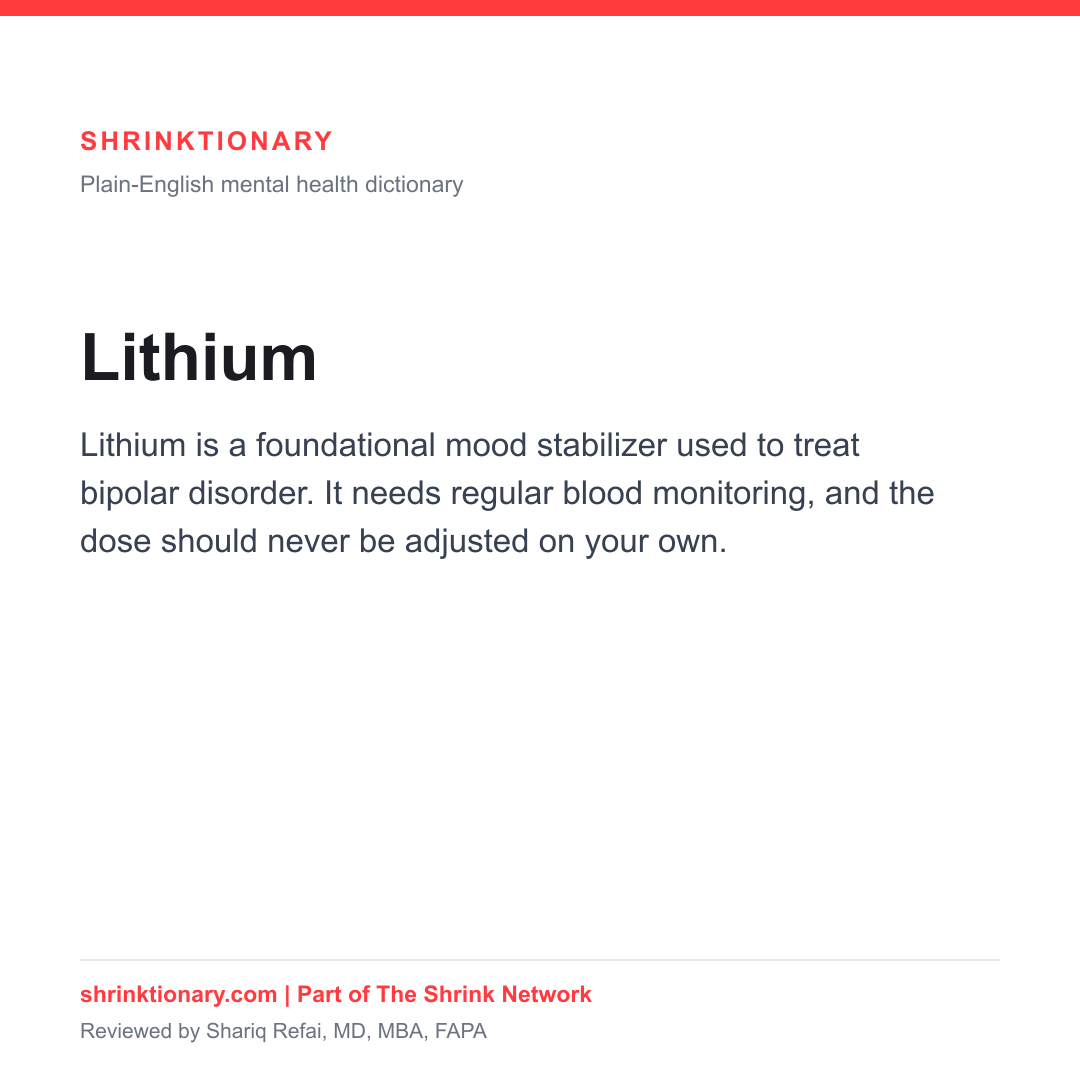
<p><strong>Lithium:</strong> Lithium is a foundational mood stabilizer used to treat bipolar disorder. It needs regular blood monitoring, and the dose should never be adjusted on your own.</p>
<p>— <a href="https://shrinktionary.com/terms/lithium/">Shrinktionary</a>, a plain-English mental health dictionary, medically reviewed by a board certified psychiatrist.</p>
</blockquote>Cite (APA)
Refai, S. (2026). Lithium. Shrinktionary. https://shrinktionary.com/terms/lithium/
Cite (MLA)
"Lithium." Shrinktionary, https://shrinktionary.com/terms/lithium/. Accessed September 26, 2026.
Your next step in The Shrink Network
You are here: Shrinktionary, the language layer of The Shrink Network.
Each site in the network has one job. No matter where you enter, we help you find the next step that makes sense.
Want to understand more first?
See how this connects to everything else in the Term Web →
Take it with you
Free printable references you can save or share. For education, not medical advice.