What relapse actually is
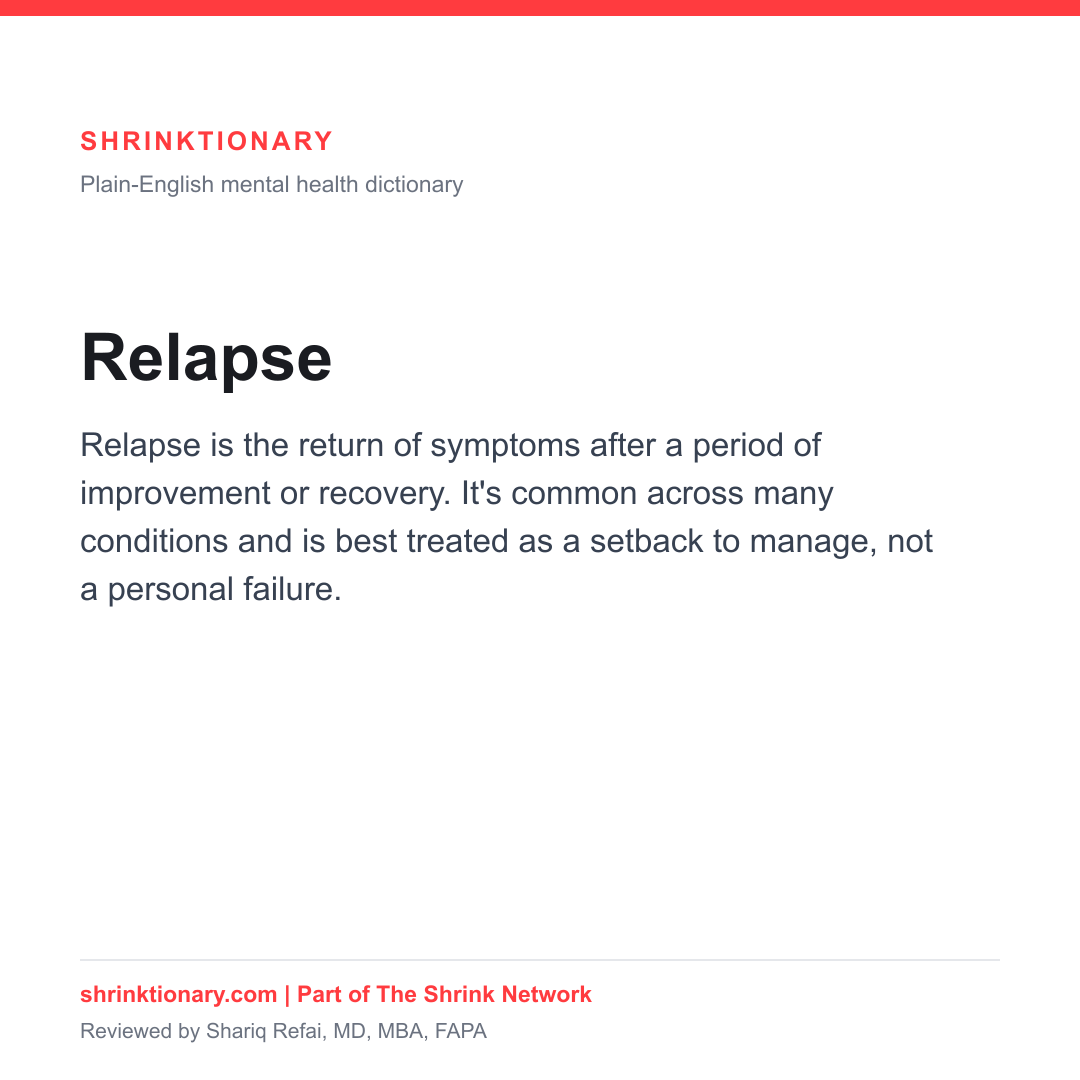
Relapse is the return of symptoms after someone has improved or recovered. A person who reached remission from depression and then sees the old symptoms come back is experiencing a relapse. It can be gradual, building up over weeks, or it can come on more quickly.
Relapse is a normal part of how many mental health conditions behave. Some conditions tend to come and go in episodes, so a return of symptoms is more about the nature of the illness than about anything a person did wrong. Recognizing this helps separate a relapse from a judgment about character or effort.
Why relapse matters
Relapse matters because catching it early usually makes it easier to manage. Many people learn their own warning signs, the small shifts that tend to show up before a full return. Those can include changes in sleep, pulling back from people, losing interest in usual activities, or the return of a familiar thought pattern. Spotting these early gives a person and their clinician a chance to adjust care before symptoms take hold.
A few patterns raise relapse risk. Stopping medication suddenly is a common one, which is why prescribers usually taper rather than cut off treatment. Major stress, poor sleep, substance use, and dropping the routines that were helping can all play a part. Prevention often comes down to staying with a working plan, keeping follow-up appointments, and having a clear idea of what to do if early signs appear.
What relapse isn’t
Relapse isn’t a failure. It doesn’t mean treatment didn’t work or that a person didn’t try hard enough. For conditions that run in episodes, a relapse can happen even when someone is doing everything right.
It also isn’t necessarily a return to square one. A relapse caught early and treated promptly is often shorter and less severe than the first episode, especially when a person already knows what helps.
Related terms you’ll see next
Remission is the period of improvement that a relapse interrupts. Prognosis includes the likelihood of relapse over time. Discontinuation syndrome is a separate issue tied to stopping medication and is sometimes confused with relapse.
Where you’ll see it
You’ll hear about relapse most when planning how to stay well after symptoms improve. It helps to know your own early warning signs and to have a simple plan for what to do if they appear, including who to contact. If symptoms return, reaching out sooner rather than later usually makes them easier to turn around.
When this word matters
It matters because a relapse is the return of symptoms after improvement, and catching it early through personal warning signs usually makes it easier to manage. It's best treated as a setback to handle with a clinician, not a personal failure, and recognizing the difference from a brief slip can change how care is adjusted.
Commonly confused with
Frequently asked questions
Does a relapse mean treatment failed?
No. A relapse isn't a failure and doesn't mean a person didn't try hard enough, since many conditions run in episodes where symptoms can return even when someone is doing everything right.
What are the warning signs of a relapse?
Many people learn their own early warning signs, which can include changes in sleep, pulling back from people, losing interest in usual activities, or the return of a familiar thought pattern. Spotting these early gives you and your clinician a chance to adjust care before symptoms take hold.
What raises the risk of relapse?
Stopping medication suddenly is a common trigger, which is why prescribers usually taper rather than cut off treatment. Major stress, poor sleep, substance use, and dropping helpful routines can also play a part.
Related terms
Sources
- Mental Health Topics , National Institute of Mental Health
- Mental Health Medications , National Institute of Mental Health
Use or cite this definition
Free to reuse with attribution. Paste the block into your own page, or grab a citation.
Embed on your site
<blockquote>
<p><strong>Relapse:</strong> Relapse is the return of symptoms after a period of improvement or recovery. It's common across many conditions and is best treated as a setback to manage, not a personal failure.</p>
<p>— <a href="https://shrinktionary.com/terms/relapse/">Shrinktionary</a>, a plain-English mental health dictionary, medically reviewed by a board certified psychiatrist.</p>
</blockquote>Cite (APA)
Refai, S. (2026). Relapse. Shrinktionary. https://shrinktionary.com/terms/relapse/
Cite (MLA)
"Relapse." Shrinktionary, https://shrinktionary.com/terms/relapse/. Accessed September 26, 2026.
Your next step in The Shrink Network
You are here: Shrinktionary, the language layer of The Shrink Network.
Each site in the network has one job. No matter where you enter, we help you find the next step that makes sense.
Want to understand more first?
See how this connects to everything else in the Term Web →
Take it with you
Free printable references you can save or share. For education, not medical advice.