What schizoaffective disorder actually is
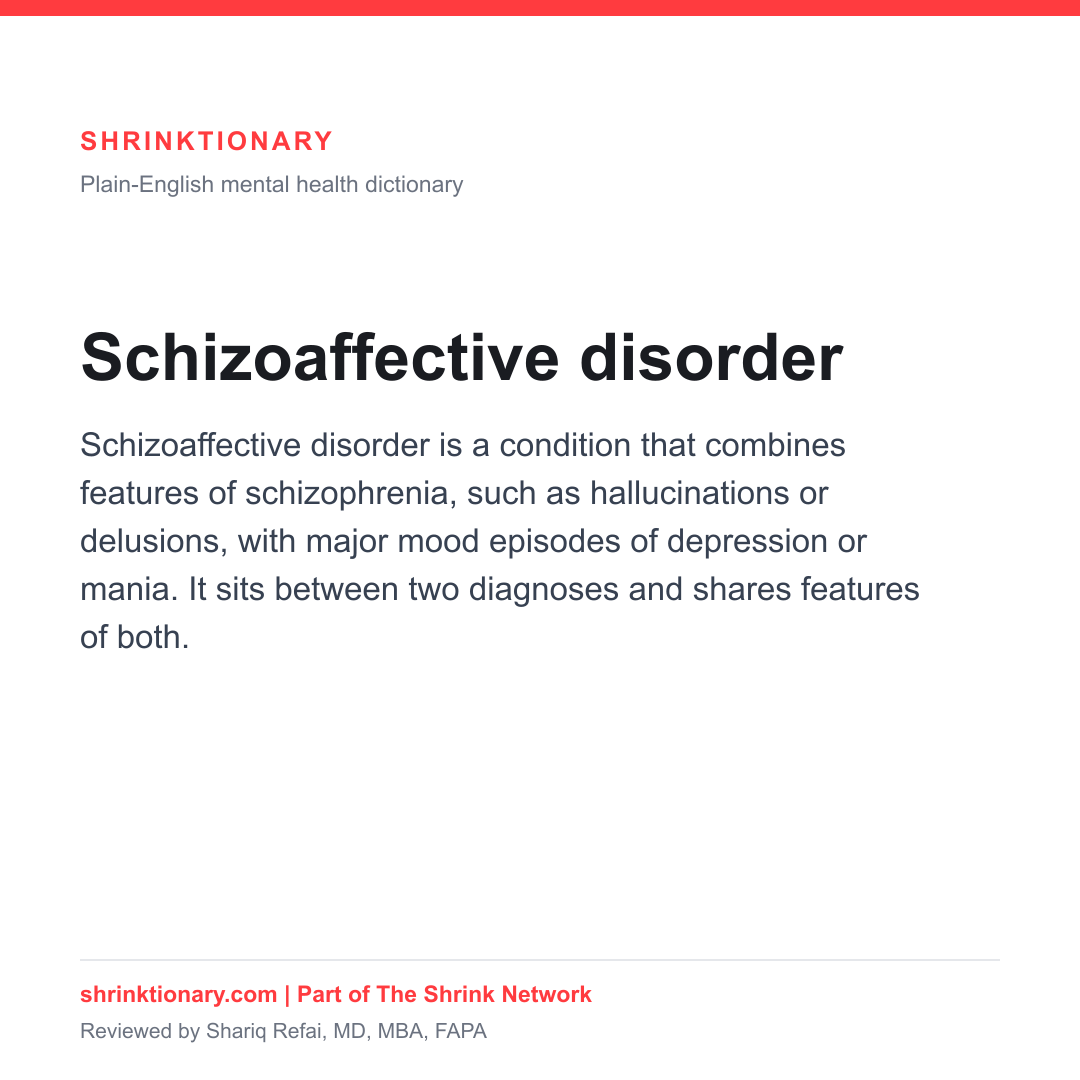
Schizoaffective disorder is a condition that blends two kinds of symptoms. On one side are features of psychosis, like hallucinations or delusions, which are also seen in schizophrenia. On the other are major mood episodes, meaning periods of depression or mania. To fit this diagnosis, a person has psychotic symptoms even during stretches when their mood is stable, which is part of what separates it from a mood disorder alone.
Because it sits between schizophrenia and mood disorders, it can be tricky to diagnose, and the diagnosis sometimes becomes clearer over time. Clinicians describe it as having either a bipolar type, with manic episodes, or a depressive type, with depression only.
How schizoaffective disorder shows up
The picture can shift over time. During a psychotic phase, a person might hear voices, hold beliefs that aren’t grounded in reality, or have disorganized thinking. During mood episodes, they might feel deeply depressed, or unusually energized and elevated in the case of mania.
Between episodes, some psychotic symptoms can linger even when mood feels steadier. Day to day, this can affect concentration, sleep, motivation, and the ability to keep up with work, school, or relationships. The mix and timing of symptoms looks different from one person to the next.
What schizoaffective disorder isn’t
It isn’t the same as schizophrenia, even though they share psychotic features, because schizoaffective disorder includes significant mood episodes as a core part of the picture. It also isn’t the same as bipolar disorder or major depression with psychotic features, where the psychosis happens only during mood episodes rather than on its own.
It isn’t a “split personality” either, despite the common mix-up. That idea belongs to a different and rare condition. Schizoaffective disorder is a treatable brain-based condition, not a character flaw.
Related terms you’ll see next
When to seek professional care
Anyone experiencing hallucinations, delusions, or severe mood changes should be evaluated by a mental health professional, ideally sooner rather than later. Treatment usually combines medication with therapy and support, and getting care early can make a real difference. If there are thoughts of suicide or anyone is in danger, contact emergency services or a crisis line right away.
When evaluation may help
Not everyone reading about schizoaffective disorder needs treatment. If it's getting in the way of your day, your sleep, your work, or your relationships, or if it isn't easing on its own, a professional evaluation is a reasonable next step. Most people start with their primary care doctor or a therapist. A psychiatrist is the right call when medication may be involved or the picture is complicated, though waits can be long.
We keep an honest, no-commission rundown of the options, from primary care to telepsychiatry to crisis lines, on one page.
If you're in crisis or thinking about suicide, call or text 988 in the US, or go to the nearest emergency room.
When this word matters
The distinction matters because schizoaffective disorder requires psychotic symptoms even during stretches when mood is stable, which is what separates it from a mood disorder with psychosis. It sits between schizophrenia and the mood disorders and shares features of both, so the diagnosis often takes time to clarify.
Commonly confused with
Frequently asked questions
What is schizoaffective disorder?
Schizoaffective disorder is a condition that combines features of psychosis, like hallucinations or delusions, with major mood episodes of depression or mania. To fit the diagnosis, a person has psychotic symptoms even during stretches when their mood is stable.
How is schizoaffective disorder different from schizophrenia or bipolar disorder?
Unlike schizophrenia, it includes significant mood episodes as a core part of the picture. Unlike bipolar disorder or major depression with psychotic features, the psychosis can occur on its own rather than only during mood episodes.
Is schizoaffective disorder the same as split personality?
No, despite a common mix-up, it isn't a split personality, which belongs to a different and rare condition. Schizoaffective disorder is a treatable brain-based condition, not a character flaw.
Related terms
In these language clusters
Sources
- Schizophrenia , National Institute of Mental Health
- Schizoaffective Disorder , MedlinePlus
Use or cite this definition
Free to reuse with attribution. Paste the block into your own page, or grab a citation.
Embed on your site
<blockquote>
<p><strong>Schizoaffective disorder:</strong> Schizoaffective disorder is a condition that combines features of schizophrenia, such as hallucinations or delusions, with major mood episodes of depression or mania. It sits between two diagnoses and shares features of both.</p>
<p>— <a href="https://shrinktionary.com/terms/schizoaffective-disorder/">Shrinktionary</a>, a plain-English mental health dictionary, medically reviewed by a board certified psychiatrist.</p>
</blockquote>Cite (APA)
Refai, S. (2026). Schizoaffective disorder. Shrinktionary. https://shrinktionary.com/terms/schizoaffective-disorder/
Cite (MLA)
"Schizoaffective disorder." Shrinktionary, https://shrinktionary.com/terms/schizoaffective-disorder/. Accessed September 26, 2026.
Your next step in The Shrink Network
You are here: Shrinktionary, the language layer of The Shrink Network.
Each site in the network has one job. No matter where you enter, we help you find the next step that makes sense.
Want to understand more first?
See how this connects to everything else in the Term Web →
Take it with you
Free printable references you can save or share. For education, not medical advice.