What Paranoia actually is
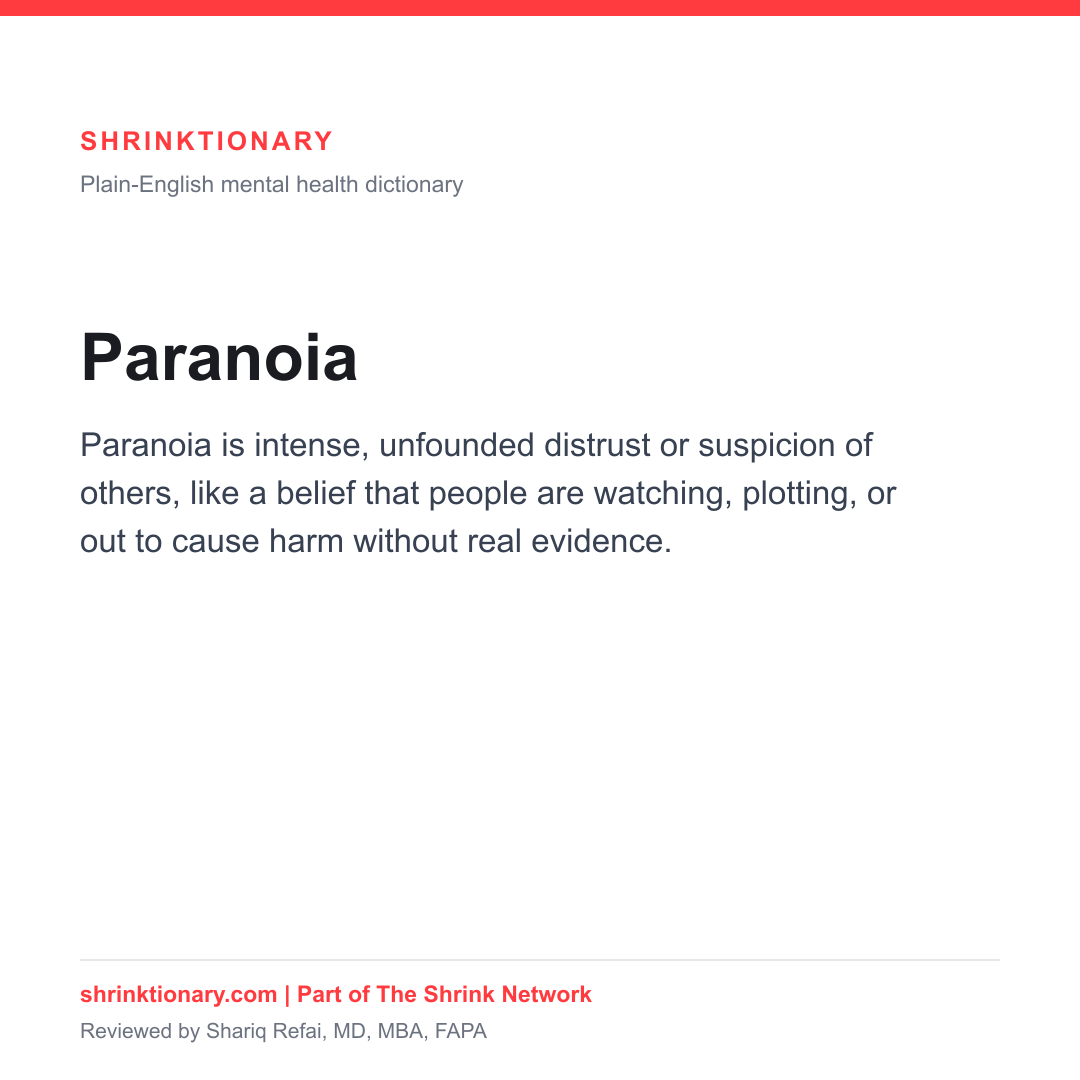
Paranoia is a strong feeling of distrust or suspicion toward other people that isn’t backed up by evidence. A person experiencing paranoia may believe others are watching them, talking about them, trying to harm them, or plotting against them, even when there’s no good reason to think so.
Paranoia exists on a range. Mild, passing suspicious thoughts are common and can show up during stress, sleep loss, or after a difficult event. More intense and fixed paranoia can be a symptom of conditions like schizophrenia, bipolar disorder, or severe anxiety, and it can also occur with certain substances or medical issues.
What Paranoia can feel like
Paranoia can feel frightening and isolating. The world starts to seem unsafe, and ordinary events take on a threatening meaning. A glance from a stranger, a private conversation, or a delayed text might feel like proof that something is wrong.
People often feel on guard, tense, and unable to relax. They may pull away from others, avoid certain places, or check repeatedly for signs of danger. Because the fear feels so real, it can be hard to accept reassurance, even from people who are trusted.
What Paranoia isn’t
It isn’t the same as being cautious or having a reasonable concern. Healthy caution is based on real signals and adjusts when the facts change. Paranoia holds on even when the evidence points the other way.
It also isn’t a character flaw or something a person chooses. Paranoia is a symptom, not a decision, and it can be treated. When paranoia becomes a fixed false belief, it’s known as a delusion.
Related terms you’ll see next
When to seek professional care
If suspicious or fearful thoughts are taking over, making it hard to trust people, or interfering with daily life, it’s a good idea to talk with a mental health professional. Paranoia can be a symptom of a treatable condition, and getting evaluated is an important step.
If you or someone you know feels unsafe or is at risk of harm, call 911 or go to the nearest emergency room. In the US, you can also call or text 988 any time to reach the Suicide and Crisis Lifeline. Support is available, and paranoia often improves with the right treatment.
When this word matters
Suspicion crosses into clinically meaningful paranoia when distrust is intense, unfounded, and held despite evidence, which can appear in conditions like schizophrenia, severe mood episodes, or paranoid personality patterns.
Commonly confused with
Frequently asked questions
What is paranoia?
Paranoia is a strong feeling of distrust or suspicion toward other people that isn't backed up by evidence. A person may believe others are watching them, talking about them, or plotting against them even when there's no good reason to think so.
What is the difference between paranoia and being cautious?
Healthy caution is based on real signals and changes when the facts change. Paranoia holds on even when the evidence points the other way, and it can take over a person's thinking and daily life.
Is paranoia a sign of a mental health condition?
It can be. Mild, passing suspicious thoughts are common during stress or sleep loss, but more intense and fixed paranoia can be a symptom of conditions like schizophrenia, bipolar disorder, or severe anxiety. Paranoia is a treatable symptom, not a character flaw or a choice.
Related terms
In these language clusters
Sources
- Schizophrenia , National Institute of Mental Health
- Schizophrenia , MedlinePlus
Use or cite this definition
Free to reuse with attribution. Paste the block into your own page, or grab a citation.
Embed on your site
<blockquote>
<p><strong>Paranoia:</strong> Paranoia is intense, unfounded distrust or suspicion of others, like a belief that people are watching, plotting, or out to cause harm without real evidence.</p>
<p>— <a href="https://shrinktionary.com/terms/paranoia/">Shrinktionary</a>, a plain-English mental health dictionary, medically reviewed by a board certified psychiatrist.</p>
</blockquote>Cite (APA)
Refai, S. (2026). Paranoia. Shrinktionary. https://shrinktionary.com/terms/paranoia/
Cite (MLA)
"Paranoia." Shrinktionary, https://shrinktionary.com/terms/paranoia/. Accessed September 26, 2026.
Your next step in The Shrink Network
You are here: Shrinktionary, the language layer of The Shrink Network.
Each site in the network has one job. No matter where you enter, we help you find the next step that makes sense.
Want to understand more first?
See how this connects to everything else in the Term Web →
Take it with you
Free printable references you can save or share. For education, not medical advice.