What psychoeducation actually is
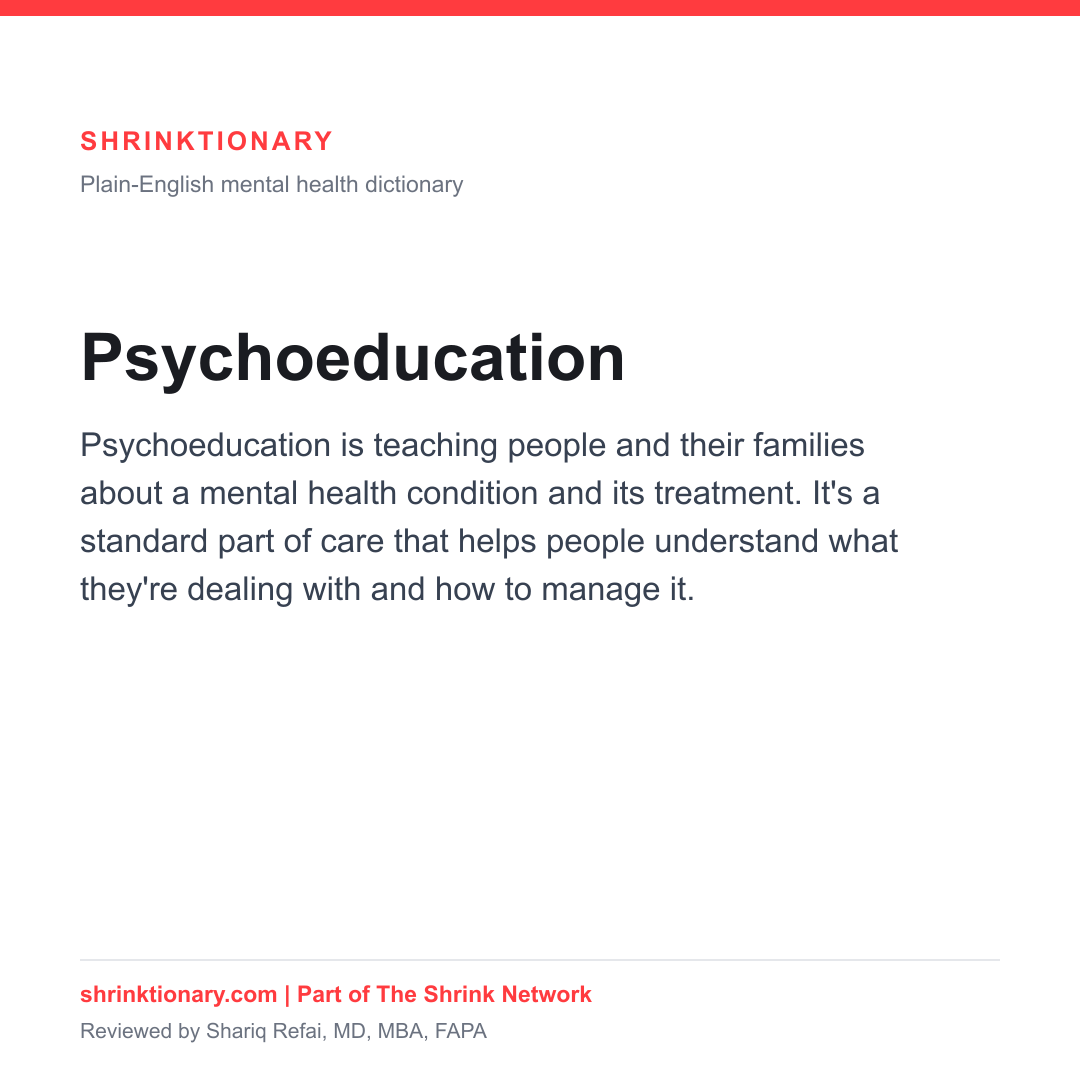
Psychoeducation is the part of treatment where a clinician explains a condition in plain terms. That means what it is, what causes it, what the symptoms mean, what treatment options exist, and what to expect over time. It’s usually delivered to the person being treated, and often to their family or close supports too.
It sounds simple, but it does real work. When someone understands that racing thoughts before a panic attack are a false alarm and not a heart problem, the fear loses some of its grip. When a family understands that a relative’s symptoms are part of an illness and not a character flaw, the home environment often gets calmer.
How psychoeducation works
Psychoeducation can happen in a one-on-one session, a structured class, a family meeting, or a printed handout. A clinician might walk a person through how their medication works, why finishing the full course matters, and which side effects are worth a phone call. For a condition like bipolar disorder, psychoeducation often covers how to spot early warning signs and what to do before a full episode takes hold.
The goal is to turn a confusing experience into something a person can recognize and respond to. People who understand their condition tend to stick with treatment more reliably, catch warning signs earlier, and feel more in control. For some conditions, structured psychoeducation has been shown to lower the chance of relapse, which is why it’s built into so many treatment plans rather than left to chance.
What psychoeducation isn’t
Psychoeducation isn’t a replacement for therapy or medication. It’s a foundation that makes the rest of treatment work better, not a standalone cure. It also isn’t a one-time lecture. Understanding usually builds across sessions as a person sees how the information applies to their own life.
It isn’t the same as searching symptoms online. Good psychoeducation comes from a trained clinician who tailors the information to the person in front of them and corrects the misunderstandings that unfiltered internet reading tends to create.
Related terms you’ll see next
Readers often move from psychoeducation to coping skills, to CBT, which builds education into its sessions, to group therapy, where education is often shared, and to relapse, which psychoeducation aims to prevent.
When to seek professional care
Anyone starting treatment for a mental health condition can ask their clinician for clear education about it, and families can ask to be included. If a diagnosis or treatment plan feels confusing, that’s a good reason to request a session focused on understanding it, since a person who understands their care is better equipped to follow it.
When this word matters
It matters as a standard, active part of care rather than a nice extra, because understanding a condition and its treatment can lower fear, calm the home environment, and help people spot early warning signs. It's easy to confuse with general therapy, but its specific job is teaching about the illness and how to manage it.
Commonly confused with
Frequently asked questions
What is psychoeducation?
Psychoeducation is the part of treatment where a clinician explains a condition in plain terms, including what it is, what causes it, what the symptoms mean, and what treatment options exist. It's usually given to the person being treated and often to their family or close supports too.
Does psychoeducation replace therapy or medication?
No. Psychoeducation isn't a standalone cure. It's a foundation that helps the rest of treatment work better, and for some conditions structured psychoeducation has been shown to lower the chance of relapse.
Is psychoeducation the same as searching symptoms online?
No. Good psychoeducation comes from a trained clinician who tailors the information to the person in front of them and corrects the misunderstandings that unfiltered internet reading tends to create.
Related terms
In these language clusters
Sources
- Psychotherapies , National Institute of Mental Health
- Mental Health , MedlinePlus
Use or cite this definition
Free to reuse with attribution. Paste the block into your own page, or grab a citation.
Embed on your site
<blockquote>
<p><strong>Psychoeducation:</strong> Psychoeducation is teaching people and their families about a mental health condition and its treatment. It's a standard part of care that helps people understand what they're dealing with and how to manage it.</p>
<p>— <a href="https://shrinktionary.com/terms/psychoeducation/">Shrinktionary</a>, a plain-English mental health dictionary, medically reviewed by a board certified psychiatrist.</p>
</blockquote>Cite (APA)
Refai, S. (2026). Psychoeducation. Shrinktionary. https://shrinktionary.com/terms/psychoeducation/
Cite (MLA)
"Psychoeducation." Shrinktionary, https://shrinktionary.com/terms/psychoeducation/. Accessed September 26, 2026.
Your next step in The Shrink Network
You are here: Shrinktionary, the language layer of The Shrink Network.
Each site in the network has one job. No matter where you enter, we help you find the next step that makes sense.
Want to understand more first?
See how this connects to everything else in the Term Web →
Take it with you
Free printable references you can save or share. For education, not medical advice.