What pressured speech actually is
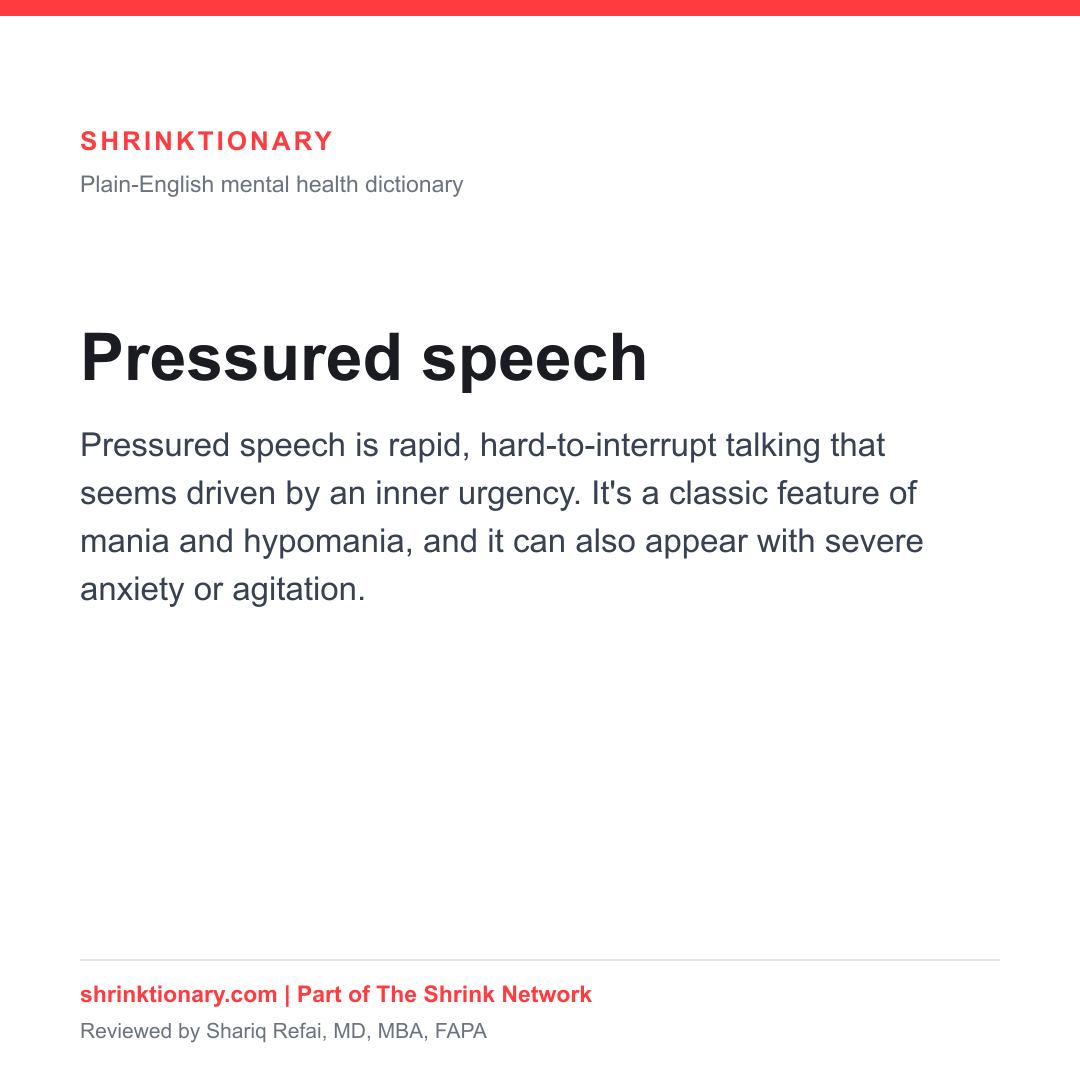
Pressured speech is speech that comes out fast, in large volume, and feels difficult to interrupt. The person seems pushed from the inside to keep talking, as if the words can’t come quickly enough. Clinicians describe it as speech that’s driven rather than chosen, with an urgency that overrides the normal back-and-forth of conversation.
It’s one of the most recognizable signs of a manic or hypomanic episode in bipolar disorder. During mania, thoughts often speed up, and pressured speech is partly the outward face of that internal acceleration. When racing thoughts pile up faster than they can be expressed, speech tends to spill out rapidly and run past the usual stopping points.
Pressured speech often travels with related features. Thoughts may jump from one idea to the next with loose connections, a pattern called flight of ideas. The volume may rise. The person may talk over others, struggle to wait their turn, or keep going long after the listener has tried to respond.
What pressured speech looks like
To a listener, pressured speech can feel like trying to merge into traffic that never slows. There’s no natural gap to step into. Questions get answered and then bypassed as the speaker rolls on to the next thought. Attempts to redirect the conversation tend to slide off.
The content can be hard to follow, not because any single sentence is wrong, but because the links between sentences move so quickly. Topics shift. Tangents open and rarely close. The overall impression is of momentum that the speaker can’t easily put the brakes on.
While pressured speech is most associated with mania and hypomania, it isn’t unique to them. It can show up in severe anxiety, in agitation, with stimulant use, and in some other conditions that raise arousal and speed up thinking. The surrounding signs help point to the cause.
What pressured speech isn’t
Pressured speech isn’t the same as simply being talkative, excited, or a fast talker by habit. Plenty of people speak quickly when enthusiastic and can still pause, listen, and yield the floor. The defining feature here is the sense of being driven, the difficulty interrupting, and usually a change from how the person normally communicates.
It also isn’t a character flaw or rudeness, even though it can feel that way to people on the receiving end. When pressured speech reflects mania or another condition, the urgency is part of the episode, not a deliberate disregard for others.
Related terms you’ll see next
Mania and hypomania are the states where pressured speech most often appears. Racing thoughts describe the accelerated thinking that frequently drives it. Psychomotor agitation is a related kind of revved-up physical restlessness that can show up at the same time.
When to seek professional care
Pressured speech that arrives as part of a broader change, such as needing little sleep, feeling unusually energized or invincible, spending impulsively, or having thoughts that race, deserves a prompt professional evaluation. Those features can signal a manic or hypomanic episode, which is treatable and benefits from early attention. If pressured speech comes with confusion, agitation, or thoughts of harm, it should be treated as urgent.
When this word matters
It matters when fast, hard-to-interrupt talking shows up as part of a broader change, such as needing little sleep, feeling unusually energized, or having thoughts that race. That pattern can signal a manic or hypomanic episode, which is treatable and benefits from prompt attention.
Commonly confused with
Frequently asked questions
What does pressured speech mean?
Pressured speech is rapid, high-volume talking that's hard to interrupt and feels driven by an inner urgency. The person seems pushed to keep talking, as if the words can't come quickly enough.
Is pressured speech a sign of bipolar disorder?
It's one of the most recognizable signs of a manic or hypomanic episode in bipolar disorder, often paired with racing thoughts. It can also appear with severe anxiety, agitation, or stimulant use, so context helps point to the cause.
How is pressured speech different from just being talkative?
Talkative people can pause, listen, and yield the floor. Pressured speech feels driven, is hard to interrupt, and is usually a change from how the person normally communicates rather than a longstanding habit.
Related terms
Sources
- Bipolar Disorder , National Institute of Mental Health
- Mania , StatPearls (NCBI Bookshelf)
Use or cite this definition
Free to reuse with attribution. Paste the block into your own page, or grab a citation.
Embed on your site
<blockquote>
<p><strong>Pressured speech:</strong> Pressured speech is rapid, hard-to-interrupt talking that seems driven by an inner urgency. It's a classic feature of mania and hypomania, and it can also appear with severe anxiety or agitation.</p>
<p>— <a href="https://shrinktionary.com/terms/pressured-speech/">Shrinktionary</a>, a plain-English mental health dictionary, medically reviewed by a board certified psychiatrist.</p>
</blockquote>Cite (APA)
Refai, S. (2026). Pressured speech. Shrinktionary. https://shrinktionary.com/terms/pressured-speech/
Cite (MLA)
"Pressured speech." Shrinktionary, https://shrinktionary.com/terms/pressured-speech/. Accessed September 29, 2026.
Your next step in The Shrink Network
You are here: Shrinktionary, the language layer of The Shrink Network.
Each site in the network has one job. No matter where you enter, we help you find the next step that makes sense.
Want to understand more first?
See how this connects to everything else in the Term Web →
Take it with you
Free printable references you can save or share. For education, not medical advice.