What motivational interviewing actually is
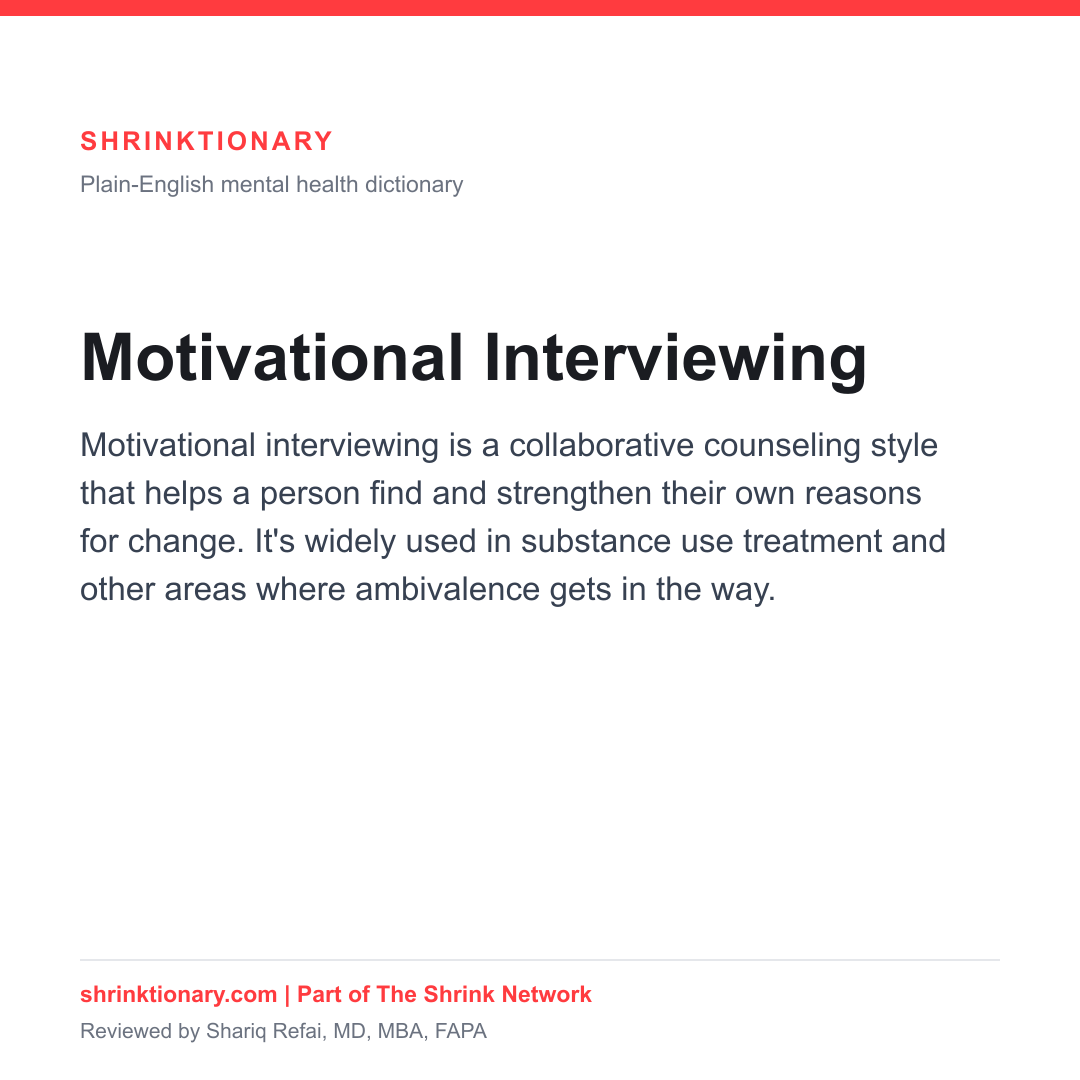
Motivational interviewing, often shortened to MI, is a way of talking with someone that helps them tap into their own motivation to change. It rests on a simple insight. People are far more likely to follow through on a change they’ve argued for themselves than on one someone else has pushed on them.
So instead of lecturing, warning, or persuading, the counselor draws out the person’s own reasons. The goal is to help someone resolve the mixed feelings, the “part of me wants to and part of me doesn’t,” that often keep them stuck.
What it looks like in practice
The counselor’s stance is curious and respectful rather than confrontational. They ask open questions, listen closely, and reflect back what they hear. When the person voices a reason for change, the counselor gently highlights it and explores it further.
A key move is rolling with resistance instead of arguing against it. If someone pushes back, the counselor doesn’t dig in. They stay alongside the person, which tends to lower defensiveness. MI is used a lot in substance use treatment, but it also helps with health behavior changes like managing a chronic illness, and it’s often used as a brief approach or as a lead-in to other treatment.
What it isn’t
MI isn’t a trick to manipulate someone into doing what the counselor wants. The spirit of it is genuine partnership, and that honesty is part of why it works. It also isn’t passive. The counselor is active and skilled, just not coercive.
And it isn’t a full treatment program by itself for every situation. MI often opens the door, helping someone get ready for change, after which other therapies or supports carry the work forward.
Related terms you’ll see next
When to seek professional care
If you’re on the fence about a change, like cutting back on drinking or sticking with a treatment plan, a counselor trained in MI can help you sort through the mixed feelings without pressure. If substance use is putting you or others at risk, reach out to a professional or a treatment service. And if you’re ever in crisis or having thoughts of harming yourself, contact a crisis line or emergency services right away.
When this word matters
Knowing the difference helps when someone feels torn about changing a behavior, because motivational interviewing is a specific counseling style for working through that ambivalence rather than a full course of therapy like CBT.
Commonly confused with
Frequently asked questions
What is motivational interviewing?
It's a collaborative counseling style that helps a person find and strengthen their own reasons for change. Instead of lecturing or persuading, the counselor draws out the person's own motivation.
What is motivational interviewing used for?
It's widely used in substance use treatment, but it also helps with health behavior changes like managing a chronic illness. It's often used as a brief approach or as a lead-in to other treatment.
Is motivational interviewing a way to manipulate someone?
No. The spirit of it is genuine partnership, and that honesty is part of why it works. The counselor is active and skilled but not coercive.
Related terms
In these language clusters
Sources
- Psychotherapies , National Institute of Mental Health
- Psychotherapy , American Psychiatric Association
Use or cite this definition
Free to reuse with attribution. Paste the block into your own page, or grab a citation.
Embed on your site
<blockquote>
<p><strong>Motivational Interviewing:</strong> Motivational interviewing is a collaborative counseling style that helps a person find and strengthen their own reasons for change. It's widely used in substance use treatment and other areas where ambivalence gets in the way.</p>
<p>— <a href="https://shrinktionary.com/terms/motivational-interviewing/">Shrinktionary</a>, a plain-English mental health dictionary, medically reviewed by a board certified psychiatrist.</p>
</blockquote>Cite (APA)
Refai, S. (2026). Motivational Interviewing. Shrinktionary. https://shrinktionary.com/terms/motivational-interviewing/
Cite (MLA)
"Motivational Interviewing." Shrinktionary, https://shrinktionary.com/terms/motivational-interviewing/. Accessed September 26, 2026.
Your next step in The Shrink Network
You are here: Shrinktionary, the language layer of The Shrink Network.
Each site in the network has one job. No matter where you enter, we help you find the next step that makes sense.
Want to understand more first?
See how this connects to everything else in the Term Web →
Take it with you
Free printable references you can save or share. For education, not medical advice.