What Depersonalization actually is
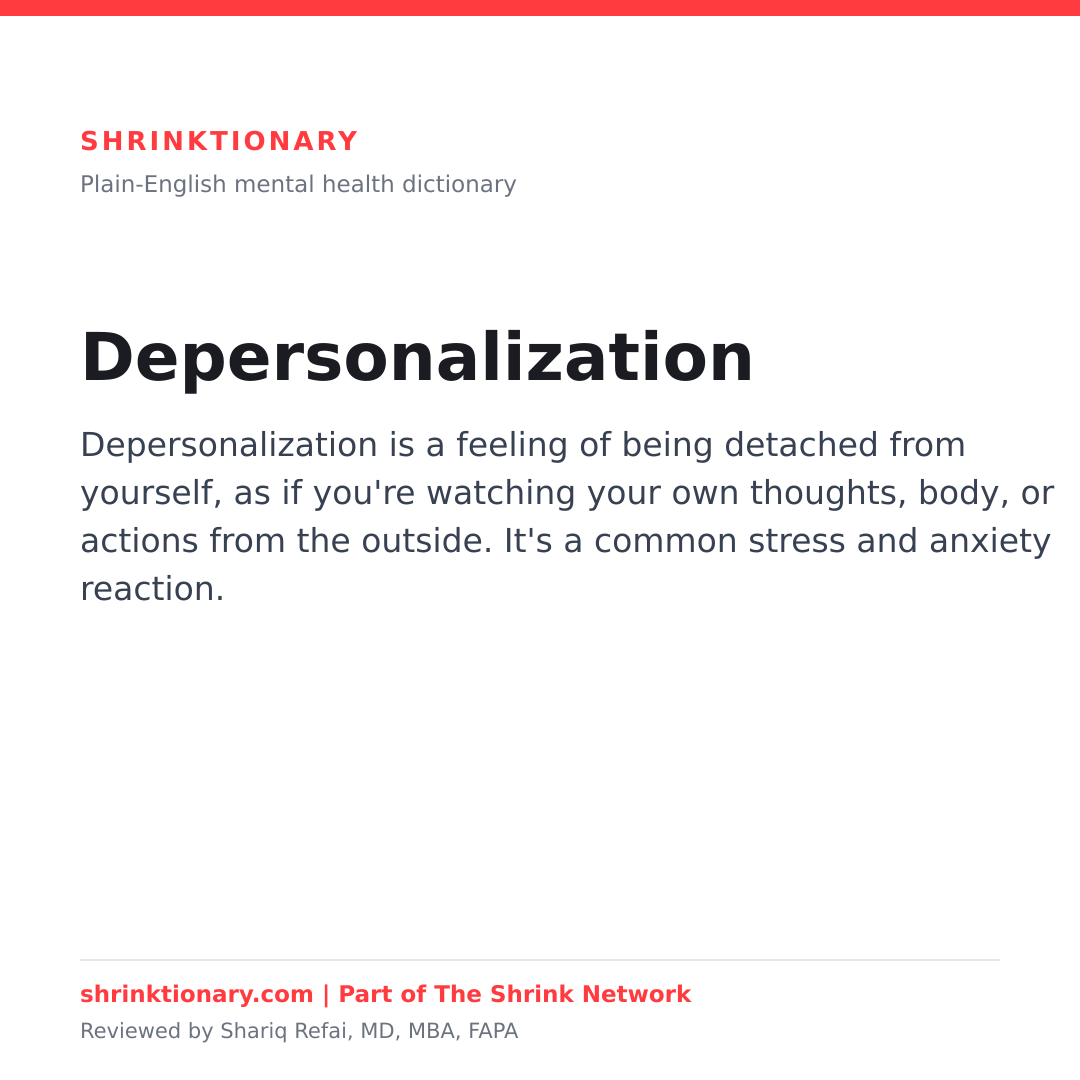
Depersonalization is a feeling of being disconnected from yourself. People describe it as watching their own life from a distance, like they’re an observer of their own body or a character in a movie. Your thoughts, feelings, or movements can seem like they belong to someone else.
It’s a form of dissociation, which is the brain’s way of creating distance from something that feels overwhelming. Short episodes of depersonalization are very common, especially during high stress, exhaustion, panic, or after a frightening event. Many people have it at least once in their lives.
What Depersonalization can feel like
It can feel strange and unsettling. You might feel like your hands aren’t quite your own, or like there’s a pane of glass between you and the world. Some people say their voice sounds far away when they speak, or that their reflection looks unfamiliar.
During the experience, your sense of who you are usually stays intact. You know it’s you. That’s part of what makes it so odd, because you feel detached and aware of being detached at the same time. The feeling can spike during a panic attack and then fade as the body calms down.
What Depersonalization isn’t
It isn’t a sign that you’re losing your mind, even though it can feel that way. The awareness that something feels off is actually a clue that you’re still grounded in reality.
It also isn’t the same as a psychotic experience like a hallucination or delusion. In depersonalization, you don’t believe things that aren’t true and you don’t sense things that aren’t there. You simply feel detached from your own experience.
Related terms you’ll see next
When to seek professional care
A brief episode during stress usually passes on its own. If depersonalization happens often, lasts a long time, or gets in the way of work, relationships, or daily life, it’s worth talking with a mental health professional.
Persistent depersonalization can be linked to anxiety, panic, trauma, or other conditions that respond well to treatment. A therapist can help you understand what’s triggering it and teach grounding skills that bring you back into the present moment.
When this word matters
It's a common stress and anxiety reaction, but it becomes more relevant when the sense of detachment from yourself is frequent, distressing, or lasting. It's worth separating from derealization, which is detachment from your surroundings rather than yourself.
Commonly confused with
Frequently asked questions
What does depersonalization feel like?
People often describe watching their own life from a distance, like an observer of their own body or a character in a movie. Your thoughts, feelings, or movements can seem like they belong to someone else, and some people feel like there's a pane of glass between them and the world.
Is depersonalization a sign of losing your mind?
No, even though it can feel that way. The awareness that something feels off is actually a clue that you're still grounded in reality, and it isn't the same as a psychotic experience like a hallucination or delusion.
When should I see someone about depersonalization?
A brief episode during stress usually passes on its own. If it happens often, lasts a long time, or gets in the way of daily life, it's worth talking with a mental health professional, since it can have many causes such as anxiety, panic, or trauma that respond well to treatment.
Related terms
In these language clusters
Compare
Sources
- Anxiety Disorders , National Institute of Mental Health
- Depersonalization-derealization disorder , MedlinePlus
Use or cite this definition
Free to reuse with attribution. Paste the block into your own page, or grab a citation.
Embed on your site
<blockquote>
<p><strong>Depersonalization:</strong> Depersonalization is a feeling of being detached from yourself, as if you're watching your own thoughts, body, or actions from the outside. It's a common stress and anxiety reaction.</p>
<p>— <a href="https://shrinktionary.com/terms/depersonalization/">Shrinktionary</a>, a plain-English mental health dictionary, medically reviewed by a board certified psychiatrist.</p>
</blockquote>Cite (APA)
Refai, S. (2026). Depersonalization. Shrinktionary. https://shrinktionary.com/terms/depersonalization/
Cite (MLA)
"Depersonalization." Shrinktionary, https://shrinktionary.com/terms/depersonalization/. Accessed September 26, 2026.
Your next step in The Shrink Network
You are here: Shrinktionary, the language layer of The Shrink Network.
Each site in the network has one job. No matter where you enter, we help you find the next step that makes sense.
Want to understand more first?
See how this connects to everything else in the Term Web →
Take it with you
Free printable references you can save or share. For education, not medical advice.