What therapeutic alliance actually is
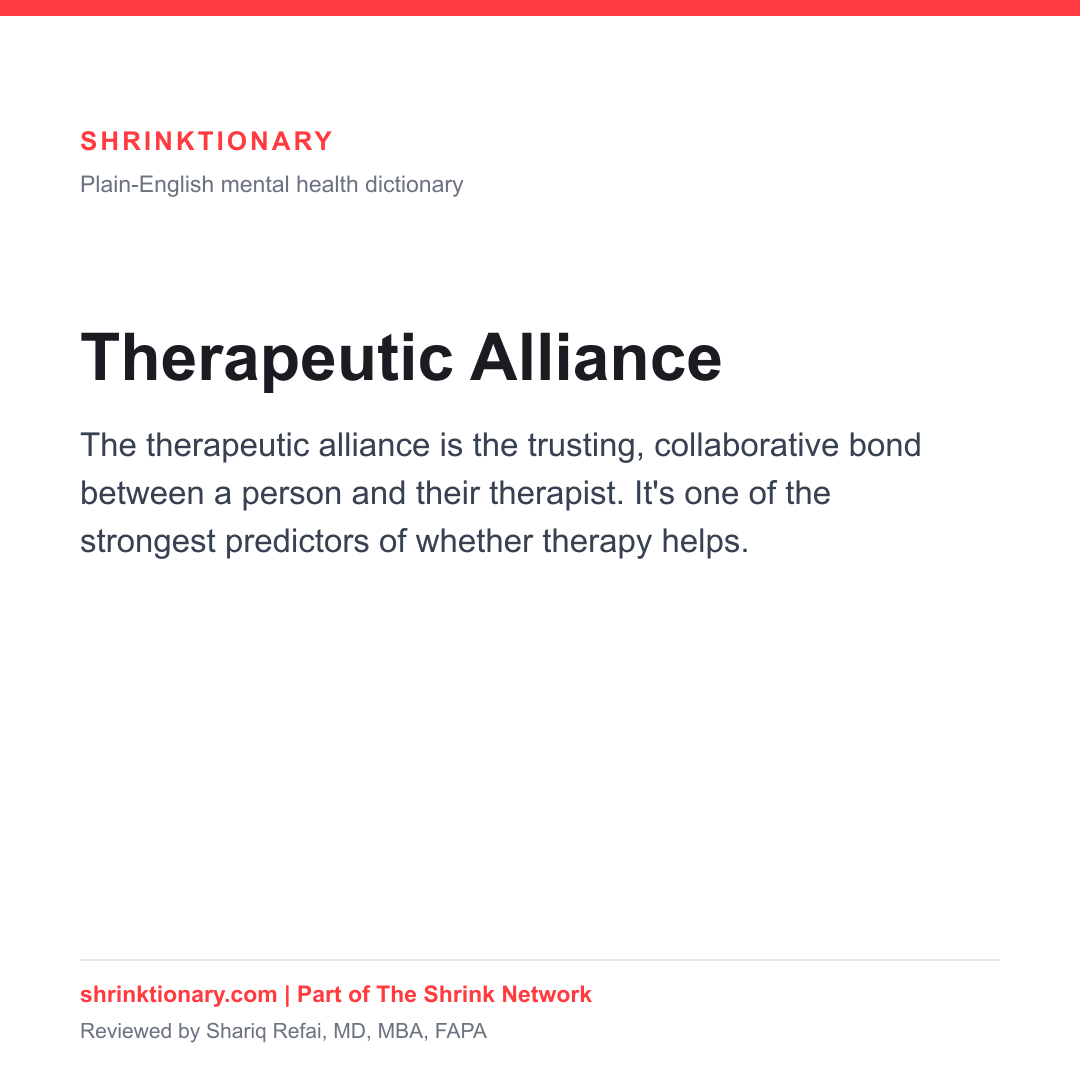
The therapeutic alliance is the working relationship between a person and their therapist. It’s the sense of trust, mutual respect, and shared purpose that makes it possible to do hard emotional work together.
Researchers usually describe it as having three parts: a warm bond between the two people, agreement on the goals of therapy, and agreement on the tasks that will get them there. When those three line up, the person feels safe enough to be honest and to try new things.
What it looks like in practice
A strong alliance shows up in small ways. The person feels heard rather than judged, trusts that the therapist is on their side, and believes the work is heading somewhere that matters to them. The therapist, in turn, stays attentive, responsive, and genuine.
The alliance isn’t always smooth. There are often ruptures, moments of misunderstanding or friction, and a big part of good therapy is repairing them openly. Decades of research find that the quality of this relationship is one of the most reliable predictors of whether therapy works, often more than which specific method is used.
What it isn’t
The therapeutic alliance isn’t a friendship. It’s a professional relationship with clear boundaries that exist to keep the focus on the person’s growth.
It also isn’t just liking your therapist. Genuine warmth matters, but the alliance is really about trust, agreement on goals, and working as a team, even through the uncomfortable parts.
Related terms you’ll see next
When to seek professional care
If you’re starting therapy, it’s worth paying attention to whether you feel safe and understood with your therapist, since that bond does a lot of the work. If the fit feels off after giving it time, it’s okay to talk about it or look for a better match. If you’re in crisis or thinking about self-harm, call or text 988 in the United States or go to the nearest emergency room.
When this word matters
The therapeutic alliance matters because the trust and shared purpose between a person and their therapist is one of the strongest predictors of whether therapy helps, sometimes more than the specific method used. If the bond feels off, raising it with your therapist is a normal and useful part of the work.
Commonly confused with
Frequently asked questions
What are the parts of the therapeutic alliance?
Researchers usually describe three parts: a warm bond between the person and therapist, agreement on the goals of therapy, and agreement on the tasks that will get them there. When those line up, the person feels safe enough to be honest.
Why does the therapeutic alliance matter?
Decades of research find that the quality of this relationship is one of the most reliable predictors of whether therapy works, often more than which specific method is used.
Is the therapeutic alliance the same as being friends with your therapist?
No. It's a professional relationship with clear boundaries that keep the focus on the person's growth, and it's about trust and working as a team, not just liking your therapist.
Related terms
In these language clusters
Compare
Sources
- Psychotherapy , American Psychological Association
- Psychotherapies , National Institute of Mental Health
Use or cite this definition
Free to reuse with attribution. Paste the block into your own page, or grab a citation.
Embed on your site
<blockquote>
<p><strong>Therapeutic Alliance:</strong> The therapeutic alliance is the trusting, collaborative bond between a person and their therapist. It's one of the strongest predictors of whether therapy helps.</p>
<p>— <a href="https://shrinktionary.com/terms/therapeutic-alliance/">Shrinktionary</a>, a plain-English mental health dictionary, medically reviewed by a board certified psychiatrist.</p>
</blockquote>Cite (APA)
Refai, S. (2026). Therapeutic Alliance. Shrinktionary. https://shrinktionary.com/terms/therapeutic-alliance/
Cite (MLA)
"Therapeutic Alliance." Shrinktionary, https://shrinktionary.com/terms/therapeutic-alliance/. Accessed September 26, 2026.
Your next step in The Shrink Network
You are here: Shrinktionary, the language layer of The Shrink Network.
Each site in the network has one job. No matter where you enter, we help you find the next step that makes sense.
Want to understand more first?
See how this connects to everything else in the Term Web →
Take it with you
Free printable references you can save or share. For education, not medical advice.