What transference actually is
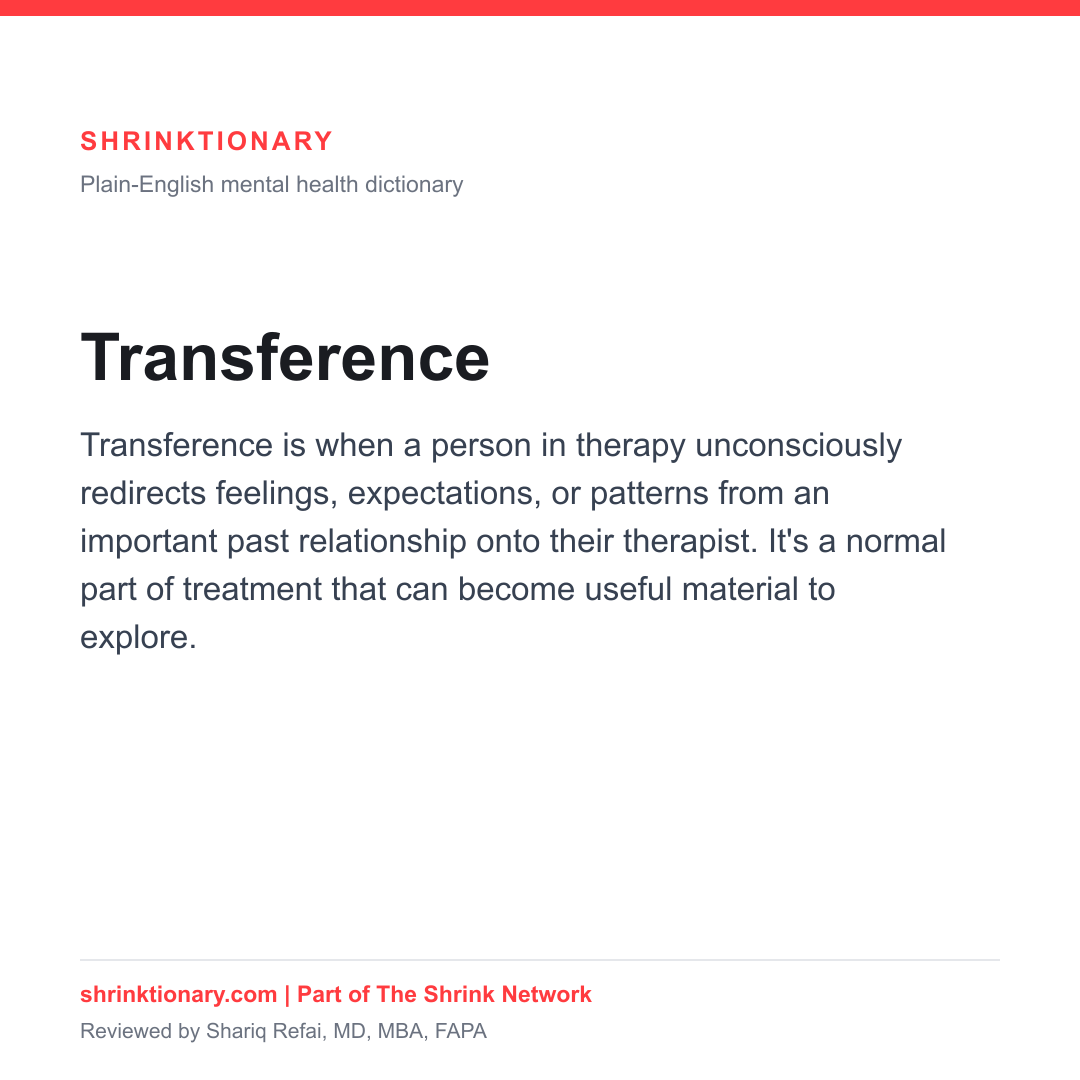
Transference is a pattern that shows up in therapy when someone starts relating to their therapist the way they once related to someone important from their past, often a parent or another early caregiver. Without meaning to, the person transfers old feelings, hopes, fears, or assumptions onto the therapist sitting across from them.
The idea comes from psychodynamic thinking, but the experience itself isn’t limited to one kind of therapy. A client might find themselves wanting the therapist’s approval the way they once wanted a parent’s, or bracing for criticism that hasn’t happened. These reactions usually happen below the surface, and the person often doesn’t notice them at first.
How it works
Old relationships leave templates in the mind for how closeness, authority, and trust tend to go. When a new relationship has some of the same emotional ingredients, like one person depending on another for help, those templates can switch on automatically.
In therapy, the relationship is close and a bit one-sided by design, so it’s a setting where these old patterns tend to surface. A skilled therapist pays attention to transference because it offers a live look at how the person connects with others. Instead of just hearing about a client’s relationships, the therapist can notice the patterns playing out in the room and gently bring them into the conversation. There’s also countertransference, which is the therapist’s own emotional reactions to the client, and good therapists stay aware of that too.
What it isn’t
Transference isn’t a sign that something has gone wrong, and it isn’t the same as genuinely liking or trusting a therapist for who they are. It’s also not a real-time accurate read on the therapist as a person. The feelings are real, but they’re shaped by the past more than by the actual relationship.
It isn’t manipulation, and it isn’t something the client is doing on purpose. And it doesn’t only mean romantic feelings. Transference can be warm, hostile, dependent, competitive, or any mix of those.
Related terms you’ll see next
Why it matters for mental health
Working with transference can turn a vague, repeating relationship problem into something a person can actually see and understand. When old patterns show up in the therapy room, the therapist and client get a chance to slow them down, name them, and try out new responses in a safe setting.
That kind of insight can carry over into life outside therapy. People often find they react to bosses, partners, and friends in ways that echo the past, and recognizing the pattern is the first step toward changing it.
When this word matters
Transference matters in therapy because old feelings and expectations from past relationships can quietly show up toward the therapist, and noticing them can become useful material to explore. It's a normal part of treatment, not a sign something has gone wrong.
Commonly confused with
Frequently asked questions
What is transference in therapy?
It's when a person unconsciously redirects feelings, expectations, or patterns from an important past relationship, often a parent or early caregiver, onto their therapist. The person usually doesn't notice it at first.
Is transference a sign that something has gone wrong?
No. It's a normal part of treatment and isn't done on purpose. A skilled therapist pays attention to it because it offers a live look at how the person connects with others.
Does transference only mean romantic feelings?
No. Transference can be warm, hostile, dependent, competitive, or any mix of those. There's also countertransference, which is the therapist's own emotional reactions to the client.
Related terms
In these language clusters
Sources
- Psychotherapies , National Institute of Mental Health (NIMH)
- Mental health and behavior , MedlinePlus
Use or cite this definition
Free to reuse with attribution. Paste the block into your own page, or grab a citation.
Embed on your site
<blockquote>
<p><strong>Transference:</strong> Transference is when a person in therapy unconsciously redirects feelings, expectations, or patterns from an important past relationship onto their therapist. It's a normal part of treatment that can become useful material to explore.</p>
<p>— <a href="https://shrinktionary.com/terms/transference/">Shrinktionary</a>, a plain-English mental health dictionary, medically reviewed by a board certified psychiatrist.</p>
</blockquote>Cite (APA)
Refai, S. (2026). Transference. Shrinktionary. https://shrinktionary.com/terms/transference/
Cite (MLA)
"Transference." Shrinktionary, https://shrinktionary.com/terms/transference/. Accessed September 26, 2026.
Your next step in The Shrink Network
You are here: Shrinktionary, the language layer of The Shrink Network.
Each site in the network has one job. No matter where you enter, we help you find the next step that makes sense.
Want to understand more first?
See how this connects to everything else in the Term Web →
Take it with you
Free printable references you can save or share. For education, not medical advice.