What a defense mechanism actually is
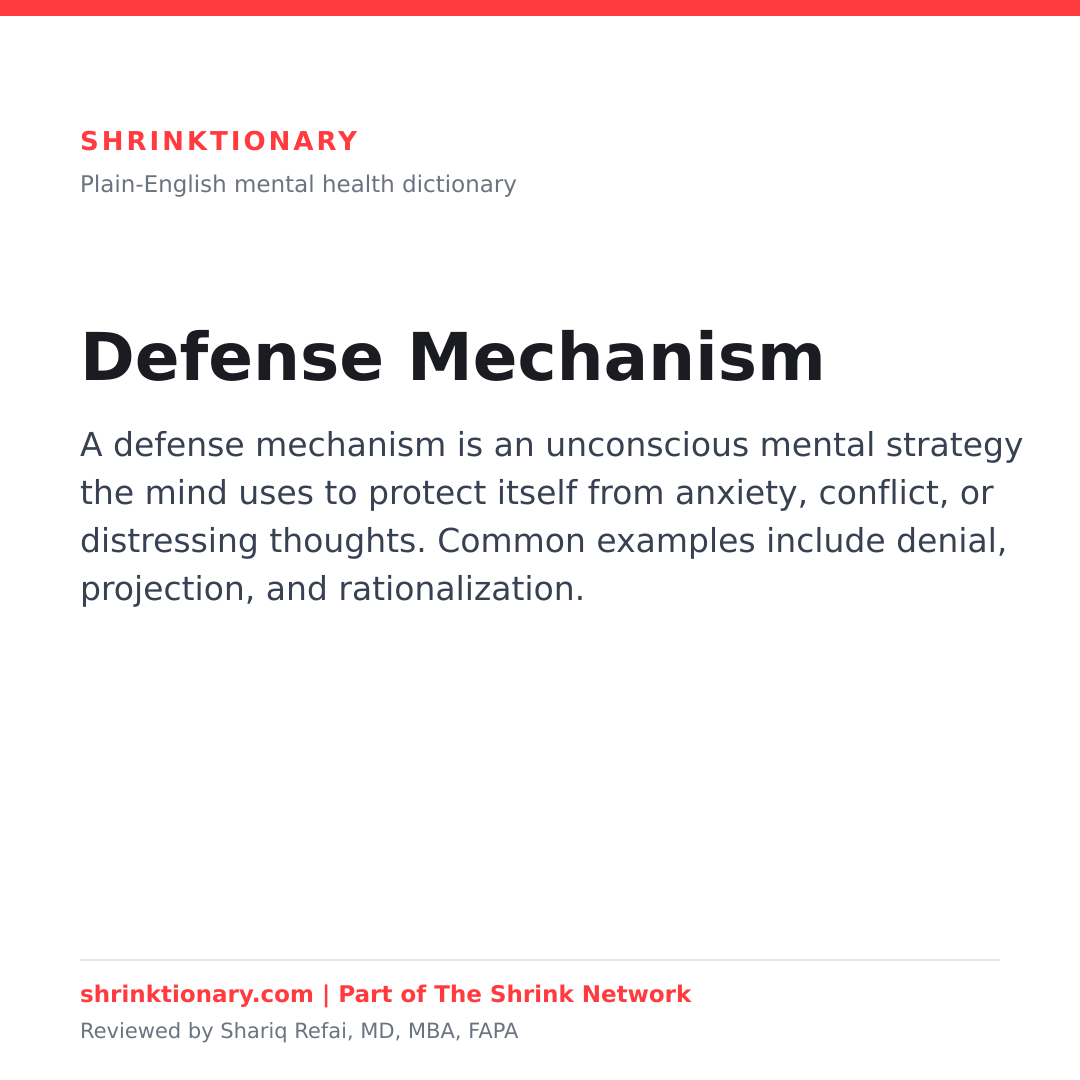
A defense mechanism is an unconscious mental move the mind makes to shield itself from feelings that are hard to face, like anxiety, guilt, or threat. The key word is unconscious. People usually do not decide to use one. It happens automatically, often without any awareness that it’s happening at all.
The idea grew out of early psychoanalytic theory, and the language has stuck around in everyday conversation. Common examples include denial, which is refusing to accept a painful reality, and projection, which is attributing your own uncomfortable feelings to someone else. Rationalization, where a person invents a logical sounding reason for something driven by emotion, is another familiar one.
How it works
When something feels too distressing to handle directly, the mind has ways of softening the blow. A defense mechanism reroutes or reshapes that distress so it feels more manageable in the moment. Someone facing a frightening diagnosis might say “the test must be wrong,” which is denial buying time before the reality sinks in.
Not all defenses are unhealthy. Some, like humor or putting a feeling aside temporarily to get through a crisis, can be genuinely adaptive. Others, like chronic denial or blaming everyone else, tend to cause problems when they become a person’s main way of coping. The same mechanism can be helpful in small doses and harmful when it runs the show.
What it isn’t
A defense mechanism isn’t a conscious lie or a deliberate manipulation. Because it operates below awareness, the person isn’t choosing to be dishonest. That’s different from someone knowingly making excuses.
It also isn’t a diagnosis or a disorder. Everyone uses defense mechanisms, and using them is a normal part of being human. They only become a concern when rigid patterns keep someone from dealing with real problems.
Related terms you’ll see next
Why it matters for mental health
Recognizing defense mechanisms can help people understand reactions that otherwise seem confusing, both in themselves and in others. In therapy, especially psychodynamic approaches, gently noticing these patterns can open the door to healthier ways of handling difficult emotions.
The point isn’t to get rid of defenses entirely, which isn’t possible or even desirable. It’s to build awareness so that protective habits don’t quietly steer someone away from the things they need to face.
When this word matters
The concept matters in understanding how the mind protects itself from anxiety or conflict, often outside of awareness, through patterns like denial, projection, or rationalization. It's most relevant in psychodynamic therapy and in seeing how these differ from conscious coping.
Commonly confused with
Frequently asked questions
What is a defense mechanism?
A defense mechanism is an unconscious mental move the mind makes to shield itself from feelings that are hard to face, like anxiety, guilt, or threat. The key word is unconscious, since people usually don't decide to use one.
What are some common examples of defense mechanisms?
Common examples include denial, which is refusing to accept a painful reality, projection, which is attributing your own uncomfortable feelings to someone else, and rationalization, which is inventing a logical sounding reason for something driven by emotion.
Are defense mechanisms always unhealthy?
No. Some, like humor or setting a feeling aside temporarily to get through a crisis, can be genuinely adaptive. They tend to cause problems mainly when rigid patterns become a person's main way of coping and keep them from facing real problems.
Related terms
Sources
- Stress , MedlinePlus
- Psychotherapies , National Institute of Mental Health
Use or cite this definition
Free to reuse with attribution. Paste the block into your own page, or grab a citation.
Embed on your site
<blockquote>
<p><strong>Defense Mechanism:</strong> A defense mechanism is an unconscious mental strategy the mind uses to protect itself from anxiety, conflict, or distressing thoughts. Common examples include denial, projection, and rationalization.</p>
<p>— <a href="https://shrinktionary.com/terms/defense-mechanism/">Shrinktionary</a>, a plain-English mental health dictionary, medically reviewed by a board certified psychiatrist.</p>
</blockquote>Cite (APA)
Refai, S. (2026). Defense Mechanism. Shrinktionary. https://shrinktionary.com/terms/defense-mechanism/
Cite (MLA)
"Defense Mechanism." Shrinktionary, https://shrinktionary.com/terms/defense-mechanism/. Accessed September 26, 2026.
Your next step in The Shrink Network
You are here: Shrinktionary, the language layer of The Shrink Network.
Each site in the network has one job. No matter where you enter, we help you find the next step that makes sense.
Want to understand more first?
See how this connects to everything else in the Term Web →
Take it with you
Free printable references you can save or share. For education, not medical advice.