What resilience actually is
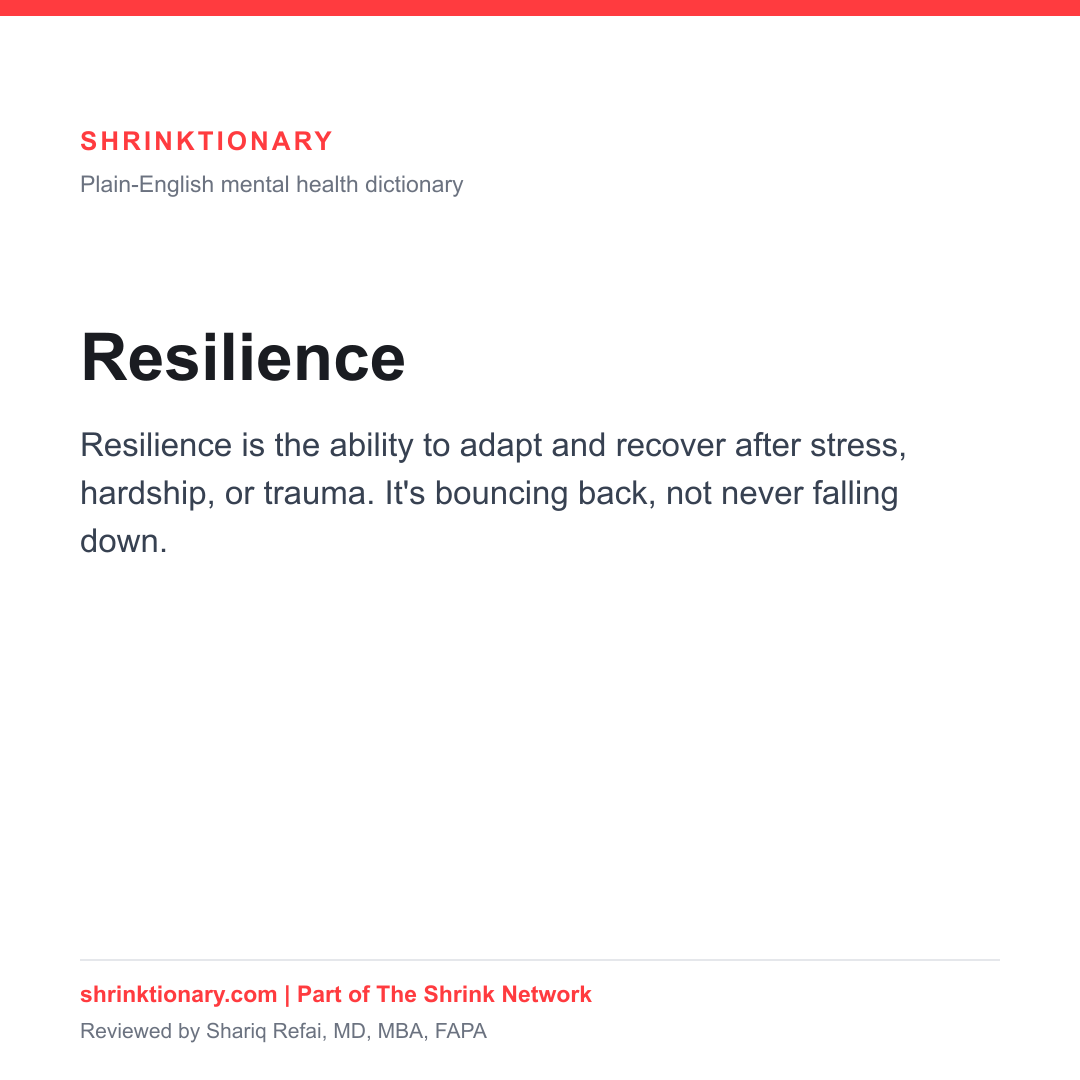
Resilience is how well a person adapts when life gets hard. It’s the capacity to face stress, loss, failure, or trauma and find a way through, eventually returning to steady footing. It doesn’t mean the hard thing didn’t hurt. It means you kept functioning and recovered over time.
Researchers describe it as a process rather than a personality type. It’s something you do, again and again, not a trait you either have or lack.
How it works
Resilience grows out of a mix of things. Supportive relationships matter a lot, since people who feel connected tend to weather hardship better. So do practical skills like managing emotions, solving problems, and keeping a realistic but hopeful outlook.
Importantly, these can be built. The APA points out that resilience involves behaviors and thoughts anyone can learn and practice. Small steps, like staying connected to others, taking care of your body, and accepting that change is part of life, add up over time.
What it isn’t
Resilience isn’t toughing it out alone or refusing to feel pain. People who recover well usually let themselves grieve, ask for help, and feel their emotions fully. Bottling everything up is closer to the opposite of resilience.
It also isn’t a fixed gift that some lucky people are born with and others aren’t. And it isn’t constant. Even resilient people get knocked flat sometimes; the difference is in how they find their way back.
Related terms you’ll see next
Why it matters
Resilience is a central idea in how people recover from trauma, manage chronic stress, and protect their mental health over the long haul. Because it can be strengthened, it offers a hopeful message: struggling now doesn’t mean you’ll always struggle. The skills that help people bounce back are things you can learn, practice, and lean on when the next hard time comes.
For everyday ways to build it, see these practical tips for emotional resilience on shrinkMD. shrinkMD is part of The Shrink Network, founded by Shariq Refai, MD.
When this word matters
The distinction matters because resilience is a process you can build through relationships and skills, not a fixed trait you either have or lack, and it doesn't mean hardship doesn't hurt. It comes up most in discussions of coping with stress, loss, and trauma over time.
Commonly confused with
Frequently asked questions
What is resilience?
Resilience is the ability to adapt and recover after stress, loss, failure, or trauma, eventually returning to steady footing. It doesn't mean the hard thing didn't hurt, it means you kept functioning and recovered over time.
Can resilience be learned?
Yes, the American Psychological Association describes resilience as a process involving behaviors and thoughts anyone can learn and practice. Small steps like staying connected, caring for your body, and accepting change add up over time.
Does being resilient mean handling everything alone?
No, that's closer to the opposite. People who recover well usually let themselves grieve, ask for help, and feel their emotions fully rather than bottling everything up.
Related terms
Sources
- Building Your Resilience , American Psychological Association
- Caring for Your Mental Health , National Institute of Mental Health
Use or cite this definition
Free to reuse with attribution. Paste the block into your own page, or grab a citation.
Embed on your site
<blockquote>
<p><strong>Resilience:</strong> Resilience is the ability to adapt and recover after stress, hardship, or trauma. It's bouncing back, not never falling down.</p>
<p>— <a href="https://shrinktionary.com/terms/resilience/">Shrinktionary</a>, a plain-English mental health dictionary, medically reviewed by a board certified psychiatrist.</p>
</blockquote>Cite (APA)
Refai, S. (2026). Resilience. Shrinktionary. https://shrinktionary.com/terms/resilience/
Cite (MLA)
"Resilience." Shrinktionary, https://shrinktionary.com/terms/resilience/. Accessed September 26, 2026.
Your next step in The Shrink Network
You are here: Shrinktionary, the language layer of The Shrink Network.
Each site in the network has one job. No matter where you enter, we help you find the next step that makes sense.
Want to understand more first?
See how this connects to everything else in the Term Web →
Take it with you
Free printable references you can save or share. For education, not medical advice.