What oxytocin actually is
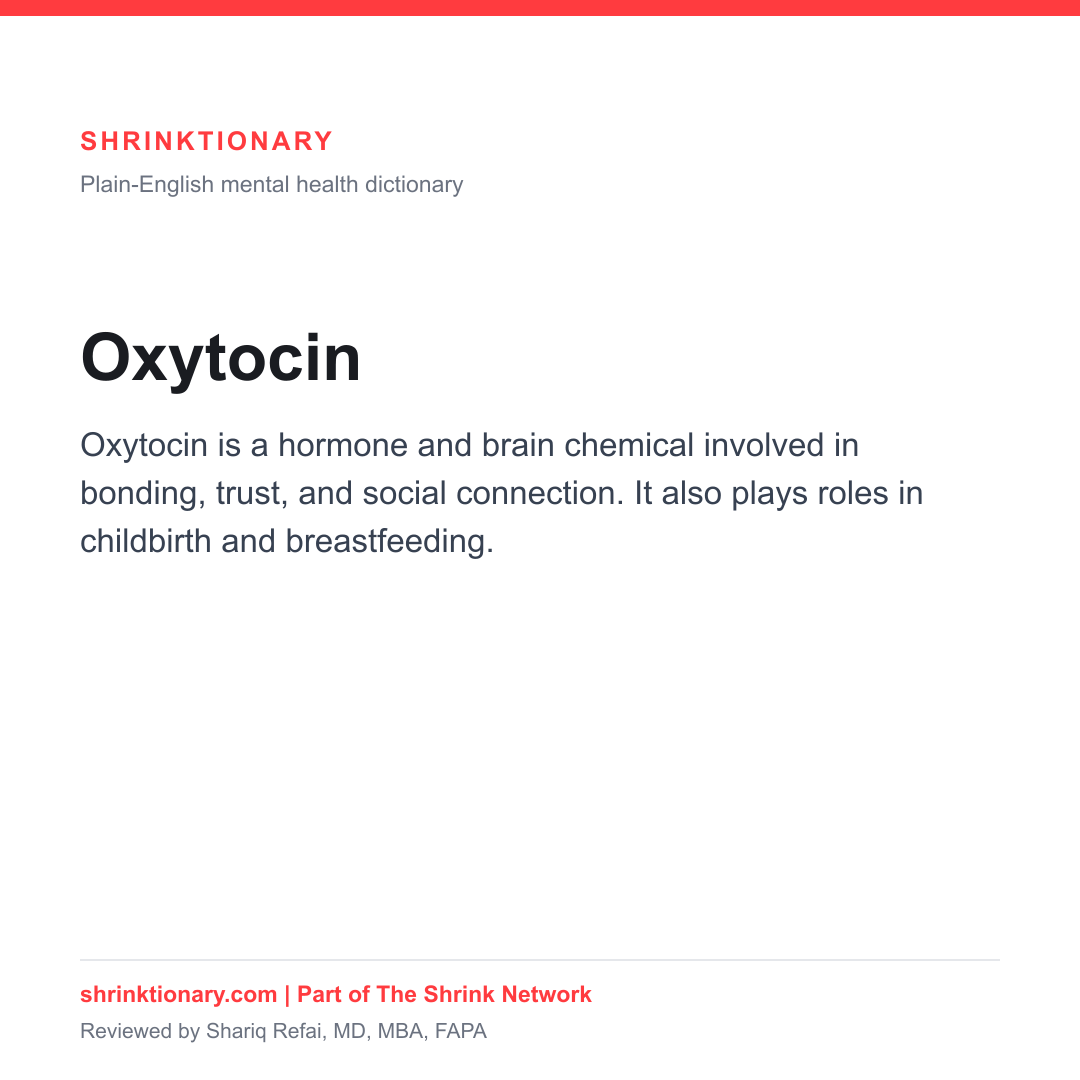
Oxytocin is a chemical the body makes that acts as both a hormone and a messenger in the brain. It’s produced in a region of the brain and released in response to certain experiences, especially close, warm social contact. People sometimes call it the “bonding hormone” or “love hormone” because of its link to connection.
It’s involved in social and emotional life, and also in some clear physical roles. Oxytocin helps the body during childbirth and supports breastfeeding, which is part of how scientists first came to study it.
What it does
Oxytocin tends to rise during moments of closeness, like a hug, gentle touch, or caring for a child. In these settings, it’s thought to support feelings of trust, attachment, and connection, and to help calm the body’s stress response somewhat. It’s part of how social bonds, between partners, friends, and parents and children, get reinforced over time.
On the physical side, oxytocin plays a direct role in labor by helping the uterus contract, and in nursing by triggering the release of milk. So the same molecule is woven into both the emotional bonds of early parenthood and the body processes that go with it. Researchers continue to study how oxytocin shapes social behavior, and the picture is more complex than the simple nickname suggests.
What it isn’t
Oxytocin isn’t a simple “love switch” that creates affection on demand. Its effects depend a lot on context, the relationship involved, and the individual. The popular image of one hormone producing love is a big oversimplification.
It also isn’t only positive. Research suggests oxytocin’s effects can vary, and it doesn’t make everyone feel trusting in every situation. And it isn’t a cure-all supplement. Claims that taking or sniffing oxytocin will reliably boost happiness or relationships go well beyond what the evidence supports.
Related terms you’ll see next
Why it matters for mental health
Human connection is one of the strongest protective factors for mental health, and oxytocin is part of the biology behind why closeness can feel soothing and steadying. It helps explain why supportive relationships and physical comfort can ease stress.
Oxytocin also comes up in conversations about bonding after childbirth and about social difficulties in various conditions. As with other brain chemicals, the honest takeaway is that it’s one meaningful piece of a complex system, not a single explanation for how we feel or connect.
When this word matters
Telling it apart from other chemicals matters when reading about bonding and trust, since oxytocin's nickname as the love hormone often gets oversimplified and its effects are more complex than the headlines suggest.
Commonly confused with
Frequently asked questions
What does oxytocin do?
Oxytocin tends to rise during moments of closeness like a hug or caring for a child, where it's thought to support trust, attachment, and connection. It also plays direct physical roles in childbirth and breastfeeding.
Is oxytocin a love switch?
No, it isn't a simple love switch that creates affection on demand. Its effects depend a lot on context, the relationship involved, and the individual, so the popular image of one hormone producing love is an oversimplification.
Can taking oxytocin boost happiness or relationships?
Claims that taking or sniffing oxytocin will reliably boost happiness or relationships go well beyond what the evidence supports. It's one meaningful piece of a complex system, not a cure-all.
Related terms
Sources
- Hormones , MedlinePlus
- Brain basics: Know your brain , National Institute of Neurological Disorders and Stroke (NINDS)
Use or cite this definition
Free to reuse with attribution. Paste the block into your own page, or grab a citation.
Embed on your site
<blockquote>
<p><strong>Oxytocin:</strong> Oxytocin is a hormone and brain chemical involved in bonding, trust, and social connection. It also plays roles in childbirth and breastfeeding.</p>
<p>— <a href="https://shrinktionary.com/terms/oxytocin/">Shrinktionary</a>, a plain-English mental health dictionary, medically reviewed by a board certified psychiatrist.</p>
</blockquote>Cite (APA)
Refai, S. (2026). Oxytocin. Shrinktionary. https://shrinktionary.com/terms/oxytocin/
Cite (MLA)
"Oxytocin." Shrinktionary, https://shrinktionary.com/terms/oxytocin/. Accessed September 26, 2026.
Your next step in The Shrink Network
You are here: Shrinktionary, the language layer of The Shrink Network.
Each site in the network has one job. No matter where you enter, we help you find the next step that makes sense.
Want to understand more first?
See how this connects to everything else in the Term Web →
Take it with you
Free printable references you can save or share. For education, not medical advice.