What the autonomic nervous system actually is
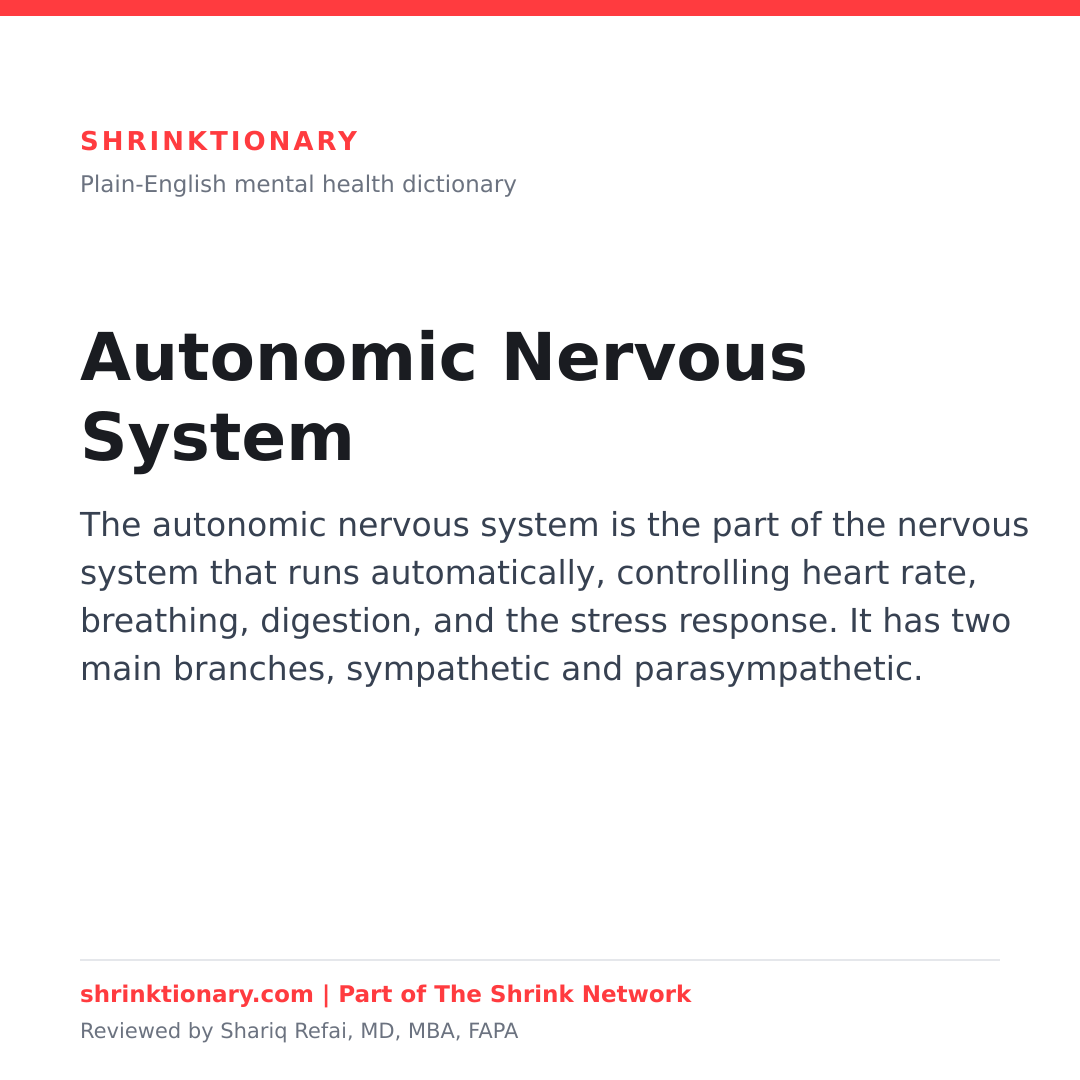
The autonomic nervous system is the part of the nervous system that handles the body’s automatic functions, the things that happen without conscious thought. Heart rate, breathing, digestion, sweating, and the size of your pupils are all under its control. The word autonomic comes from the same root as automatic, which is a good way to remember what it does.
It has two main branches that work in balance. The sympathetic branch revs the body up, and the parasympathetic branch calms it back down. Together they keep the body adjusting moment to moment without a person ever having to think about it.
How it works
The sympathetic branch is the body’s accelerator. When it activates, heart rate rises, breathing quickens, and the body gets ready for action. This is the engine behind the fight-or-flight response, and it relies on chemicals like norepinephrine.
The parasympathetic branch is the brake. It slows the heart, supports digestion, and helps the body rest and recover. This is sometimes called the rest and digest state. In a healthy system, these two branches trade off smoothly, ramping the body up when needed and settling it back down afterward. Both branches are always active to some degree, constantly fine-tuning the balance.
What it isn’t
The autonomic nervous system isn’t something a person controls directly through willpower. You can’t simply decide to lower your heart rate the way you decide to lift your arm. That said, practices like slow breathing can indirectly nudge the system toward calm.
It also isn’t broken just because it produces uncomfortable sensations. During a panic attack, for example, the sympathetic branch fires strongly, which feels alarming but is the system doing what it’s built to do, just at the wrong time.
Related terms you’ll see next
Why it matters for mental health
The autonomic nervous system is at the heart of how anxiety and stress feel in the body. The racing heart, shallow breathing, and sweating that come with fear are this system in action. Understanding that helps explain why anxiety is so physical and why those sensations, while uncomfortable, aren’t dangerous on their own.
Many calming techniques work by gently shifting the balance toward the parasympathetic branch. Slow breathing and grounding exercises are common examples, and they can help the body settle when the system has tipped too far toward alarm.
When this word matters
It matters for understanding why anxiety and stress produce physical symptoms like a racing heart or shallow breathing, since this system runs the body automatically through its sympathetic and parasympathetic branches. It's a framework for the stress response, not something a person gets diagnosed with.
Commonly confused with
Frequently asked questions
What does the autonomic nervous system do?
It handles the body's automatic functions, the things that happen without conscious thought, like heart rate, breathing, digestion, sweating, and pupil size. The word autonomic comes from the same root as automatic, which is a good way to remember what it does.
What is the difference between the sympathetic and parasympathetic branches?
The sympathetic branch is the body's accelerator, raising heart rate and readying the body for action as part of fight-or-flight. The parasympathetic branch is the brake, slowing the heart and supporting rest and digestion. In a healthy system the two trade off smoothly.
Can you control your autonomic nervous system?
Not directly through willpower. You can't simply decide to lower your heart rate the way you decide to lift your arm. That said, practices like slow breathing and grounding can indirectly nudge the system toward calm.
Related terms
Sources
- Autonomic Nervous System Disorders , MedlinePlus
- Brain Basics: Know Your Brain , National Institute of Neurological Disorders and Stroke
Use or cite this definition
Free to reuse with attribution. Paste the block into your own page, or grab a citation.
Embed on your site
<blockquote>
<p><strong>Autonomic Nervous System:</strong> The autonomic nervous system is the part of the nervous system that runs automatically, controlling heart rate, breathing, digestion, and the stress response. It has two main branches, sympathetic and parasympathetic.</p>
<p>— <a href="https://shrinktionary.com/terms/autonomic-nervous-system/">Shrinktionary</a>, a plain-English mental health dictionary, medically reviewed by a board certified psychiatrist.</p>
</blockquote>Cite (APA)
Refai, S. (2026). Autonomic Nervous System. Shrinktionary. https://shrinktionary.com/terms/autonomic-nervous-system/
Cite (MLA)
"Autonomic Nervous System." Shrinktionary, https://shrinktionary.com/terms/autonomic-nervous-system/. Accessed September 26, 2026.
Your next step in The Shrink Network
You are here: Shrinktionary, the language layer of The Shrink Network.
Each site in the network has one job. No matter where you enter, we help you find the next step that makes sense.
Want to understand more first?
See how this connects to everything else in the Term Web →
Take it with you
Free printable references you can save or share. For education, not medical advice.