What cortisol actually is
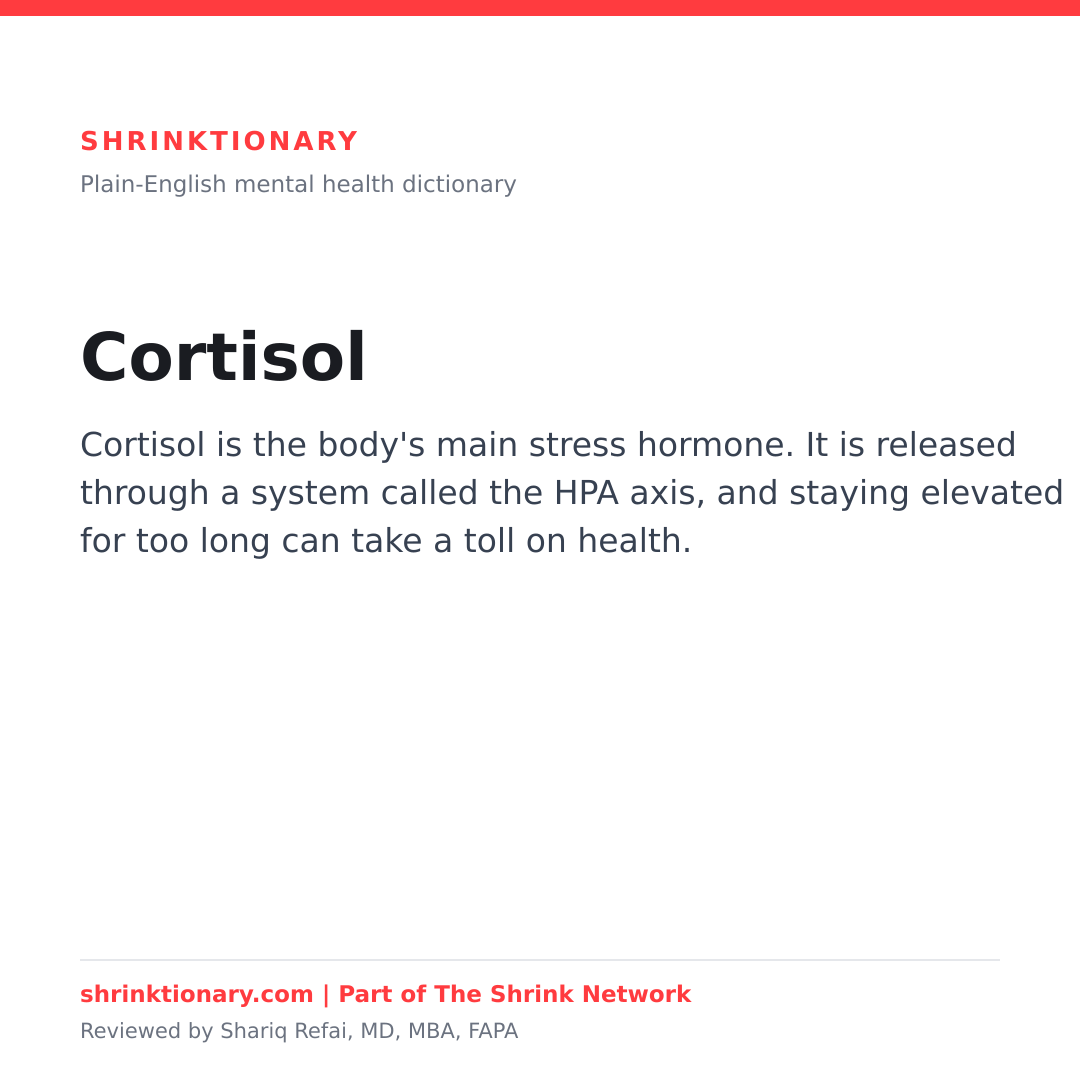
Cortisol is a hormone made by the adrenal glands, which sit on top of the kidneys. It is often called the stress hormone because levels rise when the body faces a challenge. But cortisol is not only about stress. It also helps manage blood sugar, blood pressure, the sleep-wake cycle, and how the body uses energy. Everyone needs some cortisol to function.
Levels naturally rise and fall over the day. Cortisol tends to be highest in the morning, helping you wake up and get going, and lower at night. This daily rhythm is part of normal, healthy biology.
How cortisol works
Cortisol release is controlled by a loop sometimes called the HPA axis, which stands for the hypothalamus, pituitary gland, and adrenal glands. When the brain senses stress, the hypothalamus signals the pituitary, which signals the adrenal glands to release cortisol. Cortisol then helps the body respond, and it also tells the brain to ease off, forming a feedback loop that is meant to switch the response back down once the challenge passes.
In short bursts, this system is useful. Cortisol sharpens focus and frees up energy to deal with a demand. The trouble comes when stress is constant and the system stays switched on. Long-term elevated cortisol has been linked with problems like disrupted sleep, weight changes, high blood pressure, and effects on mood and memory. The relationship between cortisol and mental health is complex, and no single hormone explains how a person feels.
What cortisol isn’t
Cortisol is not a villain. It is essential, and low cortisol causes serious problems too. The goal is balance, not elimination.
It is also not a simple dial for mood. You cannot read someone’s emotional state from a single cortisol number, and high cortisol does not by itself cause a mental illness. And lowering cortisol is not a one-step cure. Managing stress involves sleep, support, behavior, and sometimes treatment, not just one hormone.
Related terms you’ll see next
Why it matters for mental health
Chronic stress keeps the cortisol system working overtime, and that ongoing strain is part of why long-term stress can wear people down and feed into problems like burnout and poor sleep. Understanding cortisol shows why stress is a whole-body issue, not just a feeling. It also points toward practical help, since rest, movement, connection, and stress management can support a healthier stress response over time.
To see what long-term stress does to the brain and what helps undo it, read chronic stress and the brain on shrinkMD. shrinkMD is part of The Shrink Network, founded by Shariq Refai, MD.
When this word matters
It matters when stress stays switched on, since cortisol released through the HPA axis is helpful in short bursts but can take a toll on sleep, mood, and health when it stays elevated too long. It comes up in talk about chronic stress and burnout.
Commonly confused with
Frequently asked questions
Is high cortisol bad for you?
In short bursts cortisol is useful and necessary. The trouble comes when stress is constant and levels stay elevated, which has been linked with disrupted sleep, weight changes, high blood pressure, and effects on mood and memory.
Does high cortisol cause mental illness?
High cortisol doesn't by itself cause a mental illness. You can't read someone's emotional state from a single cortisol number, and mental health conditions involve many interacting systems, not one hormone.
How can I lower my cortisol naturally?
Lowering cortisol isn't a one-step cure, but rest, movement, connection, and stress management can support a healthier stress response over time. The goal is balance, since low cortisol causes serious problems too.
Related terms
Compare
Sources
Use or cite this definition
Free to reuse with attribution. Paste the block into your own page, or grab a citation.
Embed on your site
<blockquote>
<p><strong>Cortisol:</strong> Cortisol is the body's main stress hormone. It is released through a system called the HPA axis, and staying elevated for too long can take a toll on health.</p>
<p>— <a href="https://shrinktionary.com/terms/cortisol/">Shrinktionary</a>, a plain-English mental health dictionary, medically reviewed by a board certified psychiatrist.</p>
</blockquote>Cite (APA)
Refai, S. (2026). Cortisol. Shrinktionary. https://shrinktionary.com/terms/cortisol/
Cite (MLA)
"Cortisol." Shrinktionary, https://shrinktionary.com/terms/cortisol/. Accessed September 26, 2026.
Your next step in The Shrink Network
You are here: Shrinktionary, the language layer of The Shrink Network.
Each site in the network has one job. No matter where you enter, we help you find the next step that makes sense.
Want to understand more first?
See how this connects to everything else in the Term Web →
Take it with you
Free printable references you can save or share. For education, not medical advice.