What GABA actually is
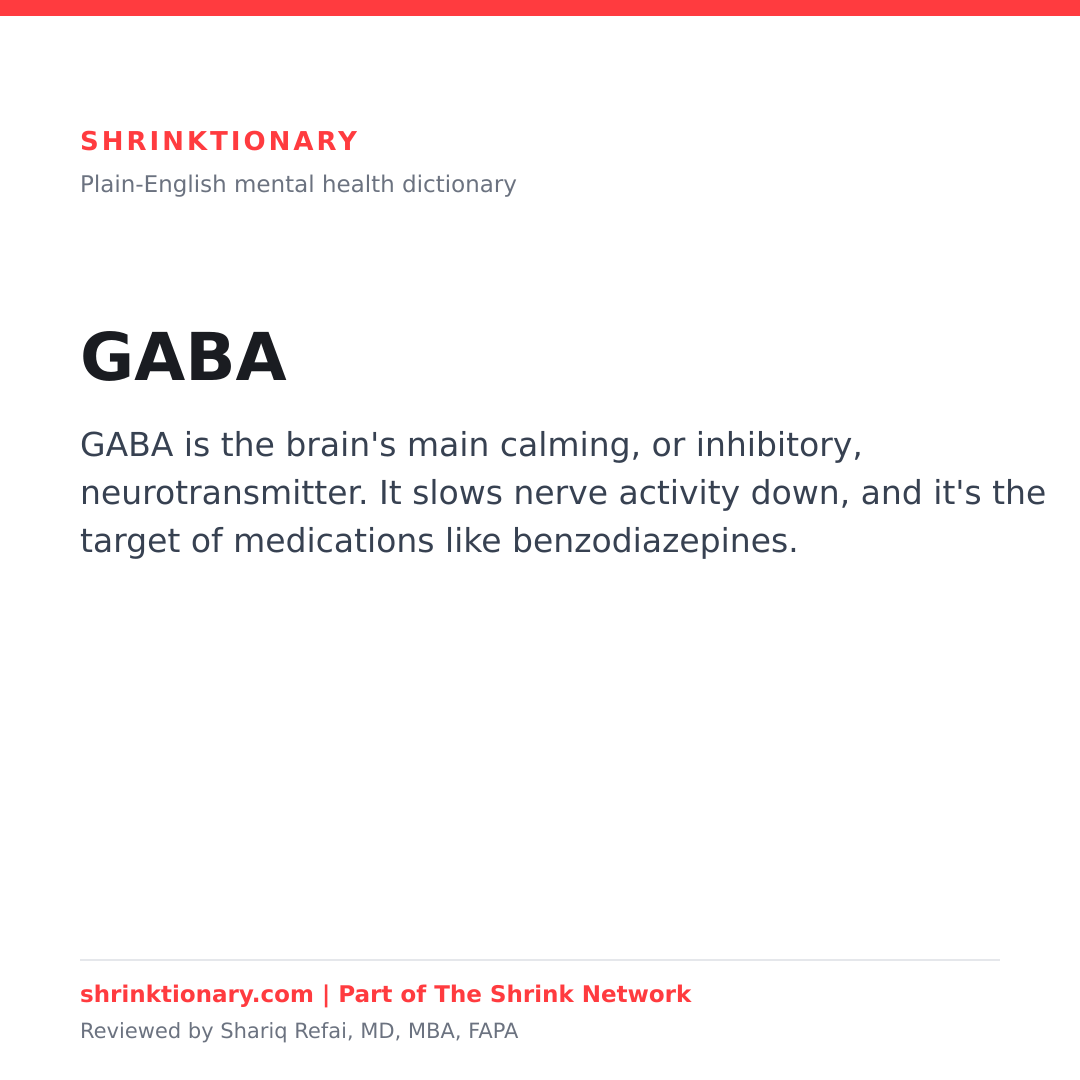
GABA, short for gamma-aminobutyric acid, is a neurotransmitter, a chemical that nerve cells use to communicate. It’s the brain’s main inhibitory messenger, which means its job is to quiet things down. Where some chemicals tell nerve cells to fire, GABA tells them to slow or stop.
This calming role makes GABA a kind of brake pedal for the nervous system. A healthy brain needs both signals that excite activity and signals that restrain it. GABA provides much of that restraint, helping keep brain activity balanced rather than running unchecked.
How it works
When GABA binds to its receptors on a nerve cell, it makes that cell less likely to fire. The overall effect is a dampening of activity. This helps reduce excess excitement in the brain, which is part of how the system stays calm and stable.
Several medications work by boosting GABA’s calming effect. Benzodiazepines, for example, enhance how GABA acts at its receptors, which is why they can ease anxiety and help with sleep. That same mechanism explains why these medications can cause drowsiness and why they carry real risks of dependence when used long term.
What it isn’t
GABA isn’t a cure-all calming agent, and low GABA isn’t a complete explanation for anxiety. Anxiety involves many brain systems and life factors working together, not one chemical acting alone.
Taking a GABA supplement also isn’t the same as boosting GABA in the brain. There’s limited evidence that GABA from supplements crosses easily into the brain, so swallowing GABA is not the same as the brain producing and using its own.
Related terms you’ll see next
Why it matters for mental health
GABA matters because so many calming medications act on it. Benzodiazepines, used for anxiety and sleep, work through the GABA system, and understanding this helps explain both their benefits and their risks.
The bigger lesson is about balance. The brain depends on the interplay between chemicals that speed activity up and chemicals like GABA that slow it down. Mental health is shaped by that whole system working together, not by any single messenger on its own.
When this word matters
GABA matters as the brain's main calming messenger and the target of benzodiazepines, which enhance its effect to ease anxiety and help with sleep, and that same mechanism explains the risk of dependence with long-term use. Low GABA isn't a complete explanation for anxiety, which involves many systems at once.
Commonly confused with
Frequently asked questions
What does GABA do in the brain?
GABA is the brain's main inhibitory neurotransmitter, which means its job is to quiet things down. It acts like a brake pedal for the nervous system, making nerve cells less likely to fire and helping keep brain activity balanced.
How do benzodiazepines relate to GABA?
Benzodiazepines enhance how GABA acts at its receptors, which is why they can ease anxiety and help with sleep. That same mechanism explains why they can cause drowsiness and carry real risks of dependence when used long term.
Do GABA supplements boost GABA in the brain?
Taking a GABA supplement isn't the same as boosting GABA in the brain. There's limited evidence that GABA from supplements crosses easily into the brain, so swallowing it is not the same as the brain producing and using its own.
Related terms
Sources
- Mental Health Medications , National Institute of Mental Health
- Anxiety Disorders , National Institute of Mental Health
Use or cite this definition
Free to reuse with attribution. Paste the block into your own page, or grab a citation.
Embed on your site
<blockquote>
<p><strong>GABA:</strong> GABA is the brain's main calming, or inhibitory, neurotransmitter. It slows nerve activity down, and it's the target of medications like benzodiazepines.</p>
<p>— <a href="https://shrinktionary.com/terms/gaba/">Shrinktionary</a>, a plain-English mental health dictionary, medically reviewed by a board certified psychiatrist.</p>
</blockquote>Cite (APA)
Refai, S. (2026). GABA. Shrinktionary. https://shrinktionary.com/terms/gaba/
Cite (MLA)
"GABA." Shrinktionary, https://shrinktionary.com/terms/gaba/. Accessed September 26, 2026.
Your next step in The Shrink Network
You are here: Shrinktionary, the language layer of The Shrink Network.
Each site in the network has one job. No matter where you enter, we help you find the next step that makes sense.
Want to understand more first?
See how this connects to everything else in the Term Web →
Take it with you
Free printable references you can save or share. For education, not medical advice.