What a neurotransmitter actually is
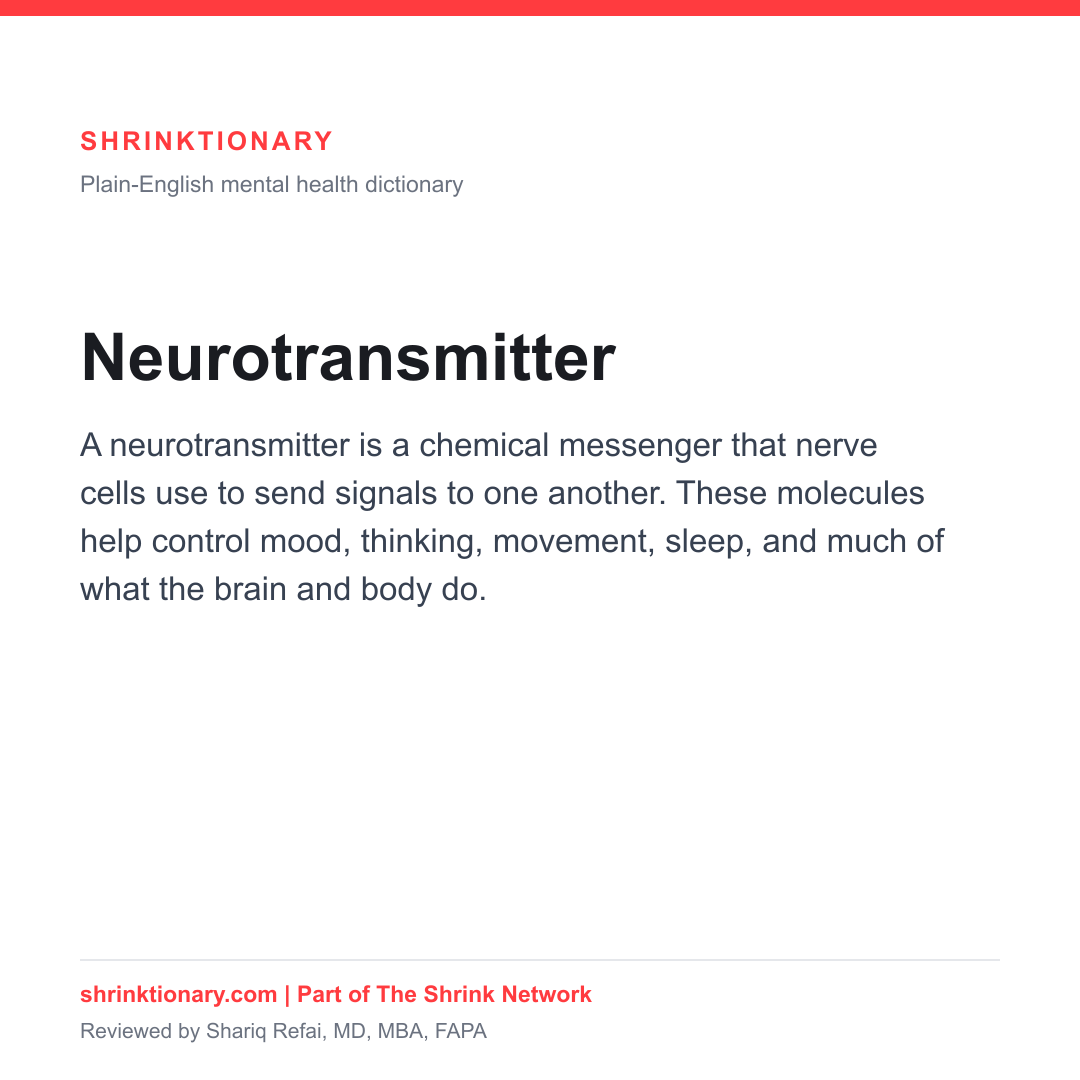
A neurotransmitter is a chemical the brain uses to pass messages from one nerve cell to the next. Nerve cells, or neurons, don’t quite touch each other. There’s a tiny gap between them called a synapse, and neurotransmitters are how a signal crosses that gap.
There are many different neurotransmitters, and the names show up often in mental health conversations: serotonin, dopamine, norepinephrine, glutamate, GABA, and others. Each one tends to be involved in certain jobs, though most of them have their hands in more than one process.
How it works
When a neuron fires, it releases neurotransmitter molecules into the synapse. Those molecules drift across the gap and attach to receptors on the next cell, like keys fitting into locks. Depending on the messenger and the receptor, this either makes the next cell more likely to fire or less likely to.
After the message is delivered, the body clears the neurotransmitter away, sometimes by breaking it down and sometimes by reabsorbing it back into the cell that released it. This is the step that many psychiatric medications act on. Some antidepressants, for example, slow down the reabsorption of serotonin so it stays active in the synapse longer. The overall picture is a constant back-and-forth of many messengers working at once.
What it isn’t
A neurotransmitter isn’t a single switch that turns a feeling on or off. The popular phrase “chemical imbalance” makes it sound like mental health is just one chemical being too high or too low, but that’s an oversimplification. Brain chemistry involves many messengers, many receptor types, and many circuits, all influencing one another along with genetics, life experience, and the body as a whole.
It also isn’t true that more of a given neurotransmitter is always better. Healthy brain function depends on balance and timing, not on maxing out any one signal.
Related terms you’ll see next
Why it matters for mental health
Neurotransmitters are part of how the brain regulates mood, motivation, focus, sleep, and stress, so they come up constantly in discussions of depression, anxiety, and many other conditions. Understanding them helps explain why medications can change how someone feels and why those changes often take weeks rather than happening overnight.
The honest version of the story is that neurotransmitters matter a great deal, but they’re one layer of a complex system. Mental health reflects the whole person, not a single chemical.
When this word matters
The distinction matters when reading about how psychiatric medications work, since many act on neurotransmitter systems, though a single chemical rarely explains a whole condition on its own.
Commonly confused with
Frequently asked questions
What is a neurotransmitter?
A neurotransmitter is a chemical the brain uses to pass messages from one nerve cell to the next across a tiny gap called a synapse. Examples include serotonin, dopamine, norepinephrine, glutamate, and GABA.
How do neurotransmitters relate to psychiatric medications?
After a message is delivered, the body clears the neurotransmitter away, and many medications act on this step. Some antidepressants, for example, slow the reabsorption of serotonin so it stays active in the synapse longer.
Is mental health just a chemical imbalance?
That phrase is an oversimplification. Brain chemistry involves many messengers, receptor types, and circuits influencing one another, along with genetics, life experience, and the body as a whole.
Related terms
Sources
- Brain basics: Know your brain , National Institute of Neurological Disorders and Stroke (NINDS)
- Brain Basics: Know Your Brain , National Institute of Neurological Disorders and Stroke (NINDS)
Use or cite this definition
Free to reuse with attribution. Paste the block into your own page, or grab a citation.
Embed on your site
<blockquote>
<p><strong>Neurotransmitter:</strong> A neurotransmitter is a chemical messenger that nerve cells use to send signals to one another. These molecules help control mood, thinking, movement, sleep, and much of what the brain and body do.</p>
<p>— <a href="https://shrinktionary.com/terms/neurotransmitter/">Shrinktionary</a>, a plain-English mental health dictionary, medically reviewed by a board certified psychiatrist.</p>
</blockquote>Cite (APA)
Refai, S. (2026). Neurotransmitter. Shrinktionary. https://shrinktionary.com/terms/neurotransmitter/
Cite (MLA)
"Neurotransmitter." Shrinktionary, https://shrinktionary.com/terms/neurotransmitter/. Accessed September 26, 2026.
Your next step in The Shrink Network
You are here: Shrinktionary, the language layer of The Shrink Network.
Each site in the network has one job. No matter where you enter, we help you find the next step that makes sense.
Want to understand more first?
See how this connects to everything else in the Term Web →
Take it with you
Free printable references you can save or share. For education, not medical advice.