What low self-esteem actually is
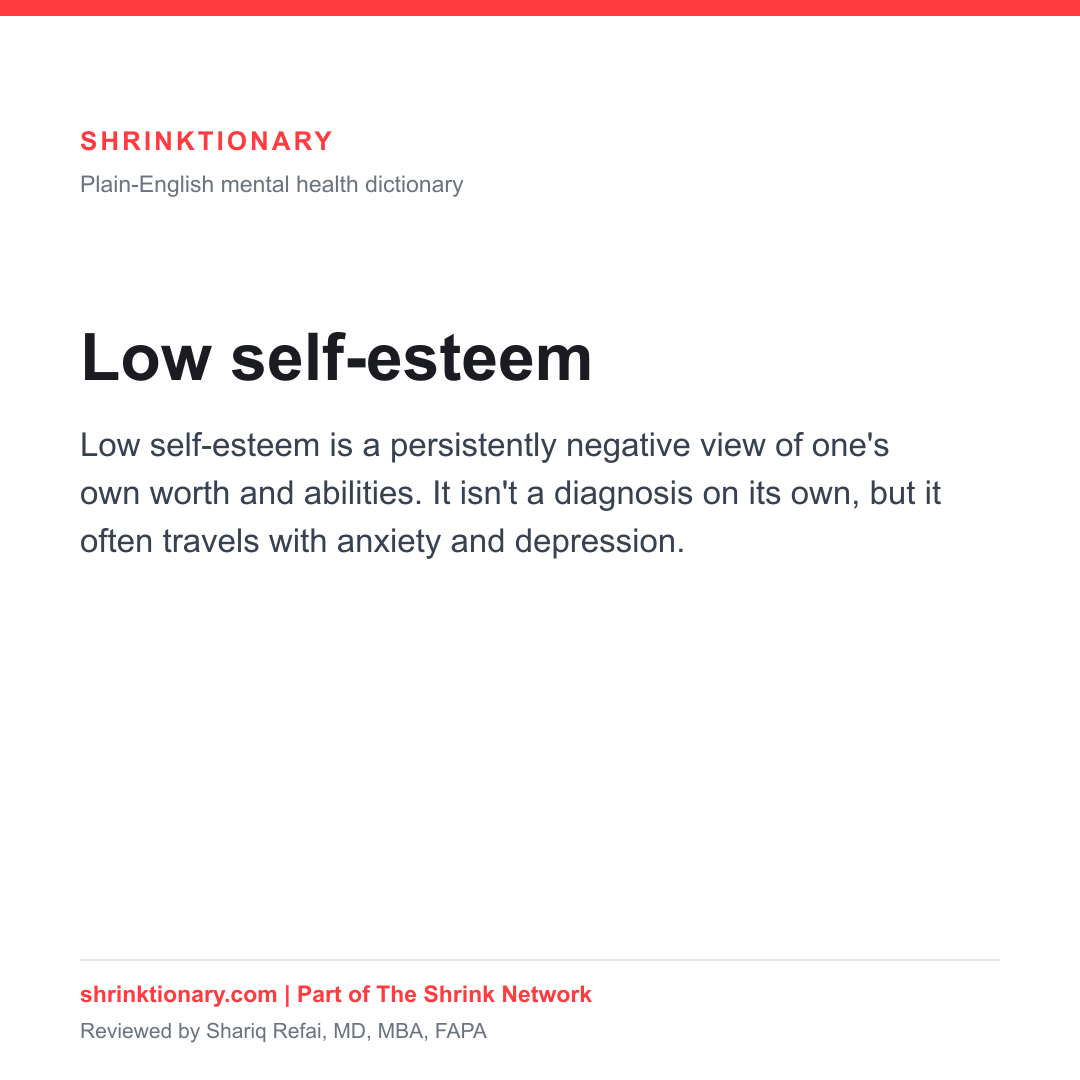
Low self-esteem is a persistent, generally negative sense of one’s own value and capability. A person with low self-esteem tends to doubt themselves, expect the worst of their own efforts, and weigh their flaws far more heavily than their strengths. It’s a way of relating to oneself, built up over time.
It isn’t a clinical diagnosis on its own. Instead, it’s a pattern that often overlaps with conditions like anxiety and depression, and it can both feed into them and be worsened by them. Self-esteem can also shift across a person’s life depending on experiences, relationships, and circumstances.
What low self-esteem can feel like
People with low self-esteem often describe a running internal critic. They may downplay achievements, assume others see their flaws, or avoid challenges out of fear of failing. Praise can feel uncomfortable or undeserved, while criticism feels confirming.
It can show up in behavior too, like having trouble saying no, apologizing constantly, or settling for less than one needs. Over time, the pattern can shrink a person’s world, because the expectation of falling short makes new things feel risky.
What low self-esteem isn’t
Low self-esteem isn’t the same as humility or being realistic about one’s limits. Healthy self-regard leaves room for both strengths and weaknesses. Low self-esteem tilts the scale, so the negatives dominate the picture regardless of the facts.
It also isn’t a fixed trait someone is simply stuck with. Self-esteem can be built up over time, and approaches like cognitive behavioral therapy work directly with the harsh, inaccurate beliefs that keep it low.
Related terms you’ll see next
When to seek professional care
If low self-esteem is holding you back at work, in relationships, or in daily life, or if it comes with persistent sadness, anxiety, or feelings of worthlessness, it’s worth talking with a professional. Therapy can help reshape the beliefs that drive it, and treating any underlying depression or anxiety often lifts self-esteem along with it.
When this word matters
Low self-esteem matters when it holds you back at work, in relationships, or in daily life, or comes with persistent sadness, anxiety, or feelings of worthlessness. It isn't a diagnosis on its own but often overlaps with anxiety and depression.
Commonly confused with
Frequently asked questions
Is low self-esteem a mental health diagnosis?
No, low self-esteem isn't a clinical diagnosis on its own. It's a pattern that often overlaps with conditions like anxiety and depression, and it can both feed into them and be worsened by them.
What does low self-esteem feel like?
People often describe a running internal critic, downplaying achievements, assuming others see their flaws, or avoiding challenges out of fear of failing. Praise can feel undeserved while criticism feels confirming.
Can low self-esteem be changed?
Yes, it isn't a fixed trait someone is stuck with. Self-esteem can be built up over time, and approaches like cognitive behavioral therapy work directly with the harsh, inaccurate beliefs that keep it low.
Related terms
Sources
- Caring for Your Mental Health , National Institute of Mental Health
- Mental Health , MedlinePlus
Use or cite this definition
Free to reuse with attribution. Paste the block into your own page, or grab a citation.
Embed on your site
<blockquote>
<p><strong>Low self-esteem:</strong> Low self-esteem is a persistently negative view of one's own worth and abilities. It isn't a diagnosis on its own, but it often travels with anxiety and depression.</p>
<p>— <a href="https://shrinktionary.com/terms/low-self-esteem/">Shrinktionary</a>, a plain-English mental health dictionary, medically reviewed by a board certified psychiatrist.</p>
</blockquote>Cite (APA)
Refai, S. (2026). Low self-esteem. Shrinktionary. https://shrinktionary.com/terms/low-self-esteem/
Cite (MLA)
"Low self-esteem." Shrinktionary, https://shrinktionary.com/terms/low-self-esteem/. Accessed September 26, 2026.
Your next step in The Shrink Network
You are here: Shrinktionary, the language layer of The Shrink Network.
Each site in the network has one job. No matter where you enter, we help you find the next step that makes sense.
Want to understand more first?
See how this connects to everything else in the Term Web →
Take it with you
Free printable references you can save or share. For education, not medical advice.