What emotional blunting actually is
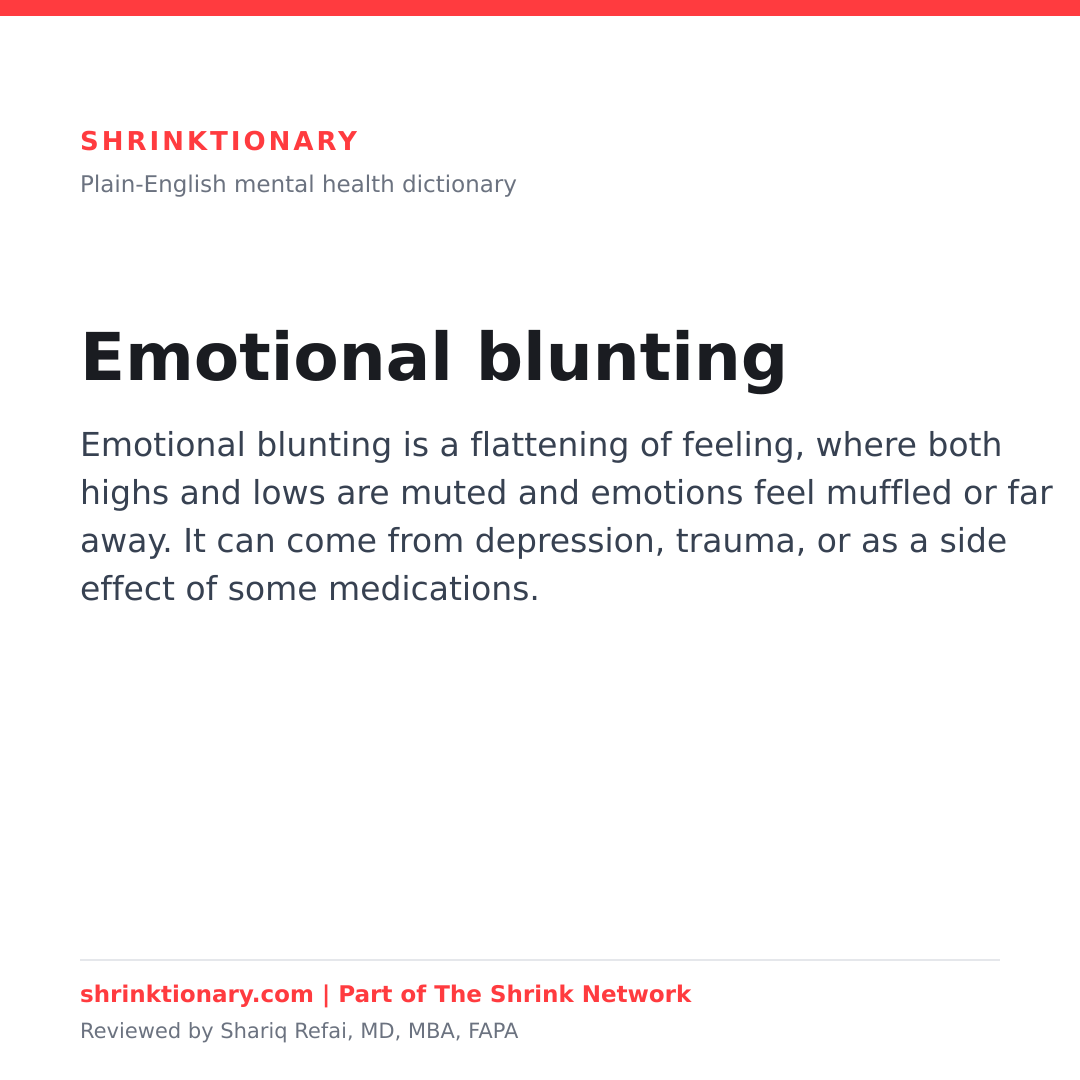
Emotional blunting is a reduction in the intensity and range of what a person feels. Emotions don’t disappear, but they get turned down. The peaks aren’t as high, the valleys aren’t as low, and the whole emotional landscape flattens out. People often describe feeling muffled, like their feelings are happening behind glass.
It can affect positive and negative emotions alike. Joy feels thinner, but so does grief, fear, and frustration. That evenness is part of what distinguishes blunting from conditions that mainly dampen pleasure. Here, the dial seems to move on the entire system rather than on one side of it.
Emotional blunting shows up in several settings. It’s a feature of depression, where it overlaps with anhedonia, the loss of pleasure. It appears in PTSD as part of emotional numbing. It can follow chronic stress. It’s also a recognized side effect of some antidepressants, particularly SSRIs, where it can emerge even as mood otherwise improves.
What emotional blunting can feel like
People describe caring less, in a way that worries them. They watch a moment that should move them and feel little. They notice they aren’t reacting to news, to loved ones, to things that used to matter. The reaction isn’t sadness, exactly. It’s the absence of a reaction where one used to be.
Some find it a relief at first, especially if they’ve been overwhelmed. Lower lows can feel like calm. Over time, though, the loss of higher highs and the sense of distance from one’s own life often becomes the more troubling part. Relationships can feel flatter, and motivation can fade along with the feeling.
When emotional blunting is medication-related, it tends to track with the medication. Noticing when it started, and whether it lined up with a new prescription or a dose change, gives a clinician useful information.
What emotional blunting isn’t
Emotional blunting isn’t the same as being calm, stoic, or emotionally even by temperament. The key is change. Someone who has always been reserved isn’t necessarily blunted. Someone who used to feel deeply and now feels little may be.
It also isn’t a sign of not caring, even though it can feel that way from the inside or look that way from outside. The capacity for feeling is still there underneath. The system that produces and transmits emotion is just running quieter, often for reasons that can be identified and addressed.
Related terms you’ll see next
Emotional numbness is a closely related experience and the two terms are often used together. Flat affect describes the outward, visible side of reduced emotional expression. Anhedonia specifically refers to the loss of pleasure, which frequently overlaps with blunting in depression.
When to seek professional care
If feelings have gone muted and the change is interfering with relationships, motivation, or your sense of being present in your own life, it’s worth raising with a clinician. When the blunting seems tied to a medication, that’s an important conversation to have rather than a reason to stop the medication on your own. There are usually options, including adjusting the dose, switching, or treating an underlying condition that’s contributing.
When this word matters
It matters when muted feeling is a change from how a person used to be and starts interfering with relationships, motivation, or the sense of being present in their own life. When the blunting lines up with a new medication, that timing is important information for a prescriber rather than a reason to stop on your own.
Commonly confused with
Frequently asked questions
What is emotional blunting?
Emotional blunting is a flattening of feeling where both highs and lows are muted. Emotions don't disappear, but they get turned down, so joy feels thinner and so do grief, fear, and frustration. People often describe feeling muffled.
Can antidepressants cause emotional blunting?
Yes. Emotional blunting is a recognized side effect of some antidepressants, particularly SSRIs, and it can appear even as mood otherwise improves. If you notice it, it's worth raising with your prescriber rather than stopping the medication on your own.
Is emotional blunting the same as not caring?
No. The capacity for feeling is still there underneath. The system that produces and transmits emotion is just running quieter, often for reasons that can be identified and addressed, so it isn't a sign that someone has stopped caring.
Related terms
Sources
- Depression , National Institute of Mental Health
- Antidepressants , MedlinePlus
Use or cite this definition
Free to reuse with attribution. Paste the block into your own page, or grab a citation.
Embed on your site
<blockquote>
<p><strong>Emotional blunting:</strong> Emotional blunting is a flattening of feeling, where both highs and lows are muted and emotions feel muffled or far away. It can come from depression, trauma, or as a side effect of some medications.</p>
<p>— <a href="https://shrinktionary.com/terms/emotional-blunting/">Shrinktionary</a>, a plain-English mental health dictionary, medically reviewed by a board certified psychiatrist.</p>
</blockquote>Cite (APA)
Refai, S. (2026). Emotional blunting. Shrinktionary. https://shrinktionary.com/terms/emotional-blunting/
Cite (MLA)
"Emotional blunting." Shrinktionary, https://shrinktionary.com/terms/emotional-blunting/. Accessed September 26, 2026.
Your next step in The Shrink Network
You are here: Shrinktionary, the language layer of The Shrink Network.
Each site in the network has one job. No matter where you enter, we help you find the next step that makes sense.
Want to understand more first?
See how this connects to everything else in the Term Web →
Take it with you
Free printable references you can save or share. For education, not medical advice.