What a black box warning actually is
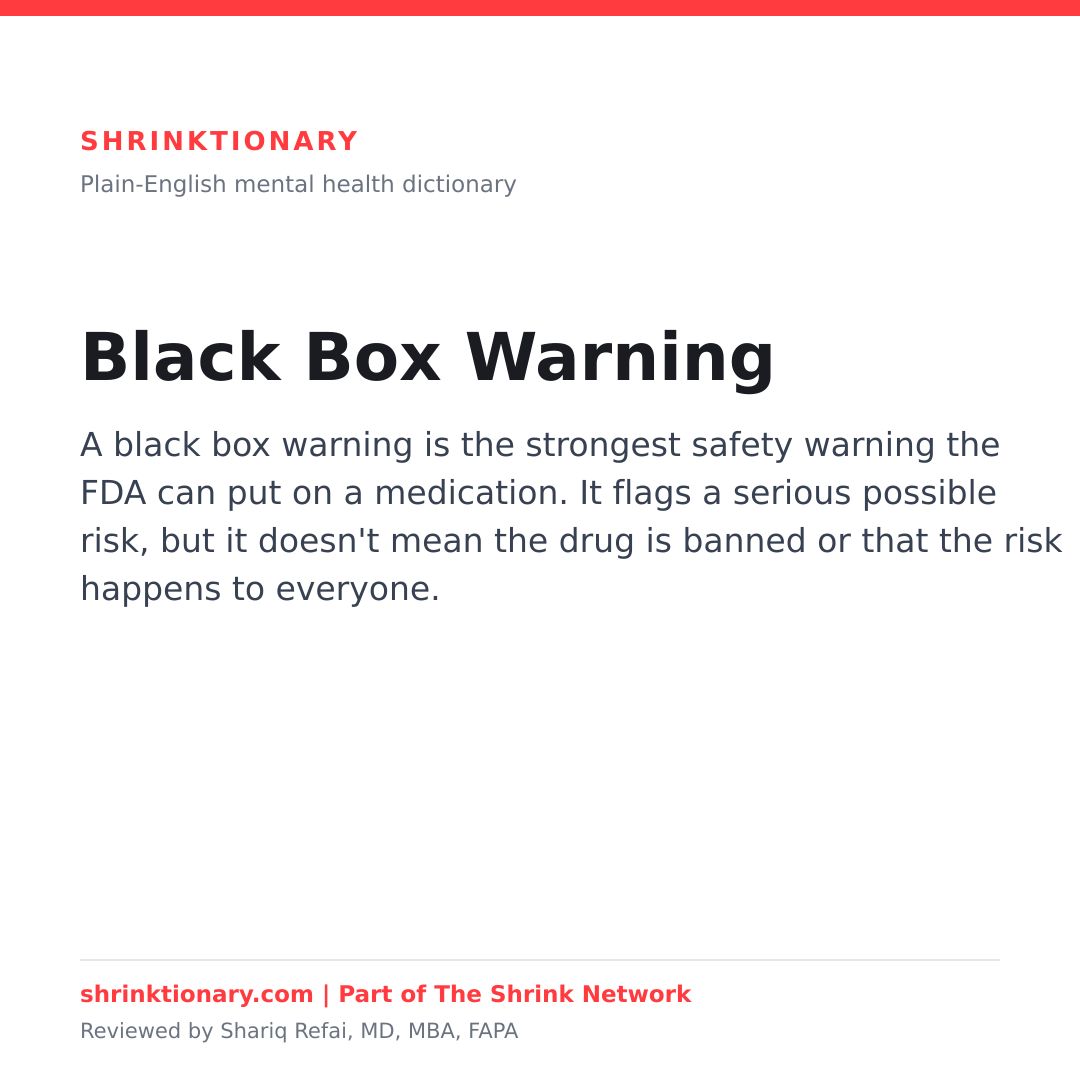
A black box warning, also called a boxed warning, is the most serious type of warning the U.S. Food and Drug Administration requires on a medication. It gets its name from the black border drawn around the text on the drug’s official labeling. The box is there to make a serious possible risk hard to miss.
A boxed warning is a flag, not a ban. The medication is still approved and still prescribed. The warning means the FDA wants prescribers and patients to be aware of a specific risk and to weigh it when deciding whether the drug is the right choice.
What it means and doesn’t mean
The warning tells you that a serious risk has been identified. It does not tell you that the risk is common, that it will happen to you, or that the drug is too dangerous to use. Many widely used and helpful medications carry boxed warnings. The point is informed decision-making, not avoidance.
A well-known example sits on antidepressants. They carry a boxed warning about an increased risk of suicidal thoughts in children, teens, and young adults, especially in the first weeks of treatment or after a dose change. Read in context, this doesn’t mean antidepressants cause suicide or that young people shouldn’t take them. Untreated depression itself carries serious risk. The warning is a reminder to monitor closely early on and to stay in contact with the prescriber. Many young people are helped by these medications when treatment is watched carefully.
What to know
A boxed warning is one piece of information among many. Prescribers weigh it against the benefits of treatment, the risks of leaving a condition untreated, and the specific person in front of them. Seeing a boxed warning on a medication you’ve been prescribed is a good reason to ask questions, not a reason to panic or to quietly stop taking it.
If a warning worries you, bring it up. A prescriber can explain how the risk applies to your situation and what monitoring is in place to keep treatment safe.
Related terms you’ll see next
When to seek professional care
If you or a young person you care for is starting an antidepressant, ask the prescriber what to watch for and how often to check in, especially in the first few weeks. Report any new or worsening thoughts of self-harm right away rather than waiting for the next appointment. Never stop a medication on your own because of a warning you read. And if there are active thoughts of suicide, treat it as an emergency and contact a crisis line or emergency services immediately.
When this word matters
The distinction matters when weighing a medication's risks against its benefits, since a boxed warning flags a serious possible risk but doesn't mean the drug is banned or that the risk happens to everyone. It often comes up with discussions of antidepressants and suicidal thoughts in young people.
Commonly confused with
Frequently asked questions
What is a black box warning?
A black box warning, also called a boxed warning, is the strongest safety warning the FDA can put on a medication. It gets its name from the black border around the text on the drug's labeling, and it flags a serious possible risk.
Does a black box warning mean a drug is banned or unsafe?
No. A boxed warning is a flag, not a ban. The medication is still approved and still prescribed, and many widely used, helpful drugs carry one. It doesn't mean the risk is common or that it will happen to you.
Why do antidepressants have a black box warning?
They carry a boxed warning about an increased risk of suicidal thoughts in children, teens, and young adults, especially early in treatment or after a dose change. It doesn't mean antidepressants cause suicide, since untreated depression itself carries serious risk. It's a reminder to monitor closely and stay in contact with the prescriber.
Related terms
In these language clusters
Sources
- Drugs , U.S. Food and Drug Administration
- Antidepressants for Children and Teens , MedlinePlus
Use or cite this definition
Free to reuse with attribution. Paste the block into your own page, or grab a citation.
Embed on your site
<blockquote>
<p><strong>Black Box Warning:</strong> A black box warning is the strongest safety warning the FDA can put on a medication. It flags a serious possible risk, but it doesn't mean the drug is banned or that the risk happens to everyone.</p>
<p>— <a href="https://shrinktionary.com/terms/black-box-warning/">Shrinktionary</a>, a plain-English mental health dictionary, medically reviewed by a board certified psychiatrist.</p>
</blockquote>Cite (APA)
Refai, S. (2026). Black Box Warning. Shrinktionary. https://shrinktionary.com/terms/black-box-warning/
Cite (MLA)
"Black Box Warning." Shrinktionary, https://shrinktionary.com/terms/black-box-warning/. Accessed September 26, 2026.
Your next step in The Shrink Network
You are here: Shrinktionary, the language layer of The Shrink Network.
Each site in the network has one job. No matter where you enter, we help you find the next step that makes sense.
Want to understand more first?
See how this connects to everything else in the Term Web →
Take it with you
Free printable references you can save or share. For education, not medical advice.