What a tricyclic antidepressant actually is
Tricyclic antidepressants, usually shortened to TCAs, are one of the oldest classes of antidepressant. They got their name from their chemical structure, which has three rings of atoms. Doctors started using them in the late 1950s, decades before newer antidepressants existed.
For a long time, TCAs were a standard treatment for depression. They still work. The reason they’re used less often today isn’t that they stopped being effective. It’s that newer classes tend to cause fewer side effects and are safer if someone takes too much.
How it works
Nerve cells in the brain talk to each other using chemical messengers, including serotonin and norepinephrine. After a cell releases these messengers, it normally reabsorbs them. TCAs slow that reabsorption, leaving more of these chemicals available between cells.
That part is similar to how SSRIs and SNRIs work. The difference is that TCAs also act on several other chemical systems in the body that aren’t directly tied to mood. That broader effect is what drives many of the side effects people associate with this class.
What to know
Because TCAs affect more than just mood-related chemicals, they can cause dry mouth, constipation, blurred vision, drowsiness, and changes in heart rhythm. They can also be dangerous in overdose, which is one reason a prescriber thinks carefully before choosing one.
None of this means TCAs are bad medications. They remain a strong option for some people, including certain cases of depression that haven’t responded to other drugs, and they’re sometimes used for other conditions like nerve pain. The point is that the higher side effect burden usually moves them to a second-line or later choice. Whether a TCA fits a given person is a decision for a prescriber, not something to sort out alone.
Related terms you’ll see next
When to seek professional care
If you’re weighing antidepressant options or struggling with low mood that won’t lift, talk with a prescriber. They can review your history and explain why one class might fit better than another. Never start, stop, or change a TCA on your own, since both starting and stopping these medications need a plan. If you ever have thoughts of harming yourself, treat that as urgent and reach out to a crisis line or emergency services right away.
When this word matters
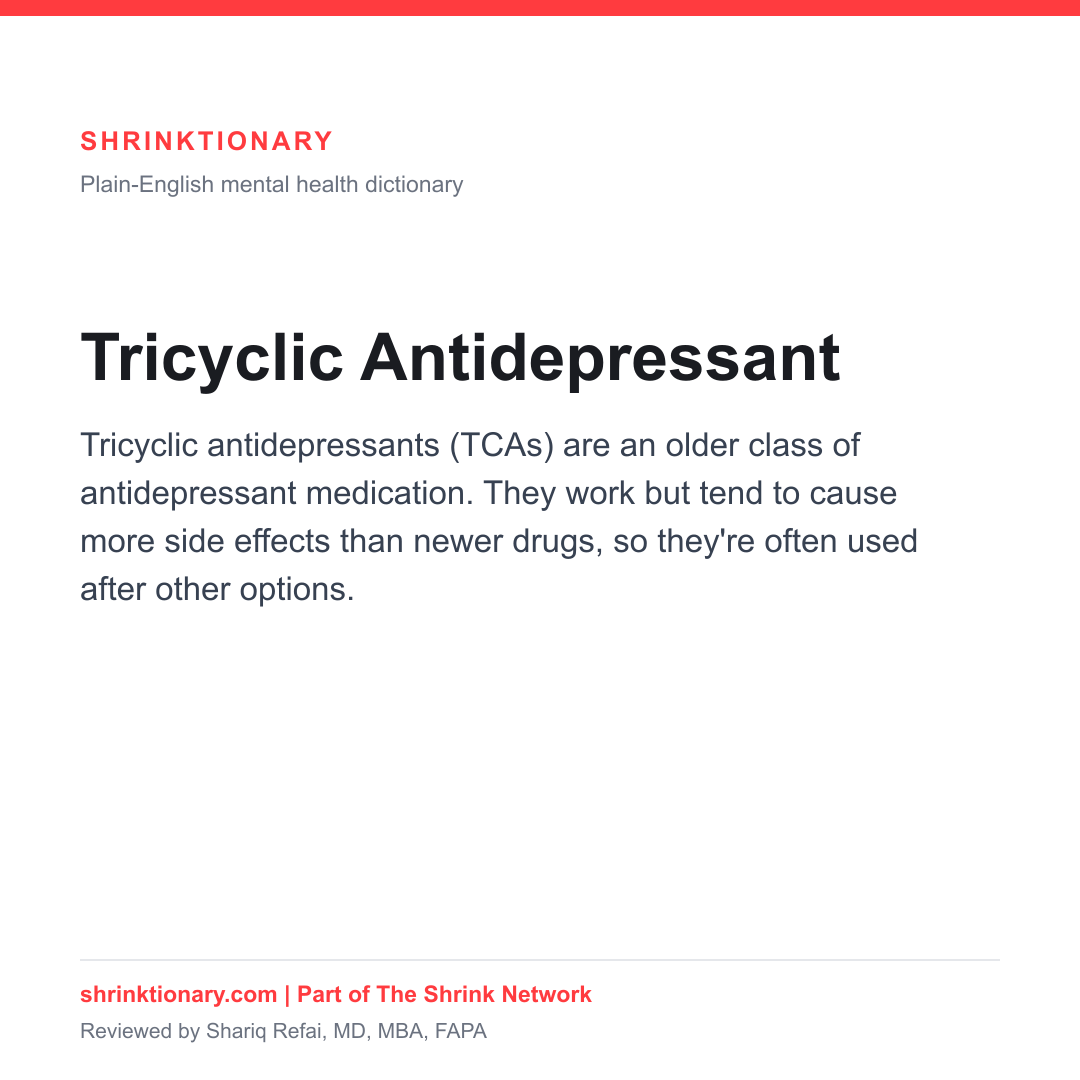
Tricyclics work but tend to cause more side effects than newer antidepressants, so the distinction matters because they're often tried after other options, sometimes for depression that hasn't responded or for certain pain or sleep problems. They can be riskier in overdose, which is part of why a prescriber monitors them closely.
Commonly confused with
Frequently asked questions
What is a tricyclic antidepressant?
Tricyclic antidepressants, usually shortened to TCAs, are one of the oldest classes of antidepressant, named for a chemical structure with three rings of atoms. Doctors started using them in the late 1950s, decades before newer antidepressants existed.
Why are TCAs used less often today?
It isn't because they stopped working. Newer classes tend to cause fewer side effects and are safer if someone takes too much, so the higher side effect burden of TCAs usually moves them to a second-line or later choice.
How do tricyclic antidepressants work?
TCAs slow the reabsorption of chemical messengers like serotonin and norepinephrine, leaving more available between nerve cells. They also act on several other chemical systems not tied to mood, which is what drives many of the side effects associated with this class.
Related terms
In these language clusters
Sources
- Mental Health Medications , National Institute of Mental Health
- Antidepressants , MedlinePlus
Use or cite this definition
Free to reuse with attribution. Paste the block into your own page, or grab a citation.
Embed on your site
<blockquote>
<p><strong>Tricyclic Antidepressant:</strong> Tricyclic antidepressants (TCAs) are an older class of antidepressant medication. They work but tend to cause more side effects than newer drugs, so they're often used after other options.</p>
<p>— <a href="https://shrinktionary.com/terms/tricyclic-antidepressant/">Shrinktionary</a>, a plain-English mental health dictionary, medically reviewed by a board certified psychiatrist.</p>
</blockquote>Cite (APA)
Refai, S. (2026). Tricyclic Antidepressant. Shrinktionary. https://shrinktionary.com/terms/tricyclic-antidepressant/
Cite (MLA)
"Tricyclic Antidepressant." Shrinktionary, https://shrinktionary.com/terms/tricyclic-antidepressant/. Accessed September 26, 2026.
Your next step in The Shrink Network
You are here: Shrinktionary, the language layer of The Shrink Network.
Each site in the network has one job. No matter where you enter, we help you find the next step that makes sense.
Want to understand more first?
See how this connects to everything else in the Term Web →
Take it with you
Free printable references you can save or share. For education, not medical advice.