What an anxiolytic actually is
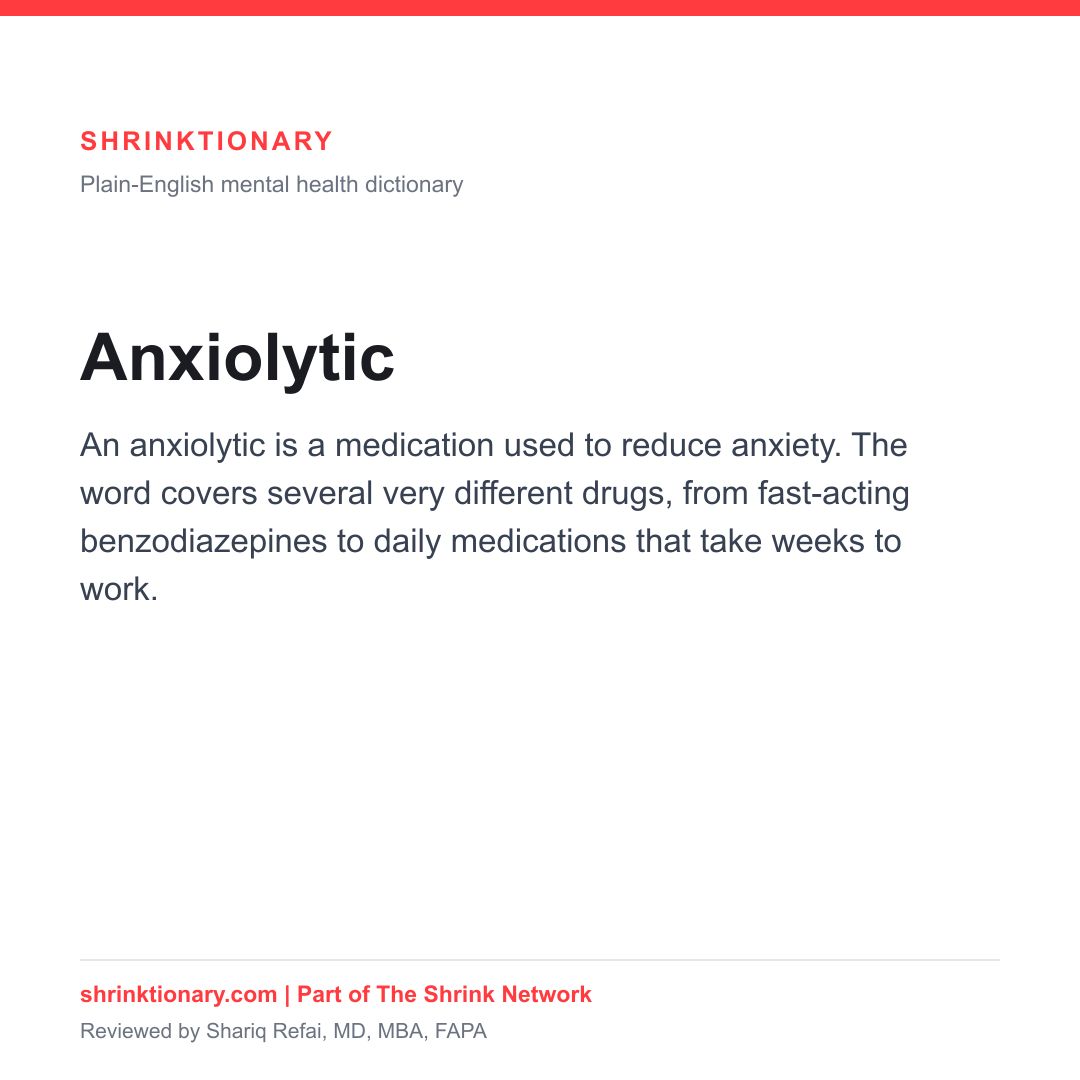
An anxiolytic is anything prescribed to bring anxiety down. The word says what the drug is for, not what it is, and that’s why it’s so much less informative than it sounds.
Under this one label sit medications that behave nothing like each other. Some work in twenty minutes. Some take a month. Some carry a real risk of dependence. Some carry none. Being told you’ve been prescribed “an anxiolytic” tells you almost nothing you’d actually want to know.
What sits under the word
Benzodiazepines are the ones most people picture. They work fast, which is exactly why they’re useful and exactly why they’re limited, since regular use brings tolerance and physical dependence. They’re generally meant for short or occasional use.
SSRIs and SNRIs are, in practice, the mainstay of treating anxiety disorders, even though most people think of them as antidepressants. They take weeks to work and they aren’t habit-forming, which is a trade most people would take once they understand it.
Then there are the others. Buspirone is a daily anti-anxiety medication with no dependence risk. Hydroxyzine is an antihistamine used for anxiety. Beta blockers like propranolol are used off-label for the physical side of situational anxiety, the shaking hands and pounding heart before a performance, and they do nothing for worry itself.
What an anxiolytic isn’t
It isn’t a single class of drug, and it isn’t a synonym for benzodiazepine, even though people often use it that way.
It also isn’t a substitute for the treatments that change anxiety over the long run. CBT and exposure therapy hold up as first-line for anxiety disorders, and medication frequently works best alongside them rather than instead of them.
Related terms you’ll see next
When to seek professional care
If anxiety is interfering with your sleep, work, relationships, or ability to leave the house, that’s the point at which treatment is worth pursuing, and there’s more than one kind. Ask specifically which medication you’ve been prescribed and whether it’s meant for daily use or occasional use, because that single question prevents a great deal of trouble. If you have thoughts of harming yourself, get help right away by calling 911, or call or text 988 in the US to reach the Suicide and Crisis Lifeline.
When this word matters
It matters because the word hides the only distinction you actually need: is this one I take every day and wait weeks for, or one I take in the moment. Getting that wrong is how people take a daily medication as needed, and wonder why nothing happens.
Commonly confused with
Frequently asked questions
Is an anxiolytic the same as a benzodiazepine?
No, though people often use the words that way. Anxiolytic just means a medication used to reduce anxiety. Benzodiazepines are one type. SSRIs, buspirone, hydroxyzine, and beta blockers are all used for anxiety too, and they behave nothing like each other.
Which anti-anxiety medications are habit-forming?
Benzodiazepines carry a real risk of tolerance and physical dependence with regular use, which is why they're generally meant for short or occasional use. SSRIs, SNRIs, buspirone, and hydroxyzine are not habit-forming.
Do anti-anxiety medications work right away?
It depends entirely on which one. Benzodiazepines work in minutes. SSRIs and SNRIs, which are the mainstay for anxiety disorders, take weeks. Asking which kind you've been prescribed prevents a lot of confusion.
Related terms
In these language clusters
Sources
- Anxiety Disorders , National Institute of Mental Health
- Mental Health Medications , National Institute of Mental Health
Use or cite this definition
Free to reuse with attribution. Paste the block into your own page, or grab a citation.
Embed on your site
<blockquote>
<p><strong>Anxiolytic:</strong> An anxiolytic is a medication used to reduce anxiety. The word covers several very different drugs, from fast-acting benzodiazepines to daily medications that take weeks to work.</p>
<p>— <a href="https://shrinktionary.com/terms/anxiolytic/">Shrinktionary</a>, a plain-English mental health dictionary, medically reviewed by a board certified psychiatrist.</p>
</blockquote>Cite (APA)
Refai, S. (2026). Anxiolytic. Shrinktionary. https://shrinktionary.com/terms/anxiolytic/
Cite (MLA)
"Anxiolytic." Shrinktionary, https://shrinktionary.com/terms/anxiolytic/. Accessed September 29, 2026.
Your next step in The Shrink Network
You are here: Shrinktionary, the language layer of The Shrink Network.
Each site in the network has one job. No matter where you enter, we help you find the next step that makes sense.
Want to understand more first?
See how this connects to everything else in the Term Web →
Take it with you
Free printable references you can save or share. For education, not medical advice.