What an atypical antidepressant actually is
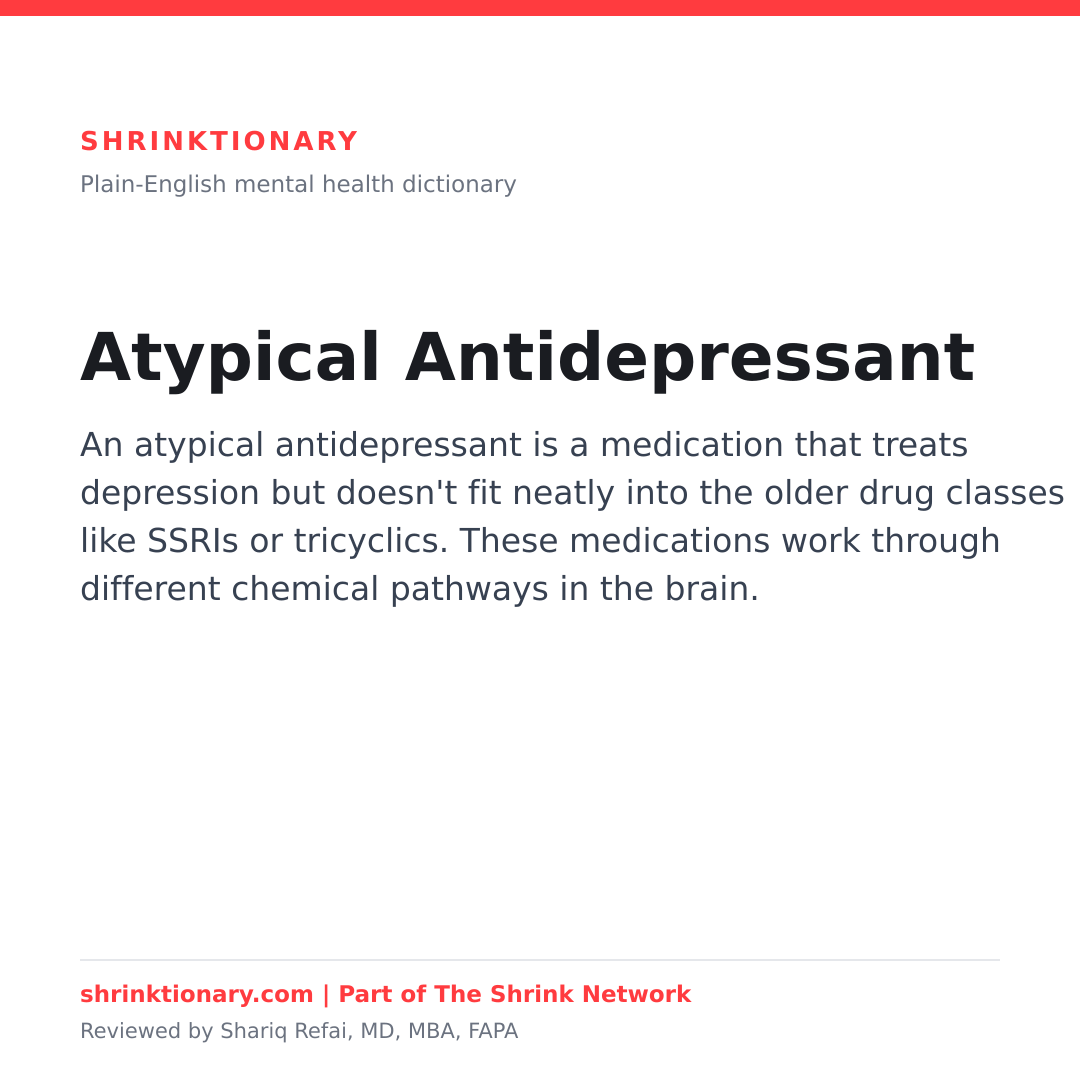
“Atypical antidepressant” is a catch-all label for antidepressants that don’t share the same mechanism as the more familiar classes. SSRIs mostly act on serotonin, and tricyclics act on serotonin and norepinephrine in a particular way. Atypical agents do something different, so clinicians group them together more for what they aren’t than for a single shared trait.
The name doesn’t mean the medication is unusual or rarely used. Several of these drugs are prescribed often. It just means they sit outside the tidy categories that came before.
How it works
Each atypical antidepressant works in its own way. Some adjust how the brain handles dopamine and norepinephrine. Others affect serotonin receptors in a pattern that’s different from how SSRIs behave. A few have effects on sleep or appetite that a prescriber might use on purpose for a particular person.
Because the mechanisms vary, the side effect profiles vary too. One atypical agent might be chosen because it’s less likely to cause a certain problem, while another might be picked for a different reason entirely. That’s a conversation for a prescriber, who weighs the whole picture.
What it isn’t
It isn’t a single drug or a single mechanism. It also isn’t a “weaker” or “stronger” category than the others. The word “atypical” describes chemistry, not strength or quality.
It also isn’t the same idea as an “atypical antipsychotic,” which is a separate class used for different conditions. The shared word can cause confusion, but the two groups are not related.
Related terms you’ll see next
What to do about it
If you’re curious whether an atypical antidepressant fits your situation, that’s a question for a prescriber. They’ll consider your symptoms, your history, other medications, and side effects you’d rather avoid. Don’t start, stop, or switch any antidepressant on your own, since stopping suddenly can cause withdrawal-like effects. A clinician can guide any change safely.
When this word matters
The label matters because these drugs treat depression but don't fit the older classes, so they work through different pathways and have their own side effect and interaction profiles. The distinction comes up when a standard SSRI isn't a good fit or its side effects are a problem.
Commonly confused with
Frequently asked questions
What is an atypical antidepressant?
It's a catch-all label for antidepressants that don't share the same mechanism as more familiar classes like SSRIs or tricyclics. They're grouped together more for what they aren't than for a single shared trait.
Does atypical mean the medication is weaker or rarely used?
No. The word atypical describes chemistry, not strength or quality, and several of these drugs are prescribed often. It just means they sit outside the older categories.
Is an atypical antidepressant the same as an atypical antipsychotic?
No. An atypical antipsychotic is a separate class used for different conditions. The shared word can cause confusion, but the two groups are not related.
Related terms
Sources
- Mental Health Medications , National Institute of Mental Health
- Antidepressants , MedlinePlus
Use or cite this definition
Free to reuse with attribution. Paste the block into your own page, or grab a citation.
Embed on your site
<blockquote>
<p><strong>Atypical Antidepressant:</strong> An atypical antidepressant is a medication that treats depression but doesn't fit neatly into the older drug classes like SSRIs or tricyclics. These medications work through different chemical pathways in the brain.</p>
<p>— <a href="https://shrinktionary.com/terms/atypical-antidepressant/">Shrinktionary</a>, a plain-English mental health dictionary, medically reviewed by a board certified psychiatrist.</p>
</blockquote>Cite (APA)
Refai, S. (2026). Atypical Antidepressant. Shrinktionary. https://shrinktionary.com/terms/atypical-antidepressant/
Cite (MLA)
"Atypical Antidepressant." Shrinktionary, https://shrinktionary.com/terms/atypical-antidepressant/. Accessed September 26, 2026.
Your next step in The Shrink Network
You are here: Shrinktionary, the language layer of The Shrink Network.
Each site in the network has one job. No matter where you enter, we help you find the next step that makes sense.
Want to understand more first?
See how this connects to everything else in the Term Web →
Take it with you
Free printable references you can save or share. For education, not medical advice.