What window of tolerance actually is
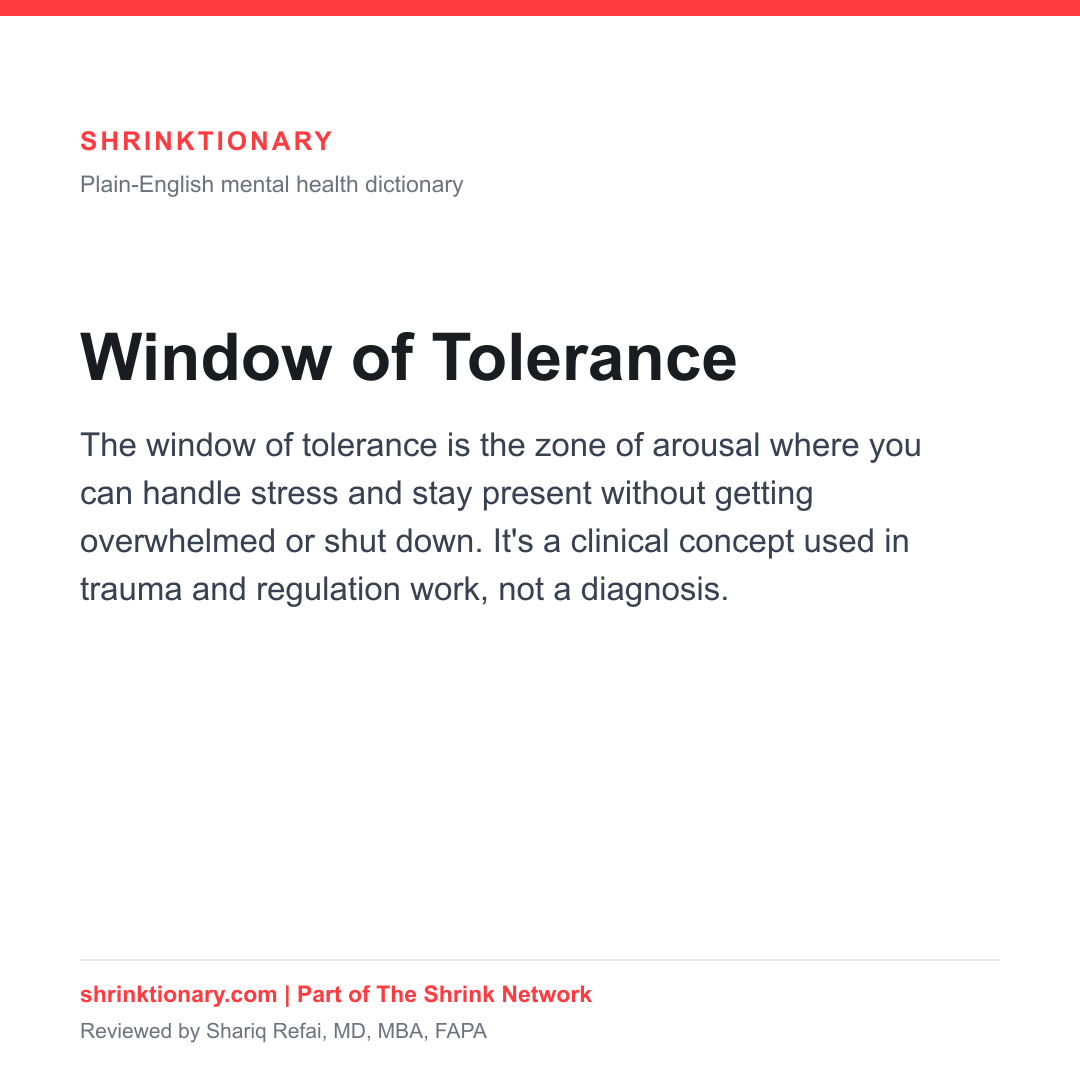
The window of tolerance is the range of nervous system arousal where a person can stay present, think clearly, and handle whatever they’re feeling without tipping into overwhelm or shutdown. Inside the window, emotions can be strong but still manageable. You can feel stress and keep functioning, take in new information, and stay connected to the people around you.
The phrase comes from the work of psychiatrist Dan Siegel and is widely used in trauma therapy and emotional regulation work. It isn’t a diagnosis. It’s a model that helps people picture what’s happening when stress moves from tolerable to too much. The width of the window varies from person to person and from day to day, and it can shrink after poor sleep, illness, or a stretch of high stress.
How it tends to show up
When something pushes a person above the top edge of the window, they move into hyperarousal. This can look like racing thoughts, a pounding heart, panic, anger, or the urge to fight or flee. Below the bottom edge sits hypoarousal, which can look like numbness, fog, exhaustion, or a sense of going blank and disconnected.
People often recognize their own edges once they have language for them. One person notices they get snappy and wired when they leave the window upward. Another notices they go quiet and far away when they drop below it. Trauma can narrow the window so that smaller triggers push someone out of it, which is part of why regulation skills are a common focus in therapy.
What window of tolerance isn’t
It isn’t a fixed trait or a measure of how strong someone is. A narrow window on a hard week says nothing about a person’s worth or resilience. It also isn’t the same as simply being calm. Being inside the window includes feeling intense emotion, as long as that emotion stays workable.
The model isn’t a clinical label either. No one is diagnosed with being outside their window. It’s a teaching tool that makes regulation easier to talk about and practice.
Related terms you’ll see next
Hyperarousal describes the over-activated state above the top edge of the window. Grounding techniques are skills used to come back into the window when arousal climbs too high. Distress tolerance names a related set of skills for staying steady through strong feelings without making things worse.
Why it matters
The window of tolerance gives people a simple map for noticing where they are before things spiral. That awareness is often the first step toward using a coping skill at the right moment rather than after the fact. It also reframes overwhelm and shutdown as nervous system states rather than personal failings. If someone is regularly thrown outside their window by everyday stress, that’s worth raising with a clinician, since it can point to anxiety, trauma, or other conditions that respond well to support.
When this word matters
It matters as a map for noticing where your arousal is before things spiral, which makes it easier to use a coping skill at the right moment. It's especially useful in trauma and regulation work, where a narrowed window can mean smaller triggers push someone into hyperarousal or shutdown.
Commonly confused with
Frequently asked questions
What does it mean to be outside your window of tolerance?
Moving above the top edge leads to hyperarousal, which can feel like panic, racing thoughts, anger, or the urge to fight or flee. Dropping below the bottom edge leads to hypoarousal, which can feel like numbness, fog, exhaustion, or going blank and disconnected.
Can your window of tolerance change?
Yes. The width of the window varies from person to person and from day to day. It can shrink after poor sleep, illness, or a stretch of high stress, and trauma can narrow it so that smaller triggers push someone out of it.
How do you get back into your window of tolerance?
Grounding and regulation skills are commonly used to come back when arousal climbs too high or drops too low. Many people find these skills easier to use once they can notice their own edges, which is part of why the model is taught in therapy.
Related terms
In these language clusters
Sources
- Coping With Traumatic Events , National Institute of Mental Health
- Post-Traumatic Stress Disorder (PTSD) , Cleveland Clinic
Use or cite this definition
Free to reuse with attribution. Paste the block into your own page, or grab a citation.
Embed on your site
<blockquote>
<p><strong>Window of Tolerance:</strong> The window of tolerance is the zone of arousal where you can handle stress and stay present without getting overwhelmed or shut down. It's a clinical concept used in trauma and regulation work, not a diagnosis.</p>
<p>— <a href="https://shrinktionary.com/terms/window-of-tolerance/">Shrinktionary</a>, a plain-English mental health dictionary, medically reviewed by a board certified psychiatrist.</p>
</blockquote>Cite (APA)
Refai, S. (2026). Window of Tolerance. Shrinktionary. https://shrinktionary.com/terms/window-of-tolerance/
Cite (MLA)
"Window of Tolerance." Shrinktionary, https://shrinktionary.com/terms/window-of-tolerance/. Accessed September 26, 2026.
Your next step in The Shrink Network
You are here: Shrinktionary, the language layer of The Shrink Network.
Each site in the network has one job. No matter where you enter, we help you find the next step that makes sense.
Want to understand more first?
See how this connects to everything else in the Term Web →
Take it with you
Free printable references you can save or share. For education, not medical advice.