What theory of mind actually is
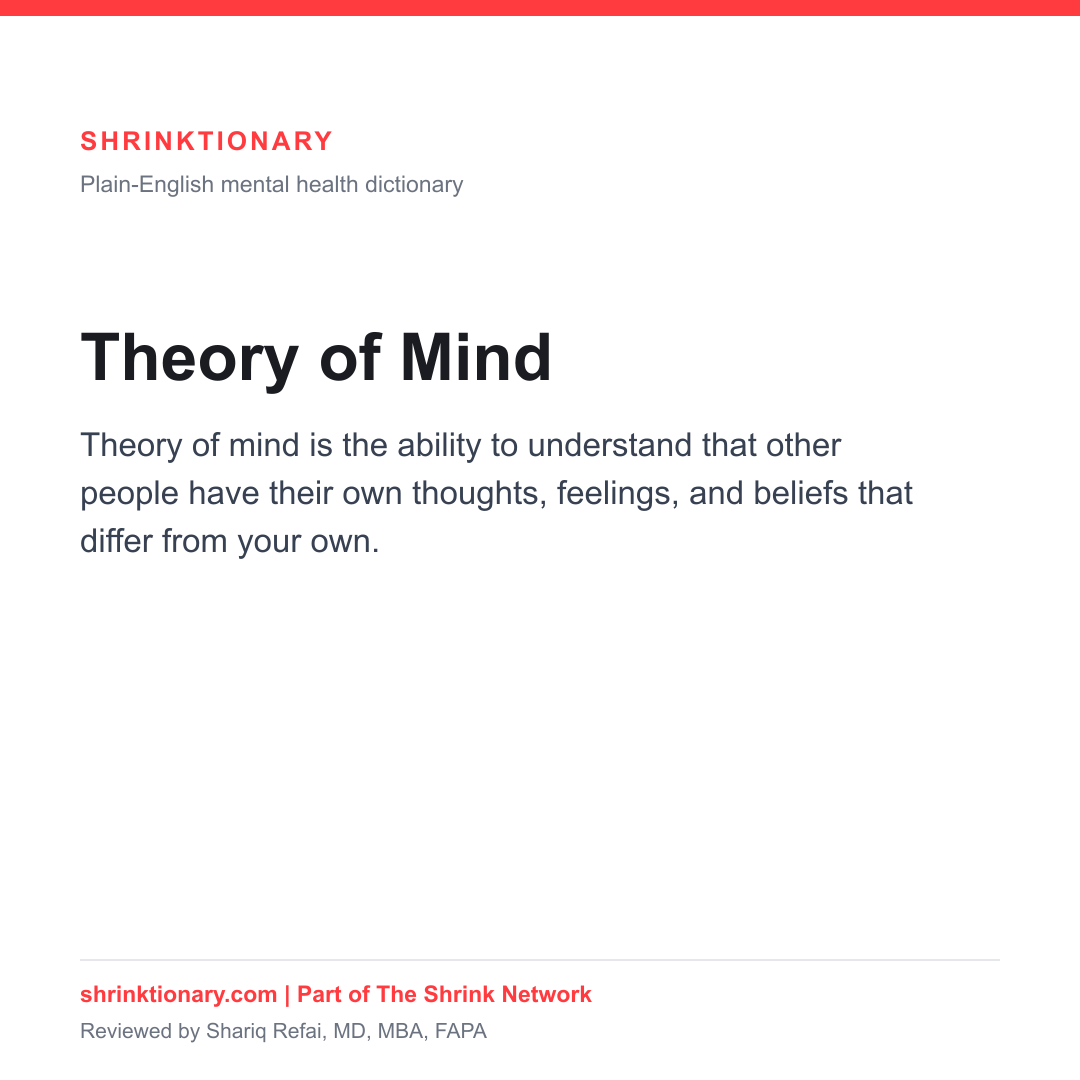
Theory of mind is the everyday skill of realizing that other people see the world through their own eyes. They know things you don’t, believe things you don’t, and want things you don’t. It’s how you guess that a friend is upset even when they say they’re fine, or how you understand that someone looking for their keys doesn’t know the keys are in your pocket.
It’s called a “theory” because nobody can read minds directly. You build a working model of what’s going on inside someone else’s head based on their words, faces, and behavior.
How it works
Theory of mind develops in steps during early childhood. Toddlers start by tracking what others can see. By around age four or five, most children pass what researchers call false-belief tasks, where they understand that another person can hold a belief that’s wrong.
In daily life it runs almost automatically. You read a tone of voice, notice a glance, and adjust what you say. The brain regions that support it overlap with the networks involved in social reasoning and empathy, and the skill keeps getting refined through experience well into adulthood.
What it isn’t
Theory of mind isn’t the same as empathy. Empathy is feeling with someone. Theory of mind is understanding what someone thinks or knows, which you can do even without sharing the emotion. The two often work together, but they’re separate.
It also isn’t all-or-nothing. People can be strong at reading some situations and miss others, and stress, fatigue, or unfamiliar social cues can throw anyone off.
Related terms you’ll see next
Why it matters
Theory of mind comes up often in conversations about autism, social anxiety, and relationships. Differences in this skill can make social situations harder to read, which affects how people connect. Understanding it helps explain why misunderstandings happen and why building social skills is a real, learnable thing rather than just “trying harder.”
When this word matters
Theory of mind is a normal developmental skill, and differences in it become clinically relevant in conditions like autism, where reading others' unspoken thoughts and feelings can take more effort. The point isn't to label someone as lacking empathy, since these are separate things.
Commonly confused with
Frequently asked questions
What is theory of mind in simple terms?
It's the everyday ability to understand that other people have their own thoughts, feelings, and beliefs that can differ from your own. It's how you guess what someone else knows, believes, or wants.
Is theory of mind the same as empathy?
No. Empathy is feeling with someone, while theory of mind is understanding what someone thinks or knows, which you can do even without sharing the emotion. The two often work together but are separate.
When does theory of mind develop?
It develops in steps during early childhood. By around age four or five, most children can understand that another person can hold a belief that's wrong, and the skill keeps getting refined through experience into adulthood.
Related terms
Sources
- Autism Spectrum Disorder , National Institute of Mental Health
- Empathy and Social Cognition , American Psychological Association
Use or cite this definition
Free to reuse with attribution. Paste the block into your own page, or grab a citation.
Embed on your site
<blockquote>
<p><strong>Theory of Mind:</strong> Theory of mind is the ability to understand that other people have their own thoughts, feelings, and beliefs that differ from your own.</p>
<p>— <a href="https://shrinktionary.com/terms/theory-of-mind/">Shrinktionary</a>, a plain-English mental health dictionary, medically reviewed by a board certified psychiatrist.</p>
</blockquote>Cite (APA)
Refai, S. (2026). Theory of Mind. Shrinktionary. https://shrinktionary.com/terms/theory-of-mind/
Cite (MLA)
"Theory of Mind." Shrinktionary, https://shrinktionary.com/terms/theory-of-mind/. Accessed September 26, 2026.
Your next step in The Shrink Network
You are here: Shrinktionary, the language layer of The Shrink Network.
Each site in the network has one job. No matter where you enter, we help you find the next step that makes sense.
Want to understand more first?
See how this connects to everything else in the Term Web →
Take it with you
Free printable references you can save or share. For education, not medical advice.