What somatic symptom disorder actually is
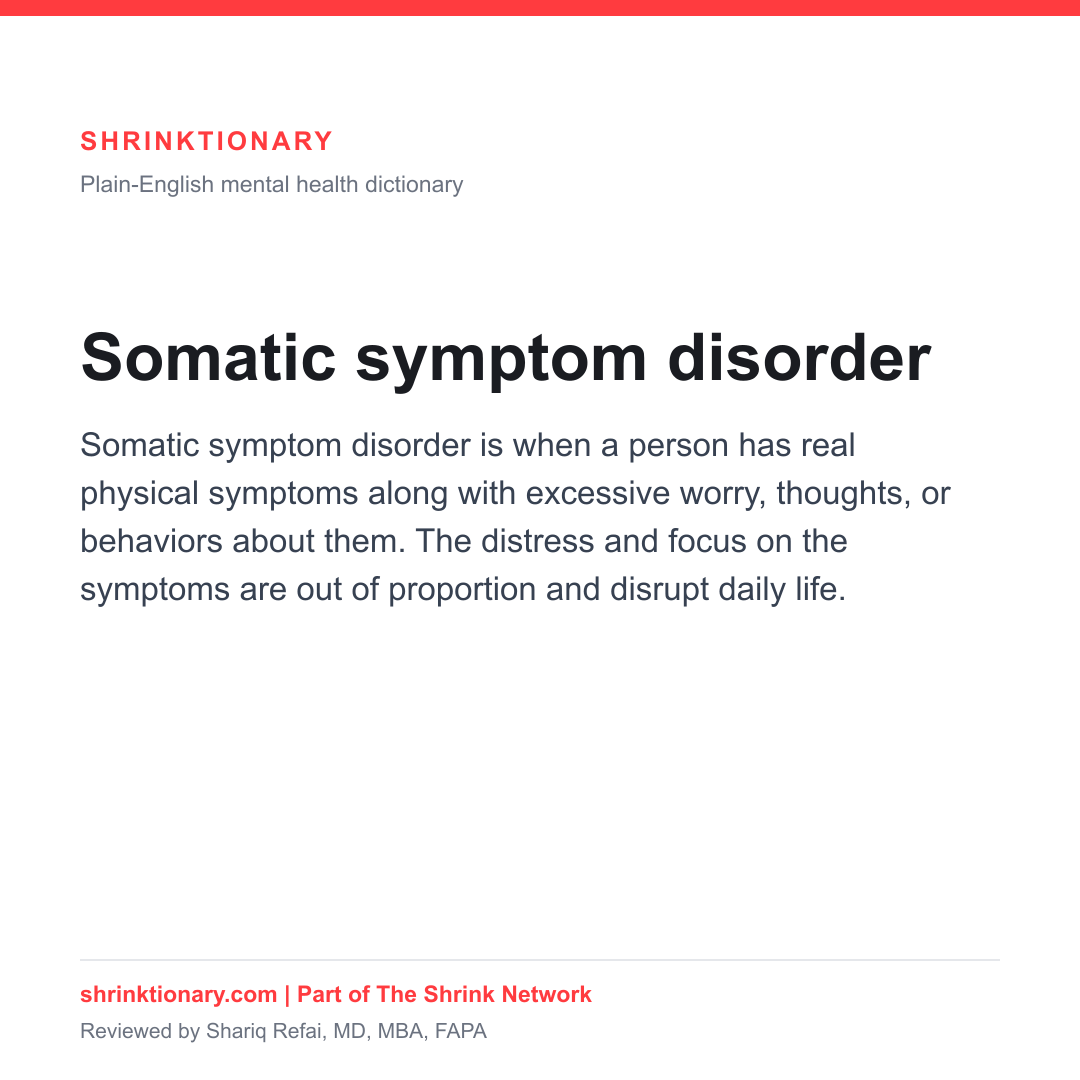
Somatic symptom disorder is a condition where a person has one or more physical symptoms that feel very real and distressing, along with thoughts, feelings, or behaviors about those symptoms that are excessive and take up a lot of time and energy. The symptoms might be pain, fatigue, stomach trouble, or something else, and they may or may not have a clear medical explanation.
The key point is the relationship to the symptoms. The worry, the time spent on health concerns, and the impact on daily life go well beyond what the situation would usually call for. The symptoms themselves are not imagined or faked. What sets the disorder apart is the intense, ongoing distress and preoccupation that comes with them.
How somatic symptom disorder shows up
It can look like spending a great deal of time worrying about the seriousness of symptoms, making frequent medical visits, or feeling that doctors aren’t taking the problem seriously. A person might check their body often, search for reassurance, or rearrange daily life around the symptoms.
There’s usually a high level of anxiety attached to health, and reassurance tends to bring only brief relief before the worry returns. Over time this can be exhausting and can interfere with work, relationships, and enjoyment of life. The physical discomfort is genuine, which can make the cycle especially hard to step out of.
What somatic symptom disorder isn’t
It isn’t faking or making symptoms up. The physical experiences are real. It also isn’t the same as illness anxiety disorder, where the main feature is fear of having a serious disease, often with few or no actual symptoms. With somatic symptom disorder, distressing symptoms are present and the focus is on them.
It isn’t a sign that someone is weak or seeking attention, and dismissing the symptoms rarely helps. It’s a recognized condition that connects the mind and body, and it responds to supportive care.
Related terms you’ll see next
When to seek professional care
It can help to seek support when worry about physical symptoms takes over daily life, leads to frequent medical visits, or causes ongoing distress. A consistent relationship with a trusted clinician, along with therapy such as cognitive behavioral therapy, can ease the worry and improve quality of life. The aim isn’t to prove the symptoms aren’t real, but to reduce the suffering around them.
When evaluation may help
Not everyone reading about somatic symptom disorder needs treatment. If it's getting in the way of your day, your sleep, your work, or your relationships, or if it isn't easing on its own, a professional evaluation is a reasonable next step. Most people start with their primary care doctor or a therapist. A psychiatrist is the right call when medication may be involved or the picture is complicated, though waits can be long.
We keep an honest, no-commission rundown of the options, from primary care to telepsychiatry to crisis lines, on one page.
If you're in crisis or thinking about suicide, call or text 988 in the US, or go to the nearest emergency room.
When this word matters
Worrying about real physical symptoms is normal, but it points toward somatic symptom disorder when the thoughts, anxiety, and time spent on the symptoms are out of proportion and disrupt daily life, whether or not a medical cause is found. The focus is on the distress and behavior around the symptoms, not on proving the symptoms are imaginary.
Commonly confused with
Frequently asked questions
What is somatic symptom disorder?
Somatic symptom disorder is when a person has one or more real, distressing physical symptoms along with excessive thoughts, feelings, or behaviors about them. The worry and focus on the symptoms are out of proportion and disrupt daily life.
Are the symptoms in somatic symptom disorder real?
Yes, the physical experiences are real and not imagined or faked. What sets the disorder apart is the intense, ongoing distress and preoccupation that comes with the symptoms, which may or may not have a clear medical explanation.
How is somatic symptom disorder different from illness anxiety disorder?
With somatic symptom disorder, distressing physical symptoms are present and the focus is on them. Illness anxiety disorder centers more on the fear of having a serious disease, often with few or no actual symptoms.
Related terms
Sources
- Somatic Symptom Disorder , MedlinePlus
- What Are Somatic Symptom and Related Disorders? , American Psychiatric Association
Use or cite this definition
Free to reuse with attribution. Paste the block into your own page, or grab a citation.
Embed on your site
<blockquote>
<p><strong>Somatic symptom disorder:</strong> Somatic symptom disorder is when a person has real physical symptoms along with excessive worry, thoughts, or behaviors about them. The distress and focus on the symptoms are out of proportion and disrupt daily life.</p>
<p>— <a href="https://shrinktionary.com/terms/somatic-symptom-disorder/">Shrinktionary</a>, a plain-English mental health dictionary, medically reviewed by a board certified psychiatrist.</p>
</blockquote>Cite (APA)
Refai, S. (2026). Somatic symptom disorder. Shrinktionary. https://shrinktionary.com/terms/somatic-symptom-disorder/
Cite (MLA)
"Somatic symptom disorder." Shrinktionary, https://shrinktionary.com/terms/somatic-symptom-disorder/. Accessed September 26, 2026.
Your next step in The Shrink Network
You are here: Shrinktionary, the language layer of The Shrink Network.
Each site in the network has one job. No matter where you enter, we help you find the next step that makes sense.
Want to understand more first?
See how this connects to everything else in the Term Web →
Take it with you
Free printable references you can save or share. For education, not medical advice.