What languishing actually is
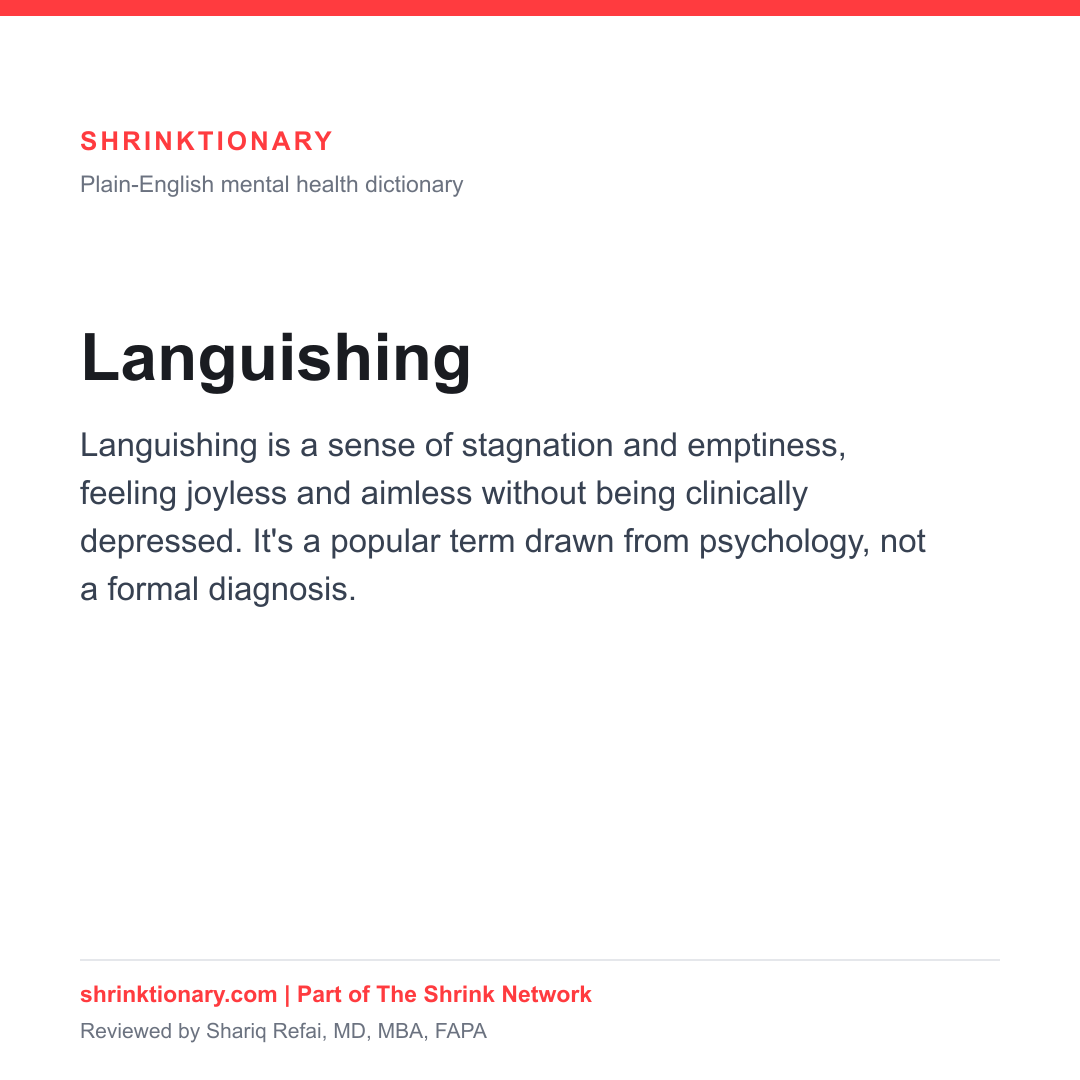
Languishing is a popular term, not a formal diagnosis. It comes from psychology research on well-being, where it names the middle ground between thriving and being clinically unwell. Languishing is the flat, stuck feeling of going through the motions, present but not really engaged, getting by without falling apart and without feeling good either.
The idea got widespread attention as a name for a mood many people recognized but couldn’t quite describe, a sense of emptiness and aimlessness that wasn’t depression but wasn’t health either. Mental health, in this view, is more than the absence of illness. You can be free of a diagnosable condition and still be far from flourishing, and languishing is the word for that gap.
For where languishing sits next to the other states on that spectrum, see the four types of mental health on shrinkMD. shrinkMD is part of The Shrink Network, founded by Shariq Refai, MD.
What languishing can feel like
People describe it as blah, gray, or muted. Motivation is low, focus is hard to find, and the days blur together without much to look forward to. There’s often a sense of just existing, of being neither excited nor distressed, but somehow not quite there. Small joys feel smaller, and momentum is hard to build.
It can be easy to dismiss, precisely because nothing is dramatically wrong. There’s no crisis to point to, which can make people minimize it or assume they should just push through. But sitting in that flatness for a long time can wear on you and, for some, can slide toward something more serious if it goes unaddressed.
What languishing isn’t
Languishing isn’t clinical depression, and it isn’t a diagnosis. Depression involves more, persistent low mood or loss of interest most of the day, often with changes in sleep, appetite, energy, and concentration, and it can include thoughts of death or self-harm. Languishing is generally lighter and more about absence of engagement than active suffering, though the line can blur.
It also isn’t laziness or a character flaw. It’s a recognizable state of low well-being, not a verdict on who you are.
Related terms you’ll see next
Depression is the clinical condition languishing is most often contrasted with and can sometimes drift toward. Anhedonia, the loss of pleasure, overlaps with the muted quality of languishing. Burnout shares the worn-down, disengaged feeling, often tied more directly to work.
When it helps to get support
If the flat, stuck feeling lingers for weeks, deepens, or starts shading into hopelessness or loss of interest, it’s worth checking in with a professional, since persistent languishing can sometimes overlap with or develop into depression. Small reconnections, with people, meaning, and activities you value, help many people. If you’re ever having thoughts of harming yourself, reach out to a crisis line or a clinician right away.
When this word matters
It matters because the flat, stuck feeling is easy to dismiss when nothing is dramatically wrong, yet persistent languishing can wear on well-being and sometimes shade toward depression. It is a state of low well-being, not a character flaw.
Commonly confused with
Frequently asked questions
What is languishing?
Languishing is a flat, stuck feeling of emptiness and aimlessness, going through the motions without thriving and without being clinically unwell. It is a popular term drawn from well-being research, not a formal diagnosis.
Is languishing the same as depression?
No. Depression involves persistent low mood or loss of interest most of the day, often with changes in sleep, appetite, energy, and concentration. Languishing is generally lighter and centers on a lack of engagement rather than active suffering, though the line can blur.
Should I do anything about languishing?
It is worth taking seriously if it lingers for weeks or deepens, since persistent languishing can sometimes overlap with or develop into depression. Small reconnections with people, meaning, and valued activities help many people, and a professional can help if it does not lift.
Related terms
In these language clusters
Sources
- Caring for Your Mental Health , National Institute of Mental Health
- Depression , MedlinePlus
Use or cite this definition
Free to reuse with attribution. Paste the block into your own page, or grab a citation.
Embed on your site
<blockquote>
<p><strong>Languishing:</strong> Languishing is a sense of stagnation and emptiness, feeling joyless and aimless without being clinically depressed. It's a popular term drawn from psychology, not a formal diagnosis.</p>
<p>— <a href="https://shrinktionary.com/terms/languishing/">Shrinktionary</a>, a plain-English mental health dictionary, medically reviewed by a board certified psychiatrist.</p>
</blockquote>Cite (APA)
Refai, S. (2026). Languishing. Shrinktionary. https://shrinktionary.com/terms/languishing/
Cite (MLA)
"Languishing." Shrinktionary, https://shrinktionary.com/terms/languishing/. Accessed September 26, 2026.
Your next step in The Shrink Network
You are here: Shrinktionary, the language layer of The Shrink Network.
Each site in the network has one job. No matter where you enter, we help you find the next step that makes sense.
Want to understand more first?
See how this connects to everything else in the Term Web →
Take it with you
Free printable references you can save or share. For education, not medical advice.