What irritability actually is
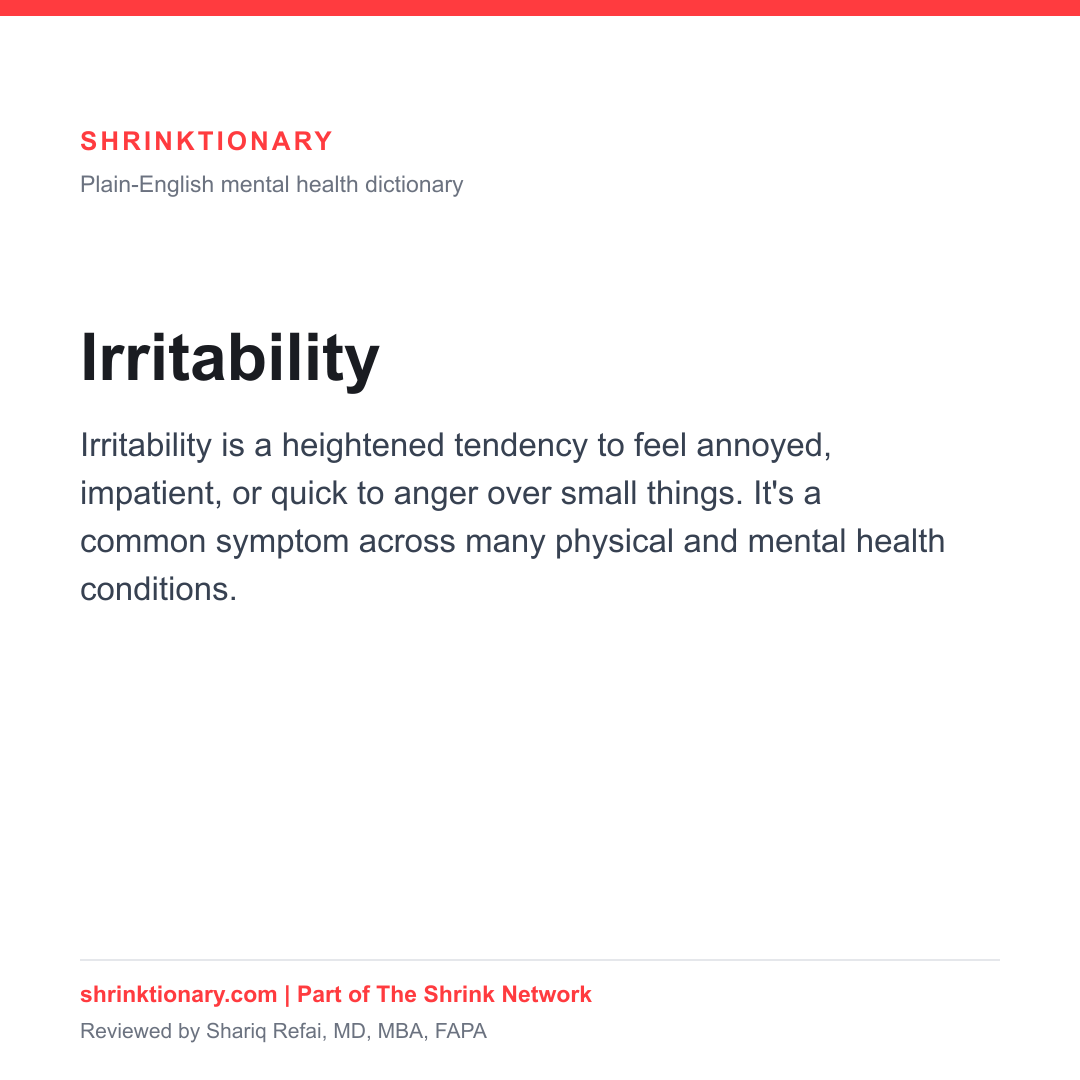
Irritability is a state in which a person feels more easily annoyed, impatient, or quick to anger than usual. Small things that wouldn’t normally bother someone can suddenly feel grating, and the fuse for frustration runs short. It’s a symptom rather than a condition on its own, and it can show up almost anywhere in mental and physical health.
In mental health, irritability is a recognized feature of many conditions. It can appear in depression, where it sometimes stands in for sadness, especially in children and teens, as well as in anxiety, bipolar disorder, and during stress or poor sleep. It also has plenty of everyday causes, including hunger, pain, fatigue, hormonal shifts, and substance use or withdrawal.
Because so many things can drive it, clinicians look at the bigger picture, including how long the irritability has lasted, what else is going on, and whether it’s a change from a person’s usual self.
What irritability can feel like
People often describe feeling on edge, touchy, or like everything is rubbing them the wrong way. Patience feels thin, noise or interruptions feel intrusive, and it can be hard not to snap at people who don’t deserve it.
There’s frequently a gap between the size of the trigger and the size of the reaction, which can leave a person feeling guilty or confused afterward. Irritability can also strain relationships, since the people closest by often catch the brunt of it. Recognizing it as a symptom, rather than a personal failing, can take some of the sting out.
What irritability isn’t
Irritability isn’t the same as being a mean or difficult person. It’s usually a signal that something else is off, whether that’s mood, sleep, stress, pain, or a physical issue, rather than a fixed part of who someone is.
It also isn’t something a person can always just decide to stop. When irritability is tied to a condition like depression or anxiety, willpower alone often isn’t enough, and treating the underlying cause tends to help more than simply trying to be nicer.
Related terms you’ll see next
Agitation is a related state of restlessness and tension that can accompany irritability. Anxiety often brings irritability along with worry. Depression can show up as irritability, especially in young people. Emotional regulation describes the skills that help manage strong reactions.
When to seek professional care
If irritability is persistent, feels out of character, or is straining relationships, work, or daily life, it’s worth talking with a clinician. They can look for causes such as mood or anxiety conditions, sleep problems, or medical issues, and discuss what might help. Reaching out is reasonable even when the cause isn’t obvious. If irritability comes with thoughts of harming yourself or someone else, seek help right away. In the United States, you can call or text 988.
When this word matters
Irritability matters when it's persistent, feels out of character, or strains relationships and daily life. It's a symptom that can point to depression, where it sometimes stands in for sadness in children and teens, as well as anxiety, bipolar disorder, sleep loss, or medical causes.
Commonly confused with
Frequently asked questions
What can cause irritability?
It's a symptom rather than a condition and can appear in depression, anxiety, bipolar disorder, and stress or poor sleep. It also has everyday causes including hunger, pain, fatigue, hormonal shifts, and substance use or withdrawal.
Can irritability be a sign of depression?
Yes. Irritability is a recognized feature of depression, where it sometimes stands in for sadness, especially in children and teens. Clinicians look at how long it has lasted and whether it's a change from a person's usual self.
Can someone just decide to stop being irritable?
Not always. When irritability is tied to a condition like depression or anxiety, willpower alone often isn't enough, and treating the underlying cause tends to help more than simply trying to be nicer.
Related terms
Compare
Sources
- Mental Health , MedlinePlus
- Mental Health Information , National Institute of Mental Health
Use or cite this definition
Free to reuse with attribution. Paste the block into your own page, or grab a citation.
Embed on your site
<blockquote>
<p><strong>Irritability:</strong> Irritability is a heightened tendency to feel annoyed, impatient, or quick to anger over small things. It's a common symptom across many physical and mental health conditions.</p>
<p>— <a href="https://shrinktionary.com/terms/irritability/">Shrinktionary</a>, a plain-English mental health dictionary, medically reviewed by a board certified psychiatrist.</p>
</blockquote>Cite (APA)
Refai, S. (2026). Irritability. Shrinktionary. https://shrinktionary.com/terms/irritability/
Cite (MLA)
"Irritability." Shrinktionary, https://shrinktionary.com/terms/irritability/. Accessed September 26, 2026.
Your next step in The Shrink Network
You are here: Shrinktionary, the language layer of The Shrink Network.
Each site in the network has one job. No matter where you enter, we help you find the next step that makes sense.
Want to understand more first?
See how this connects to everything else in the Term Web →
Take it with you
Free printable references you can save or share. For education, not medical advice.