What codependency actually is
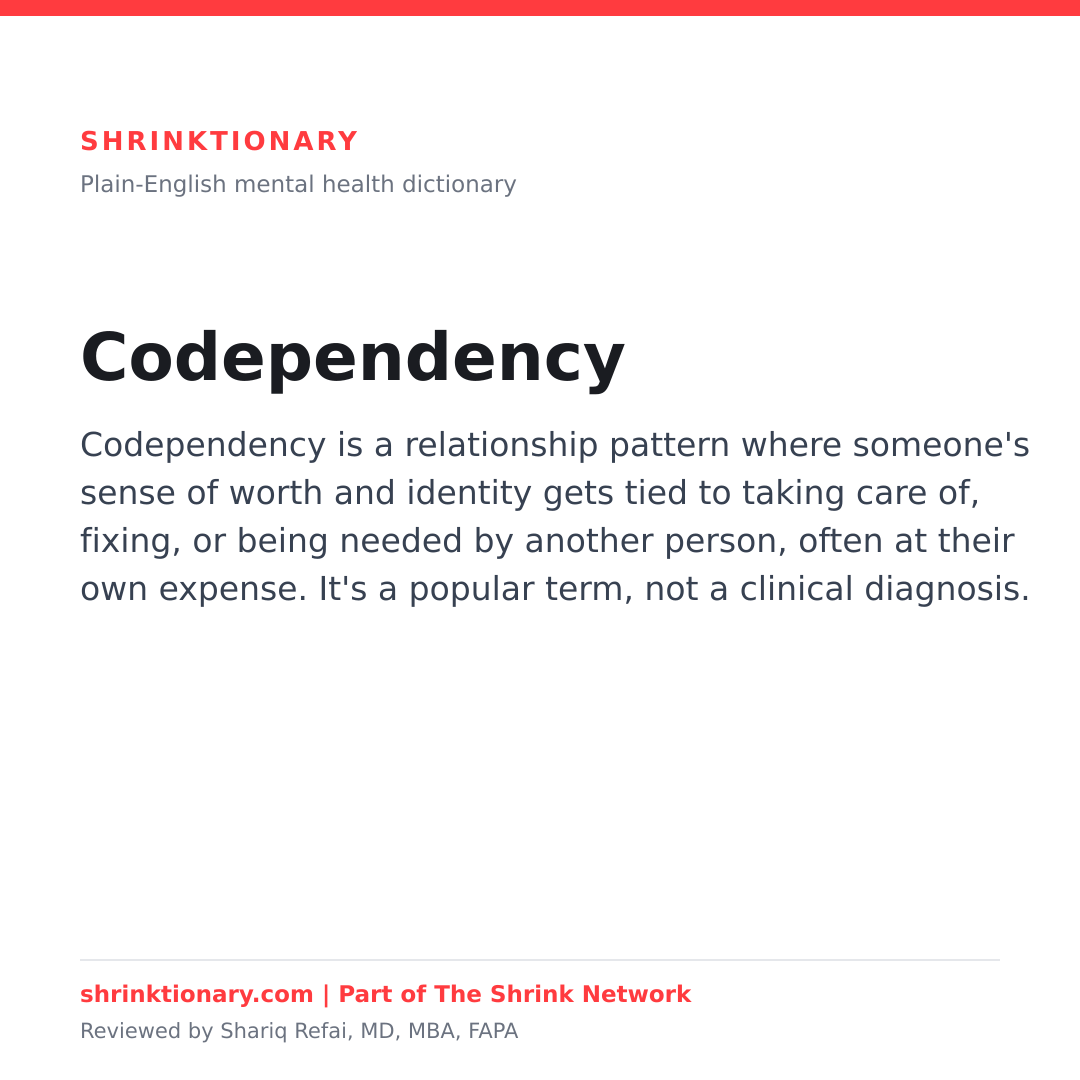
Codependency is a popular term, not a clinical diagnosis. It started in addiction-recovery circles to describe partners who organized their whole lives around a person who was struggling, and it has since broadened to name a wider relationship pattern. At its core, codependency is when someone’s sense of worth gets wrapped up in caretaking, fixing, or being needed, to the point that their own needs fade into the background.
The pattern is usually two-sided. One person tends to over-give and over-function, while the other leans on that support, and the arrangement quietly reinforces itself. The caretaker feels valuable when needed, which makes it hard to step back even when the dynamic stops being healthy. That blurring of where one person ends and the other begins is the heart of the term.
What codependency can feel like
It often feels like love taken to an exhausting extreme. People describe feeling responsible for everyone else’s moods, unable to say no, and anxious when someone is upset with them. Their own preferences can get so faint that they genuinely don’t know what they want apart from the relationship.
There’s frequently guilt attached to self-care, as if tending to your own needs is selfish. Saying no can feel dangerous, and being needed can feel like the main source of self-worth. Over time this is draining, and resentment can build underneath the helpfulness, even though the giving is sincere.
What codependency isn’t
Codependency isn’t the same as being caring, generous, or committed to the people you love. Healthy relationships involve plenty of mutual support and sacrifice. The difference is balance and self. In a healthy bond, both people still have their own identity, limits, and needs. Codependency is when those get lost in service of the other person.
It also isn’t a clinical diagnosis, and it isn’t a fixed label for who someone is. It describes a pattern that can change, not a flaw baked into a person.
Related terms you’ll see next
Boundaries are the limits that codependency tends to erode and that recovery works to rebuild. People pleasing often overlaps, since both involve putting others first at a cost to yourself. Anxious attachment can fuel the fear of stepping back that keeps the pattern going.
When it helps to get support
If your sense of worth depends on being needed, or if caring for others has crowded out your own needs to the point of exhaustion or resentment, working with a mental health professional can help. Therapy is a good place to rebuild boundaries and a separate sense of self. Support groups and self-help resources can help too, especially when the pattern is tied to a loved one’s addiction or illness.
When this word matters
It matters when self-worth depends on being needed and caretaking crowds out a person's own needs, because the pattern can lead to exhaustion and resentment. The loss of a separate self, not generosity itself, is the issue.
Commonly confused with
Frequently asked questions
What is codependency?
Codependency is a relationship pattern where someone's worth and identity get tied to caretaking, fixing, or being needed, often at their own expense. It is a popular term, not a clinical diagnosis, and it usually involves a two-sided dynamic that reinforces itself.
How is codependency different from being caring?
Healthy relationships involve plenty of mutual support, but both people keep their own identity, limits, and needs. Codependency is when those get lost in service of the other person and self-care starts to feel selfish.
Can codependency change?
Yes. Codependency describes a pattern, not a fixed trait. Therapy can help rebuild boundaries and a separate sense of self, and support groups can help too, especially when the pattern is tied to a loved one's addiction or illness.
Related terms
Sources
- Caring for Your Mental Health , National Institute of Mental Health
- Mental Health and Relationships , MedlinePlus
Use or cite this definition
Free to reuse with attribution. Paste the block into your own page, or grab a citation.
Embed on your site
<blockquote>
<p><strong>Codependency:</strong> Codependency is a relationship pattern where someone's sense of worth and identity gets tied to taking care of, fixing, or being needed by another person, often at their own expense. It's a popular term, not a clinical diagnosis.</p>
<p>— <a href="https://shrinktionary.com/terms/codependency/">Shrinktionary</a>, a plain-English mental health dictionary, medically reviewed by a board certified psychiatrist.</p>
</blockquote>Cite (APA)
Refai, S. (2026). Codependency. Shrinktionary. https://shrinktionary.com/terms/codependency/
Cite (MLA)
"Codependency." Shrinktionary, https://shrinktionary.com/terms/codependency/. Accessed September 26, 2026.
See also on ShrinkDaily
For a three-minute daily lesson on this idea, read the daily concept on codependency.
Your next step in The Shrink Network
You are here: Shrinktionary, the language layer of The Shrink Network.
Each site in the network has one job. No matter where you enter, we help you find the next step that makes sense.
Want to understand more first?
See how this connects to everything else in the Term Web →
Take it with you
Free printable references you can save or share. For education, not medical advice.