What systematic review actually is
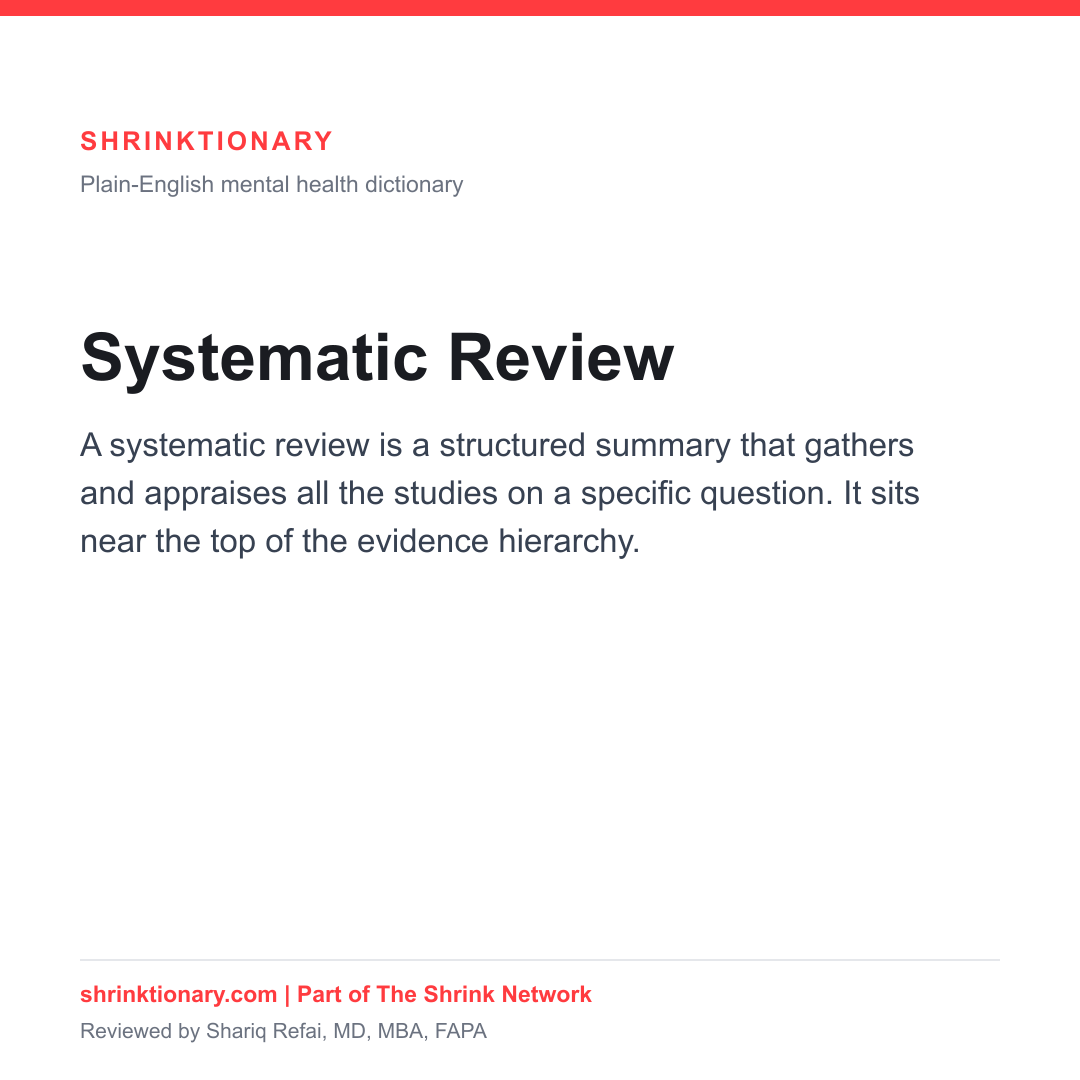
A systematic review is an attempt to answer a single, focused question by finding and evaluating every relevant study, not just the ones that are easy to find or happen to agree. Instead of one researcher’s opinion about what the evidence says, it’s a structured, repeatable process for pulling the whole body of evidence together.
The word “systematic” is the key part. The authors decide their methods in advance: what question they’re asking, what kinds of studies count, where they’ll search, and how they’ll judge quality. Then they follow that plan and document it, so someone else could repeat the same steps and land in the same place.
How it works
A team starts by writing a clear question and a protocol that spells out their rules before they look at any results. They then search databases broadly to find all the studies that might fit, screen them against their criteria, and assess each one for quality and risk of error. Finally, they summarize what the combined evidence shows, including where studies disagree.
When the studies are similar enough, the authors may statistically combine their results into a single estimate. That combined analysis is a meta-analysis, and it’s often part of a systematic review, though the two aren’t the same thing.
What it isn’t
A systematic review isn’t the same as a regular review article, where an expert simply rounds up papers they happen to know and shares their take. That kind of review can be useful, but it’s prone to cherry-picking and personal bias.
It’s also not a guarantee of truth. A systematic review is only as good as the studies it includes and the care of the people who did it. A careful review of weak studies still rests on weak ground.
Related terms you’ll see next
A meta-analysis is the statistical method for combining results across studies. A randomized controlled trial is the type of study that often carries the most weight inside a review. Peer review is the vetting a review goes through before publication. Bias is what a good systematic review tries hard to detect and limit.
Why it matters when you read about mental health
When a headline says “studies show,” it helps to ask which studies and how they were chosen. A systematic review answers that by looking at the full picture rather than a single dramatic result. It’s one of the strongest forms of evidence available, which is why guidelines for treating conditions like depression and anxiety lean on systematic reviews rather than on any one study.
When this word matters
The distinction matters when judging how much to trust a claim, because a systematic review gathers and appraises all the studies on a question using a repeatable method, unlike a casual review that may cherry-pick. It sits near the top of the evidence hierarchy, and many but not all include a statistical meta-analysis.
Commonly confused with
Frequently asked questions
What is a systematic review?
A systematic review is an attempt to answer a single, focused question by finding and evaluating every relevant study, not just the ones that are easy to find or happen to agree. It's a structured, repeatable process for pulling the whole body of evidence together.
What is the difference between a systematic review and a meta-analysis?
A systematic review is the structured process of finding and appraising all the relevant studies. A meta-analysis is the statistical method for combining their results into a single estimate, and it's often part of a systematic review though the two aren't the same thing.
Does a systematic review guarantee the truth?
No. A systematic review is only as good as the studies it includes and the care of the people who did it. A careful review of weak studies still rests on weak ground, though it remains one of the strongest forms of evidence available.
Related terms
Sources
- Cochrane Library , Cochrane
- PubMed , National Library of Medicine
Use or cite this definition
Free to reuse with attribution. Paste the block into your own page, or grab a citation.
Embed on your site
<blockquote>
<p><strong>Systematic Review:</strong> A systematic review is a structured summary that gathers and appraises all the studies on a specific question. It sits near the top of the evidence hierarchy.</p>
<p>— <a href="https://shrinktionary.com/terms/systematic-review/">Shrinktionary</a>, a plain-English mental health dictionary, medically reviewed by a board certified psychiatrist.</p>
</blockquote>Cite (APA)
Refai, S. (2026). Systematic Review. Shrinktionary. https://shrinktionary.com/terms/systematic-review/
Cite (MLA)
"Systematic Review." Shrinktionary, https://shrinktionary.com/terms/systematic-review/. Accessed September 26, 2026.
Your next step in The Shrink Network
You are here: Shrinktionary, the language layer of The Shrink Network.
Each site in the network has one job. No matter where you enter, we help you find the next step that makes sense.
Want to understand more first?
See how this connects to everything else in the Term Web →
Take it with you
Free printable references you can save or share. For education, not medical advice.